
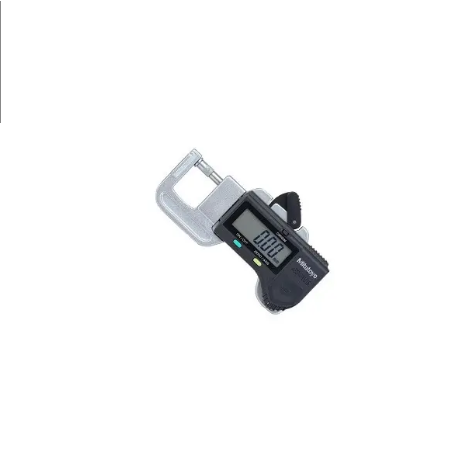
Precision measurement has become increasingly important in modern industries where even the smallest deviation can lead to costly errors. From automotive paint inspection to electronics manufacturing, professionals rely on compact measuring tools that offer both convenience and accuracy. This is where the Mini Thickness Gauge Buying Guide: Small Size, High Precision becomes essential.
Mini thickness gauges are designed to deliver accurate thickness readings while being compact enough to fit into tight spaces or pockets. Their small size does not compromise their performance—in fact, many models rival larger instruments in terms of precision. Understanding how these tools work, what features matter most, and how to choose the right one will help you make a confident and informed purchase.
What Is a Mini Thickness Gauge?
A mini thickness gauge is a compact measuring instrument used to determine the thickness of materials such as metal, plastic, coatings, paint layers, films, or sheets. Despite their small footprint, these tools are engineered for high precision.
How Mini Thickness Gauges Work
Mini thickness gauges operate using different mechanisms depending on the type. Mechanical models rely on spring-loaded probes, digital versions use electronic sensors, and ultrasonic models send sound waves through materials to calculate thickness.
The common goal is simple: deliver accurate, repeatable measurements without damaging the surface being tested.
Why Small Size Matters
The compact design allows access to narrow gaps, curved surfaces, and hard-to-reach areas. This makes mini gauges ideal for fieldwork, inspections, and mobile technicians who need reliable measurements on the go.
Types of Mini Thickness Gauges
Understanding the available types is a crucial step in the Mini Thickness Gauge Buying Guide: Small Size, High Precision.
Mechanical Mini Thickness Gauges
Mechanical gauges are simple, durable, and do not require batteries. They use a dial indicator and spring mechanism to measure thickness.
Advantages:
- Highly reliable
- No power source needed
- Long lifespan
Limitations:
- Manual reading required
- Slightly lower resolution than digital models
Digital Mini Thickness Gauges
Digital mini thickness gauges are the most popular option today. They provide quick, easy-to-read measurements on an LCD screen.
Advantages:
- High resolution and accuracy
- Easy unit conversion
- Data hold and zero functions
Limitations:
- Requires batteries
- Slightly more delicate than mechanical models
Ultrasonic Mini Thickness Gauges
Ultrasonic models are used for non-destructive testing, especially on coated or painted surfaces.
Advantages:
- Measures through coatings
- Non-invasive
- Extremely precise
Limitations:
- Higher cost
- Requires calibration and training
Key Features to Look for When Buying
Choosing the right tool means knowing which features truly matter.
Measurement Range and Resolution
Look for a gauge that covers the thickness range relevant to your work. Resolution refers to the smallest measurable unit—higher resolution equals greater precision.
For most applications, a resolution of 0.01 mm or better is recommended.
Accuracy and Repeatability
Accuracy determines how close the reading is to the true value, while repeatability ensures consistent results across multiple measurements. High-quality mini gauges excel in both.
Display and Readability
A clear, backlit display improves usability, especially in low-light conditions. Digital displays reduce reading errors and improve efficiency.
Materials and Build Quality
Durability matters, especially in industrial environments. Stainless steel contact points, hardened frames, and protective casings extend tool life.
A well-built mini thickness gauge maintains accuracy even after prolonged use.
Applications Across Different Industries
The Mini Thickness Gauge Buying Guide: Small Size, High Precision wouldn’t be complete without exploring real-world uses.
Automotive and Paint Inspection
Mini thickness gauges are widely used to measure paint and coating thickness on vehicles. They help detect repainted panels, body filler, and corrosion.
Manufacturing and Quality Control
In production lines, thickness gauges ensure materials meet strict tolerances. Compact designs allow quick checks without interrupting workflow.
Jewelry, Electronics, and Precision Crafts
Small-scale industries rely on mini gauges to measure thin components with extreme accuracy. Even minor deviations can affect performance or value.
Portability and Ergonomics
Portability is one of the biggest advantages of mini thickness gauges. Lightweight designs reduce fatigue, while ergonomic grips improve control.
Look for models that fit comfortably in your hand and tool pouch.
Calibration and Maintenance
Regular calibration ensures measurement accuracy. Some models include calibration blocks, while others support external calibration standards.
For best practices, consult recognized measurement standards such as those outlined by NIST:
👉 https://www.nist.gov/measurement-standards
Proper cleaning, storage, and occasional calibration checks significantly extend tool life.
Common Mistakes to Avoid When Buying
Many buyers focus only on price and overlook critical factors.
Avoid these mistakes:
- Choosing low accuracy models for precision work
- Ignoring calibration requirements
- Buying oversized gauges for tight spaces
- Overlooking build quality
A thoughtful approach ensures long-term satisfaction.
Price vs Performance: Finding the Best Value
Mini thickness gauges are available across a wide price range. Entry-level models suit hobbyists, while professionals may require advanced features.
Price Range
Best For
Budget
DIY and casual use
Mid-range
Automotive and light industrial
Premium
Precision manufacturing and NDT
Balancing price and performance is key to a smart purchase.
Frequently Asked Questions (FAQs)
1. What materials can a mini thickness gauge measure?
Most models measure metal, plastic, film, coatings, and composites.
2. Are digital mini thickness gauges more accurate?
Yes, digital models generally offer higher resolution and easier readability.
3. How often should I calibrate my gauge?
Calibration is recommended every 6–12 months or after heavy use.
4. Can mini thickness gauges measure curved surfaces?
Yes, many are designed to work effectively on curved or uneven surfaces.
5. Do ultrasonic models damage the surface?
No, ultrasonic gauges are completely non-destructive.
6. Is small size a disadvantage?
Not at all. Compact design enhances accessibility without sacrificing accuracy.
Conclusion
The Mini Thickness Gauge Buying Guide: Small Size, High Precision highlights one essential truth: compact tools can deliver exceptional performance when designed correctly. Whether you’re working in automotive inspection, manufacturing, or precision crafts, the right mini thickness gauge ensures accuracy, efficiency, and confidence in every measurement.
By understanding gauge types, key features, and real-world applications, you can select a tool that perfectly matches your needs. Small in size but powerful in capability, mini thickness gauges prove that precision doesn’t require bulk—just smart design.