
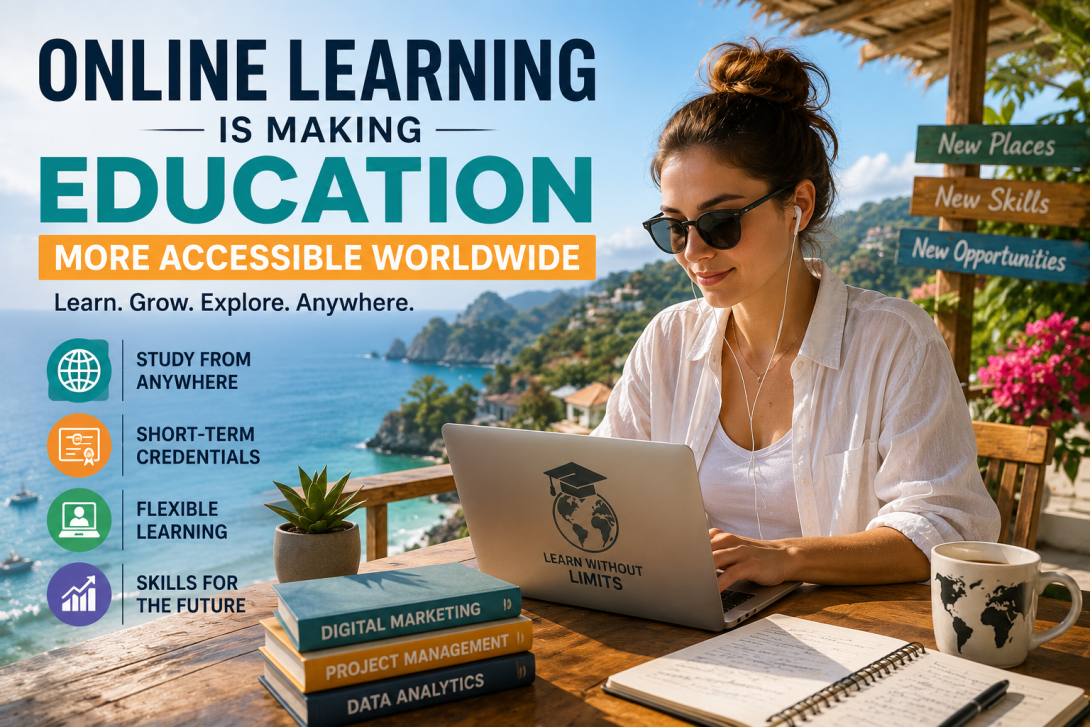
The relationship between education and employment is evolving faster than ever. Traditional degree programs remain valuable, but they are no longer the only path to career growth. In 2026, online credentials have emerged as one of the most significant developments in higher education and workforce training.
Universities, employers, and professionals are increasingly embracing short-term certificates, micro-credentials, and digital learning programs that provide targeted skills in less time than conventional academic pathways. This shift reflects a broader transformation in how people learn, work, and prepare for the future.
A New Era of Skills-Based Education
For decades, higher education focused primarily on long-term degree programs. While degrees continue to hold value, employers are placing greater emphasis on practical skills that can be applied immediately in the workplace.
Organizations today operate in environments shaped by artificial intelligence, automation, data analytics, cybersecurity, and rapid technological change. As industries evolve, workers must continuously update their knowledge and competencies.
Online credentials address this challenge by providing focused learning experiences that align with current workforce needs. Instead of spending years acquiring broad qualifications, learners can develop specific expertise that directly supports professional advancement.
This approach creates a more agile connection between education and employment.
Why Professionals Are Investing in Online Credentials
Career development is no longer a one-time process completed after graduation.
Professionals increasingly recognize the importance of continuous learning. Whether pursuing leadership opportunities, changing industries, or adapting to technological disruption, workers need efficient ways to build new capabilities.
Online credentials provide that flexibility.
A marketing specialist can learn advanced analytics. A project manager can gain expertise in digital transformation. A healthcare professional can develop leadership skills without stepping away from an existing role.
The ability to learn while working makes online credentials particularly attractive to busy professionals who need practical results without significant career interruptions.
This flexibility has become one of the strongest drivers of credential adoption.
The Business Case for Universities
Universities are investing heavily in online credentials because student demand and workforce demand are moving in the same direction.
Traditional enrollment models face increasing pressure from changing demographics, rising education costs, and growing competition from alternative learning providers.
Short-term programs offer institutions a way to expand their reach while serving learners at different stages of their careers.
Online delivery also enables universities to connect with adult learners, working professionals, corporate partners, and international students. These audiences often seek career-focused education rather than traditional campus experiences.
As a result, online credentials have become an important component of institutional growth strategies.
Employers Value Demonstrated Skills
The hiring process is becoming increasingly skills-oriented.
Employers want candidates who can contribute immediately and adapt to changing business environments. Digital credentials, certificates, and micro-credentials provide visible evidence of learning and professional development.
These qualifications complement traditional academic achievements by highlighting specific competencies.
For example, a business degree demonstrates foundational knowledge. A credential in data analytics, cloud computing, or project management signals current expertise in a particular discipline.
Together, these qualifications create a more complete professional profile.
This trend explains why many organizations are actively encouraging employees to pursue ongoing education and skills development.
Technology Is Accelerating Learning Innovation
Technology has played a central role in the expansion of online credentials.
Modern learning platforms support video instruction, interactive assessments, collaborative projects, digital badges, and real-time feedback. These tools allow institutions to deliver high-quality educational experiences at scale.
The result is a learning environment that is more accessible and flexible than traditional classroom models.
Learners can engage with content from virtually anywhere, making education available to a broader global audience.
Technology has also improved the ability to personalize learning experiences. Students can progress at their own pace while focusing on skills most relevant to their goals.
This level of flexibility is helping reshape expectations around professional development and workforce education.
Supporting Success in Digital Learning
While online learning provides flexibility, success still depends on access to effective support systems.
Many learners balance coursework alongside careers, family responsibilities, and personal commitments. Managing assignments, research projects, and study schedules can become challenging.
Universities increasingly provide digital support services, advising, Online tutoring, and academic resources to improve outcomes. Additionally, some learners seek external guidance through platforms such as Expertsmind.com's subject expert network when they need assistance with complex concepts, research planning, or academic projects.
The most successful online learning experiences combine flexibility with strong support structures that help learners stay engaged and motivated.
The Future of Workforce Development
The growth of online credentials represents more than a temporary education trend.
It reflects a fundamental shift toward lifelong learning, workforce adaptability, and skills-based professional development. As industries continue to evolve, workers will need ongoing opportunities to acquire new competencies and remain competitive.
Universities are responding by creating educational pathways that align more closely with employer expectations and learner needs. Employers are recognizing the value of specialized skills. Professionals are embracing continuous learning as part of long-term career success.
The future of education is becoming more flexible, more accessible, and more connected to real-world outcomes.
Online credentials sit at the center of that transformation. They provide a practical bridge between learning and employment, helping individuals build careers that can adapt to an increasingly dynamic global economy.
For organizations, institutions, and professionals alike, the message is clear: the future belongs to those who continue learning.