

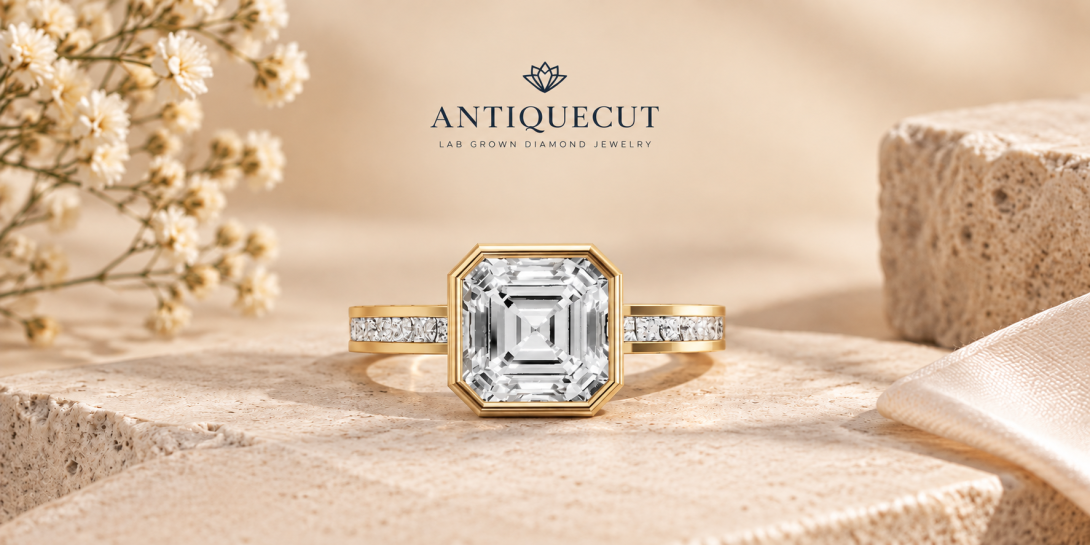
Choosing an engagement ring involves more than picking a diamond shape or metal color. The setting also affects how the ring looks, feels, and performs in everyday life. Bezel engagement rings have a distinct setting in which a thin rim of metal surrounds the diamond and holds it securely in place. This design gives the ring a clean appearance while providing additional protection around the stone. For anyone looking for a ring that combines practical details with a distinctive look, a bezel setting can be worth considering.
What Is a Bezel Diamond Engagement Ring?
A bezel setting holds the diamond with a metal rim that surrounds some or all of its outer edge. Unlike prong settings, where small metal claws hold the stone at several points, a bezel creates a continuous border around the diamond.
This structure can give the ring a smooth profile because there are fewer raised elements around the stone. It can also make the center diamond feel visually connected to the surrounding metal.
The amount of metal visible around the stone can vary. Some designs use a very narrow bezel for a delicate appearance, while others use a wider border for a stronger visual presence. The choice depends on the diamond shape, ring design, and personal preference.
Why Consider a Bezel Setting?
There are several reasons buyers consider bezel settings when shopping for an engagement ring. The design is especially appealing to people who want a ring that can be worn regularly without having many exposed prongs.
1. Added Protection for the Diamond
One of the main benefits of a bezel setting is the metal border around the diamond. Because the outer edge of the stone is surrounded by metal, the setting can help protect the diamond from direct contact with everyday objects.
This can be useful for people who work with their hands, travel frequently, or simply prefer a ring with fewer exposed parts. The setting does not make a diamond impossible to damage, but its construction can provide useful coverage around the stone.
2. A Smooth Ring Profile
A bezel setting creates a relatively smooth surface around the center stone. Without several individual prongs extending upward, there are fewer small points that can catch on clothing or other materials.
For someone who wants an engagement ring that feels comfortable during daily activities, this can be an important consideration. The exact profile will depend on the ring design and how high the diamond sits above the finger.
3. A Distinctive Look
Bezel rings have a recognizable appearance. The metal border frames the diamond and can create a defined outline around the center stone.
This works particularly well with shapes such as oval, round, emerald, pear, and elongated cuts. Different proportions can create very different results, so it is worth looking at several designs before making a decision.
Bezel Set Engagement Rings for Everyday Wear
Bezel set engagement rings can be a practical option for people who want a ring designed around regular wear. The continuous metal rim can help keep the diamond firmly positioned while reducing the number of exposed components.
This type of setting is also easy to pair with different band styles. A plain band can keep attention on the center stone, while small accent diamonds can add additional detail around the ring.
When choosing a bezel setting for daily wear, consider the height of the center stone, the thickness of the metal, and how the setting meets the band. These details can influence comfort and how the ring fits alongside a wedding band.
How a Bezel Diamond Engagement Ring Changes the Look of a Diamond
The setting can change how a diamond is perceived. A metal border creates a frame around the center stone, giving the diamond a defined outline.
For round diamonds, the bezel can emphasize the circular shape. With an oval or pear-shaped diamond, the metal border can highlight the length and proportions of the stone. Emerald-cut diamonds can also work well with bezel designs because the clean outline complements their geometric appearance.
Metal color matters, too. White gold or platinum can create a close visual connection with a white diamond, while yellow or rose gold can create more contrast around the stone.
Choosing Between a Bezel Solitaire and Other Designs
A bezel solitaire engagement ring places the main focus on one center diamond. Since there are no large side stones competing for attention, the shape and proportions of the center stone become an important part of the overall design.
This can be a good choice for someone who prefers a straightforward ring with a clear focal point. The band may be completely plain or include small details depending on the desired look.
Another option is a bezel ring with accent stones. Small diamonds can be placed along the band or around the center setting. This allows buyers to keep the secure structure of a bezel while adding additional detail.
Exploring Unique Bezel Engagement Rings
Not every bezel ring has to follow the same design. Unique bezel engagement rings can feature different diamond shapes, metal combinations, band profiles, and setting arrangements.
An east-west oval bezel, for example, places an elongated diamond horizontally across the finger rather than vertically. A bezel can also be combined with a split shank, hidden accent stones, or a two-tone metal design.
The shape of the bezel itself can also influence the appearance of the ring. A thin border may keep the diamond as the main focus, while a broader border can make the setting more noticeable.
If you are comparing several styles, look at the ring from the top and side. The side profile can reveal how high the diamond sits and how the setting meets the finger.
Lab Grown Diamonds and Bezel Settings
A lab grown bezel engagement ring combines the bezel setting with a laboratory-grown diamond. Lab-grown diamonds have the same basic chemical composition and crystal structure as diamonds formed naturally underground.
For buyers considering a lab-grown diamond, the bezel setting offers the same structural characteristics regardless of where the diamond was grown. The choice comes down to factors such as diamond shape, size, cut quality, color, clarity, metal, and ring design.
Certification can also be useful when comparing diamonds. A grading report can provide information about the stone's characteristics and help buyers understand what they are purchasing.
What Metal Should You Choose?
The metal surrounding the diamond can change the overall appearance of a bezel ring.
White gold: A popular option for buyers who want the metal and diamond to appear visually close in color.
Yellow gold: Creates a noticeable contrast around a white diamond and gives the ring a warmer appearance.
Rose gold: Provides a pink-toned metal option and can create a different look around the center stone.
Platinum: Known for its durability and naturally white appearance, making it another option for a bezel engagement ring.
Your choice can also be influenced by the wedding band you plan to wear. Matching metals can create a coordinated set, while mixing metals can produce more contrast.
Things to Check Before Buying
Before purchasing a bezel engagement ring, pay attention to a few practical details.
First, check the diamond measurements and proportions rather than focusing only on carat weight. Two diamonds with the same carat weight can have different dimensions.
Next, look at the bezel construction. The metal should hold the diamond securely without unnecessarily covering the stone.
It is also worth checking the ring's height and band width. A lower-profile ring may work well for people who prefer a ring that sits closer to the finger.
Finally, consider whether the setting will work comfortably with your wedding band. Some bezel designs sit close to the finger and may require a curved or specially shaped wedding band to sit flush.
Finding a Bezel Ring That Fits Your Style
The best bezel ring for one person may not be the right choice for another. Some buyers prefer a simple round center diamond with a narrow metal border, while others may want an oval stone, a wider bezel, or additional diamonds on the band.
When comparing options, start with the diamond shape you like. Then consider the metal, setting height, band design, and overall proportions.
You can view collection of bezel engagement rings to compare different designs and see how various diamond shapes work with the bezel setting. Antiquecut offers lab-grown diamond ring designs for shoppers who want to explore different setting and center-stone combinations.
Final Thoughts
A bezel diamond engagement ring offers a combination of structure, comfort, and distinctive design. The surrounding metal rim can help protect the diamond while giving the ring a smooth profile and clearly defined shape.
From a simple solitaire to a more detailed design, bezel settings can work with many diamond shapes and metal choices. Lab-grown diamonds also provide another option for buyers who want to consider different diamond sizes and specifications.
Before choosing a ring, compare the center stone, bezel construction, metal, band profile, and fit with your future wedding band. Taking time to examine these details can help you select a ring that suits your everyday routine as well as your personal taste