
Introduction
Choosing an engagement ring involves more than finding a diamond that looks attractive in a photograph. Small details in its proportions can change how it looks when worn. One detail worth understanding is the diamond table size. It affects the way light enters and leaves the stone, influencing its overall appearance.
When shopping on a limited budget, knowing what to look for can make the decision easier. Understanding this measurement helps buyers compare diamonds more carefully instead of relying only on carat weight or appearance.
What Is the Table Size of a Diamond?
The table is the largest flat surface on top of a faceted diamond. It is the area you see when looking directly down at the stone. Light enters through this surface, interacts with the internal facets, and returns to the viewer.
Table size is generally expressed as a percentage of the diamond's average diameter. For example, if a round diamond has an average diameter of 6.5 mm and a table measuring approximately 3.7 mm, its table percentage is around 57%.
This measurement helps explain the diamond's proportions, but it should not be considered separately from the rest of the cut. Two diamonds with the same table percentage can have different appearances because their other measurements may not match.
How Does Table Size Affect a Diamond's Appearance?
The table influences how a diamond handles light and how its face-up appearance is perceived. However, its effect depends on the relationship between several other proportions.
Larger Table Measurements
A diamond with a larger table has a wider flat surface at the top. Depending on its overall proportions, it may show more white light across the center. However, an overly large table can reduce the visual contribution of the crown facets and affect the balance of light return.
A larger table is not automatically a problem. The important thing is whether the complete cut proportions work together.
Smaller Table Measurements
A smaller table leaves more room for the surrounding crown facets. This can influence the pattern of light and color visible across the diamond.
However, a smaller measurement does not guarantee better light performance. If the crown, pavilion, and other proportions are poorly balanced, the diamond may still look less appealing.
The goal is to find a stone where the different measurements work together rather than choosing one number simply because it looks better on paper.
What Is a Good Table Percentage?
For a standard round brilliant diamond, a table percentage around 54% to 57% is commonly considered a useful comparison range. It can help buyers identify stones worth examining more closely.
However, this is not a universal rule for every diamond shape. Oval, pear, emerald, princess, and cushion cuts have different facet arrangements and proportion preferences.
Here are a few points to remember:
- Round brilliant: Around 54%–57% is a useful starting point for comparison.
- Oval: The overall length, width, and facet arrangement also influence its appearance.
- Princess: Its square outline and facet pattern require a different proportion assessment.
- Emerald: The step-cut arrangement makes the balance of the table and surrounding facets especially important.
- Cushion: Appearance can vary considerably depending on its facet pattern and shape.
Rather than treating one percentage as the perfect choice, compare diamonds of the same shape and examine their complete measurements.
How to Check Table Size Before Buying a Diamond
You do not need professional equipment to begin comparing diamond proportions. A grading report and a few product details can help you understand what you are considering.
Here are some practical steps:
- Check the grading report: Look for the table percentage in the diamond's proportion details.
- Confirm the diamond shape: Compare its measurements with other stones of the same shape.
- Review the depth percentage: Table size and total depth should be considered together.
- Examine the crown and pavilion: These measurements influence how the diamond handles light.
- Look at actual images or videos: A clear face-up view can help you assess the stone beyond its numerical specifications.
A grading report provides useful information, but photographs and videos can help you understand how the diamond looks in real viewing conditions.
Choosing a Diamond Within a Limited Budget
When comparing rings within a fixed spending limit, it is easy to focus on carat weight. A larger number may seem like better value, but the diamond's overall appearance matters more than a single measurement.
For buyers considering affordable engagement rings under $1000, it helps to compare several features before making a decision.
- Cut quality: Prioritize a well-proportioned stone with good light performance.
- Carat weight: Compare the visible face-up size instead of relying only on the weight.
- Color: Consider how the diamond's color appears in the chosen metal setting.
- Clarity: Look for inclusions that are not easily noticeable without magnification.
- Table percentage: Use this measurement as one part of the complete proportion assessment.
Lab grown diamonds offer another way to compare size and quality within a planned budget. They have the same basic physical and optical properties as mined diamonds, allowing buyers to consider different designs and specifications at accessible price points.
Why the Setting Also Matters
The diamond is only one part of an engagement ring. Its setting can change how the centre stone looks and how it sits on the finger.
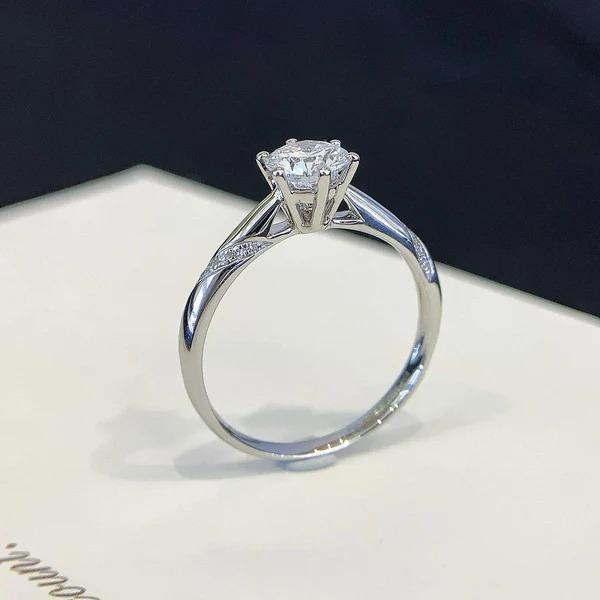
A solitaire setting keeps attention on the main diamond, while a halo setting places smaller stones around the centre. Three-stone designs add side diamonds that create a different overall appearance.
Metal choice also plays a role. White gold and platinum provide a different look from yellow or rose gold. When comparing rings, consider whether the setting complements the diamond's shape and proportions.
At Antiquecut, buyers can explore different ring designs and consider how diamond size, shape, and setting work together before choosing a piece.
Making a Confident Choice
Understanding table size gives you one more way to compare diamonds instead of making a decision based only on appearance or carat weight. Still, it should never be the only factor.
Review the grading information, compare stones with similar shapes, and pay attention to the complete cut proportions. If possible, examine real images or videos before purchasing.
For buyers working with a fixed budget, taking time to understand these details can help avoid unnecessary compromises and make the final ring selection feel more rewarding.
If you are comparing different styles and price points, View Collection of affordable engagement rings under $1000 to explore designs that fit your budget and personal preferences.
Frequently Asked Questions
1. What Does Table Size Mean in a Diamond?
Table size refers to the width of the largest flat facet on top of a diamond. It is expressed as a percentage of the stone's average diameter.
2. Is a Bigger Diamond Table Better?
Not necessarily. A larger table can change how light is reflected, but the complete proportions determine the diamond's overall appearance.
3. What Is a Good Table Percentage for a Round Diamond?
Around 54% to 57% is a commonly used comparison range for round brilliant diamonds. However, other proportions should also be considered.
4. Does Table Size Affect Diamond Brilliance?
Yes, it can influence light performance. However, crown angles, pavilion angles, depth, and other cut proportions also play important roles.
5. Is Table Percentage the Same for Every Diamond Shape?
No. Different shapes have different facet arrangements and proportion preferences, so their table percentages should be assessed accordingly.
6. Can Two Diamonds Have the Same Table Percentage but Look Different?
Yes. Their depth, crown, pavilion, symmetry, and facet arrangements may differ, creating different visual results.
7. Should I Choose Table Size Over Carat Weight?
No. Both measurements provide different information. Consider the diamond's visible size, cut proportions, and overall appearance together.
8. Are Lab Grown Diamonds Suitable for Engagement Rings?
Yes. Lab grown diamonds have the same basic physical and optical properties as mined diamonds and can be used in engagement ring settings.
9. Can I Find a Diamond Engagement Ring Under $1000?
Yes. Lab grown diamonds provide buyers with different options within this budget. The final price depends on diamond specifications, metal choice, and setting design.
10. Is a Diamond Grading Report Important When Buying Online?
Yes. A grading report provides important details about the diamond's characteristics and measurements, helping buyers make a more informed comparison.