
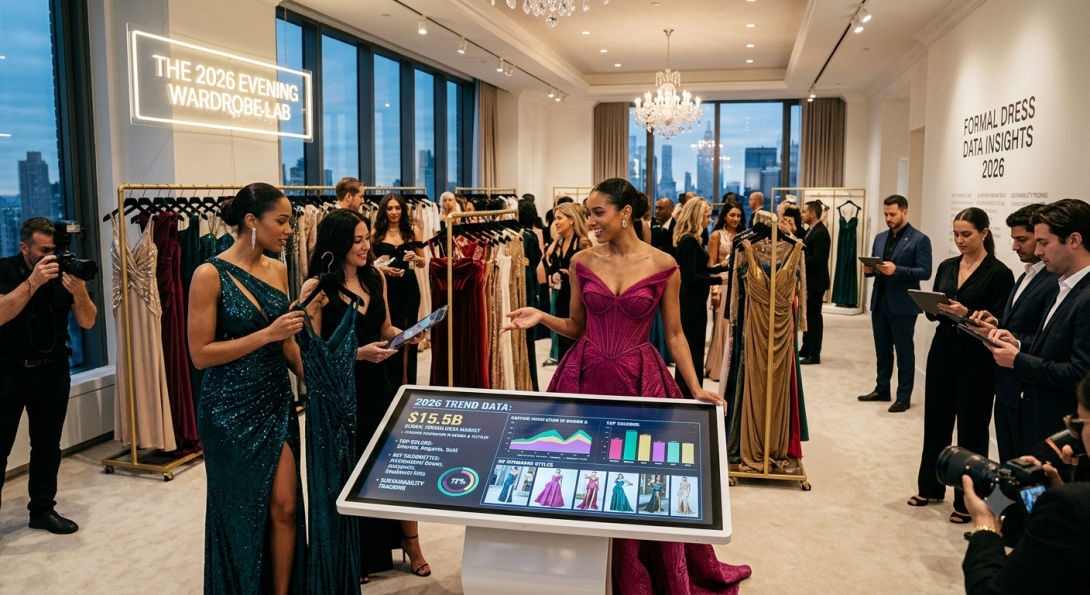
Shopping for high-end evening wear used to rely purely on seasonal fashion instinct. Today, real-time consumer data from the $15.5 billion market dictates how designers craft fits. Understanding these commercial trends helps you select gorgeous formal dresses that match modern comfort and style.
Fashion intelligence platforms now track buying habits, event schedules, and fabric preferences across the globe. This valuable data ensures your next evening outfit stays timeless, practical, and stunning. By analyzing sales metrics, smart shoppers can make better wardrobe investments for every major celebration.
The Rise of Data-Driven Evening Wear
The shift toward data-informed design has completely transformed how fashion houses manufacture evening gowns. Instead of creating massive inventory that sits on racks, brands analyze search traffic and regional sales. This targeted production reduces textile waste while delivering styles that people actively want.
Modern buyers expect garments that balance visual impact with long-lasting comfort. Market research shows that women increasingly prioritize flexible tailoring and versatile cuts over rigid structural designs. As a result, today’s evening collections blend red-carpet glamour with everyday wearable features.
How Sales Insights Predict Modern Style Trends
Data collection points reveal that shoppers want functional elegance for black-tie galas, weddings, and parties. Predictive algorithms help retailers restock popular colors and sizes long before peak event seasons begin. This proactive approach eliminates inventory shortages and gives consumers access to better fashion choices.
Furthermore, direct customer feedback shapes design adjustments in real time. If shoppers consistently review a dress as too tight around the shoulders, manufacturers quickly adjust the pattern for future runs. Consequently, you get a much better fit without paying expensive custom tailoring fees.
Essential Features Defining 2026 Formal Dresses
Market analytics highlight several key features that modern consumers demand in luxury garments. Today, buyers prefer outfits that offer both visual drama and personal utility. When browsing current collections, look for these popular, data-backed design elements:
- Sustainable Fabrics: Eco-conscious satins, organic silks, and recycled crepes engineered for low environmental impact.
- Convertible Silhouettes: Detachable sleeves, removable trains, and adjustable straps that offer multiple styling options.
- Bold Embellishments: High-lustre sequins, hand-sewn beadwork, and strategically placed metallic accents that catch light.
- Inclusive Sizing: Precision pattern-making that provides comfortable support for every unique body shape.
- Smart Stretch Linings: Flexible interior linings that allow free movement while sitting, dining, and dancing.
- Vibrant Color Palettes: Rich jewel tones like deep emerald, sapphire, and warm copper finishes.
The Role of Online Shopping and Digital Tailoring
E-commerce channels now generate over sixty percent of total evening wear transactions worldwide. Advanced digital sizing tools allow shoppers to upload precise body measurements before ordering. This technological advancement significantly lowers return rates and helps consumers find ideal fits on their first attempt.
Virtual fitting rooms also give customers the confidence to explore bold new styles online. Interactive digital previews show how different fabrics drape on various body types. This digital transition ensures that high-quality special occasion wear remains accessible to shoppers everywhere.
Expert Perspective on Wardrobe Planning
Industry analysts emphasize that consumer analytics are redefining value in luxury clothing. Instead of buying single-use gowns, buyers prefer versatile pieces with high re-wear potential. This mental shift encourages brands to focus heavily on durable craftsmanship and adaptable design features.
"Today's fashion data reveals a major shift toward functional luxury. Consumers want statement gowns that offer genuine comfort, high-quality fabrics, and re-wearability without compromising on show-stopping visual appeal." Stated Elena Rostova, Senior Fashion Intelligence Analyst.
Case Study: Optimizing Evening Collections for Modern Shoppers (Illustrative Example)
A national fashion retailer noticed dropping sales in their traditional evening wear division despite steady event demand. To solve this issue, management leveraged consumer data to revamp their product lineup.
Challenge
The retailer struggled with high product return rates and excess unsold inventory. Customers frequently complained that stiff fabrics made sitting during long banquet dinners uncomfortable. Additionally, generic sizing charts led to frequent fitting frustration among online buyers.
Strategy
The company analyzed customer reviews and purchasing metrics across three major urban markets. They replaced rigid interior boning with flexible stretch linings and introduced adjustable waistbands. They also launched a digital fit assistant on their e-commerce storefront.
Result
Within twelve months, product returns dropped by thirty-five percent while overall sales increased significantly. Customer satisfaction ratings reached record highs across all age demographics. The brand successfully cleared ninety percent of its seasonal inventory at full retail price.
Key Takeaway
Listening to retail data allows clothing brands to create better products that solve real customer problems. When fashion companies prioritize comfort alongside aesthetics, customer loyalty and sales growth naturally follow.
6 Common Mistakes to Avoid When Buying Formal Wear
Finding the right outfit requires careful planning beyond picking a pretty color. Many shoppers make avoidable mistakes that compromise their comfort and confidence during special events. Follow this practical checklist to ensure your purchase is a total success:
- Ignoring Venue Mechanics: Choosing long, sweeping trains for crowded indoor dance floors or rustic outdoor venues.
- Skipping Undergarment Planning: Forgetting to test seamless shapewear during your initial gown fitting session.
- Waiting Until the Last Minute: Ordering your outfit too late, leaving no time for professional alterations.
- Focusing Only on Aesthetics: Sacrificing breathability and physical mobility for a visually dramatic photo look.
- Overlooking Fabric Weight: Selecting heavy velvet dresses for warm summer weddings or tropical galas.
- Failing to Verify Sizing Charts: Relying on standard off-the-rack numbers instead of checking exact body measurements.
Frequently Asked Questions
How does market data influence current formal dress designs?
Market data reveals real customer preferences regarding fabric comfort, sizing accuracy, and color choices. Designers use these direct sales metrics to create gowns that meet actual consumer needs rather than relying solely on abstract artistic ideas.
Why are versatile silhouettes becoming popular in 2026?
Modern consumers seek higher value from their fashion purchases. Convertible designs with removable sleeves or adjustable skirts allow women to wear the same core gown to multiple events without looking repetitive in photos.
How far in advance should you shop for formal dresses?
You should begin shopping six to eight weeks before your event date. This timeframe provides adequate buffer room for shipping delays, custom tailoring, and selecting matching shoes and accessories without stress.
What fabrics dominate the 2026 evening wear market?
Lightweight stretch satins, breathable crepes, and eco-friendly recycled silks lead the market. These materials offer a flattering drape while providing enough flexibility for comfortable, all-night wear during long social gatherings.
Is online shopping reliable for high-end gala gowns?
Yes, modern e-commerce platforms feature advanced digital sizing tools and detailed fabric video previews. Reading verified customer reviews and checking return policies ensures a safe, successful online purchase every time.