

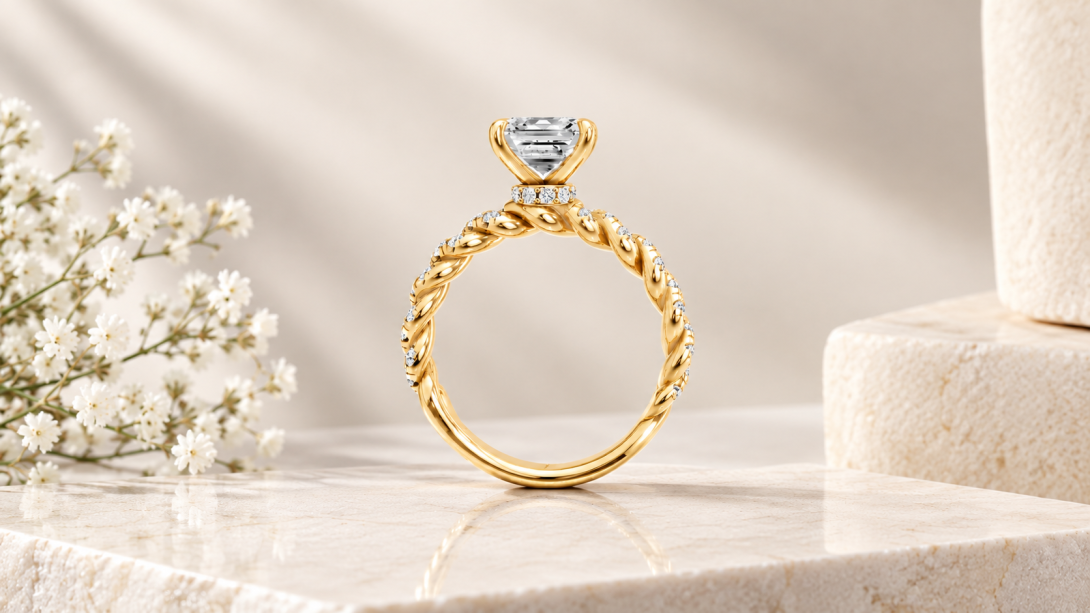
When choosing an engagement ring, the smallest design details can make a big difference. The shape of the band, the way the metal meets the center stone, and the placement of small diamonds all affect how the finished ring looks. One detail worth exploring is curved metal work around the center setting.
A hidden halo already has an interesting structure because its small diamonds sit beneath the main stone rather than forming a visible circle around it from above. When curved metal details are added, they can give the ring a different shape from every viewing angle. These designs offer something special for people who enjoy thoughtful details without wanting too much decoration on the top of their ring.
How Curved Metal Details Change the Ring's Appearance
Curved metal details can change the way an engagement ring looks without changing its main diamond shape. Instead of using completely straight lines, the band or setting follows a gentle curve that connects different parts of the design.
For example, some rings have shoulders that rise gradually toward the center stone. Others feature a curved metal frame beneath the diamond, creating a smooth connection between the band and the hidden halo.
These details can make the ring look more connected rather than having separate design elements placed together.
The curves also become more noticeable when looking at the ring from the side. This is important because an engagement ring is not only viewed from above. Its side profile can reveal details that are easy to miss at first glance.
Different Curved Metal Styles to Consider
Not every curved design looks the same. The direction, thickness, and placement of the metal can change the entire appearance of the ring.
1. Sweeping Shoulder Details
Sweeping shoulders are one of the simplest ways to introduce curved metal work. The band gradually rises toward the center stone instead of meeting it through a straight connection.
This style works well for people who want the ring to have some shape without adding too many extra details. It can also help create a smooth transition between the band and the center setting.
2. Curved Metal Beneath the Center Stone
Some designs use curved metal directly beneath the main diamond. The metal follows the shape of the setting and creates a frame around the hidden halo.
This detail is especially interesting from the side because it gives the center stone a more finished appearance. The small diamonds remain underneath the main stone, while the surrounding metal helps define their placement.
3. Twisted Band Designs
A twisted band brings two or more metal strands together as they move toward the center stone. The curves create a different look from a traditional straight band.
When combined with a hidden halo, this design can add extra detail without covering the main diamond. However, the thickness of each strand matters. Very thin strands may look delicate, while thicker ones create a stronger visual shape.
4. Open Curved Gallery Designs
The gallery is the structure beneath the center stone that supports the setting. An open gallery with curved metal details can make the side profile more interesting.
Some designs use arch-shaped metal supports, while others have small openings beneath the diamond. These details can also make the hidden halo easier to see from certain angles.
Choosing the Right Metal Shape for Your Diamond
The center diamond should always be considered when selecting a curved design. Different diamond shapes have different proportions, so the metal work should complement rather than compete with them.
Round and Oval Diamonds
Round diamonds work well with soft curves because their shape naturally suits rounded metal details. Oval diamonds can also look balanced with gently rising shoulders that follow the length of the stone.
For these shapes, avoid adding too many different curves in one area. A clean band with one or two well-placed details can be enough.
Emerald and Radiant Cuts
Emerald and radiant cuts have more defined corners and straight edges. Curved metal work can create an interesting contrast with these diamond shapes.
A slightly curved gallery or raised shoulder design can soften the overall structure without changing the appearance of the center stone.
Pear and Marquise Diamonds
Pear and marquise diamonds have pointed ends, which makes the placement of the setting particularly important. Curved metal details can help connect the band to the center stone, but the design should leave enough room around the pointed areas.
Protective prongs and a well-supported setting are important considerations for these shapes.
What to Check Before Selecting the Setting
A ring may look beautiful in a photograph, but its construction matters just as much when you plan to wear it regularly.
Here are a few things worth checking before making a decision:
- Metal thickness: Make sure the curved sections are not too thin or weak. The band should feel suitable for everyday wear.
- Center stone support: Check how the diamond is held in place and whether the setting provides proper support.
- Hidden halo placement: The small diamonds should sit evenly beneath the center stone without looking crowded.
- Ring height: A raised design may allow more visibility underneath the diamond, but it should also feel comfortable.
- Cleaning access: Curved galleries and closely placed diamonds can collect dirt. Check whether the setting allows easy cleaning.
- Prong protection: Make sure the center diamond has secure prongs that protect its edges and corners where needed.
These details are worth discussing with a jeweler before placing a custom order.
Selecting the Right Metal for Your Design
The metal color also affects how curved details appear. White gold gives the ring a consistent appearance when paired with white diamonds. Yellow gold creates a noticeable contrast between the band and the stones, while rose gold introduces a warmer color.
The choice between 10K, 14K, and 18K gold also deserves attention. Each option has different gold content, hardness, and price considerations. Platinum is another option for people who prefer a different metal.
Think about your daily jewelry habits before choosing. If you regularly wear gold necklaces, bracelets, or other rings, selecting a similar metal color can help your engagement ring feel like a natural part of your collection.
Is a Curved Hidden Halo Design Right for You?
The right design depends on what you enjoy seeing when you look at your ring. Some people prefer a plain band with a hidden detail underneath the center diamond. Others enjoy twisted shoulders, raised galleries, or more noticeable metal shapes.
A lab grown hidden halo engagement ring can be designed with different diamond shapes, metal colors, and band styles. The important thing is to choose proportions that work together rather than selecting every available detail.
If you are comparing different designs, pay attention to both the top view and the side profile. Ask for photographs or videos from multiple angles so you can understand how the curved metal connects to the center setting.
View Collection of hidden halo setting designs to compare different arrangements, diamond shapes, and setting details before deciding which design feels right for you.
Final Thoughts
Curved metal details can give a hidden halo ring its own character without taking attention away from the center diamond. Whether you prefer sweeping shoulders, a twisted band, or an open gallery, each design offers a different way to shape the ring.
Take your time comparing the side profile, band thickness, metal color, and stone placement. A well-planned ring should not only look good in photographs but also feel comfortable and secure when worn every day.
At Antiquecut, exploring different ring designs can help you understand which details suit your preferences and what you would like in a piece made for your special moment.