

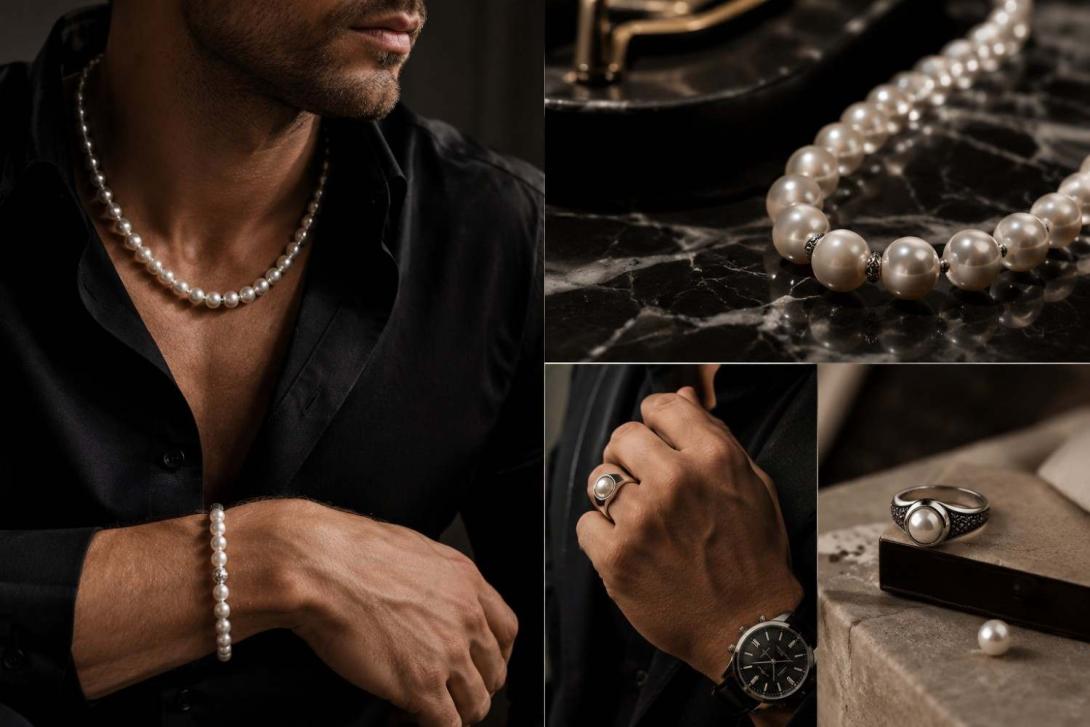
Pearl jewelry for men has moved from conversation piece to daily wear. The question most men ask before buying is not whether pearls look right on a man in 2026 — that conversation is settled — but whether they can actually handle being worn every day. What happens to a pearl bracelet after six months of daily wear? Can you shower with a pearl necklace on? Does sweat damage them?
These are practical questions that deserve practical answers.
First: What Makes a Pearl Different From Other Gemstones
To understand how pearls hold up with daily wear, it helps to understand what they actually are.
Pearls are organic. Every other gemstone in fine jewelry is a mineral — formed through geological processes over millions of years. A diamond, a sapphire, a garnet — these are crystite structures with a hardness rating that makes them nearly impervious to most daily contact. A pearl is different. It is produced by a living mollusc, built from layers of nacre — calcium carbonate crystals bonded together by a protein called conchiolin — around an irritant inside the shell.
This organic origin is what gives pearls their distinctive luster and depth of surface. It is also what makes them more sensitive to certain conditions than mineral gemstones. A diamond is rated 10 on the Mohs hardness scale. A pearl sits between 2.5 and 4.5. That gap matters for daily wear.
Understanding this does not mean pearls are fragile. It means they need slightly more thought than a gemstone ring. Once you know what to avoid, daily wear is entirely realistic.
What Pearls Can Handle
The good news first.
Freshwater pearls — which make up the majority of the men's pearl jewelry range at Aequa & Co., including the Player collection — are among the most durable pearl types available. The nacre on a quality freshwater pearl is thick throughout the entire pearl, unlike Akoya pearls which have a thinner nacre layer over a large bead nucleus. Thick nacre means better resistance to surface wear and a luster that holds over time.
Tahitian pearls, which appear in pieces like the Player Tahi Necklace, are saltwater pearls known for their natural dark color and excellent nacre thickness. They handle daily wear well when the setting is properly made.
Mabe pearls, which appear in some of the Player collection's ring designs, are half-sphere pearls set with the flat back against the ring base. Because the pearl face is protected by the setting on the underside, they are well-suited to ring wear specifically.
What all of these pearl types handle without issue in daily wear:
Regular movement and contact with clothing. Pearls worn as necklaces or bracelets touch fabric constantly. This is not a concern for quality freshwater or Tahitian pearls — the nacre is tough enough for this kind of low-impact contact.
Temperature changes within normal ranges. Going from an air-conditioned office to outdoor summer heat, or from a warm room to cold air, does not damage pearls. Extreme temperature changes — placing a pearl piece directly over a heat source, for example — are a different matter, but normal daily temperature variation is not a concern.
Light and air exposure. Unlike some organic materials, pearls do not require special storage conditions. Normal ambient light and air do not degrade nacre.
What to Actually Avoid With Daily Wear Pearls
This is where most pearl care guides get vague. Here is the specific, practical version.
Avoid wearing pearls while showering. This one surprises most people. The issue is not the water itself — pearls are formed in water. The issue is soap, shampoo, and shower gel. Most personal care products contain surfactants and chemicals that can dull pearl luster over time with repeated exposure. They do not destroy a pearl in one shower, but consistent exposure across months and years strips the surface shine gradually.
If you forget once and shower with a pearl necklace on, nothing dramatic happens. If you do it every day for a year, you will notice the luster has faded. The fix is simple: take the piece off before showering. Put it back on after.
Avoid perfume and cologne directly on pearls. Alcohol-based fragrances are the main concern. Spray your cologne before you put your jewelry on, not after. The alcohol in fragrance can damage nacre with direct, repeated contact. Indirect exposure from wearing cologne on your skin while also wearing a pearl piece is not a significant concern — it is direct application on the pearl surface itself that causes damage.
Avoid chlorinated water. Swimming pools are more damaging to pearls than the ocean. Chlorine is a chemical that attacks nacre directly. If you swim regularly, leave pearl bracelets and necklaces off in the pool. This applies to hot tubs as well — the combination of chlorine and heat is particularly harsh.
Avoid ultrasonic cleaners. These are the machines jewelers use to clean diamond and gemstone pieces through high-frequency vibration. They are effective on hard gemstones. They can damage pearl nacre and loosen settings. Never put a pearl piece in an ultrasonic cleaner.
Avoid abrasive surfaces and materials. The hardness difference between a pearl and a diamond means that contact with hard, rough surfaces — granite countertops, rough stone, unfinished metal — can scratch pearl nacre over time. Normal daily activities do not present this risk, but it is worth being aware of in situations where you might be working with hands in contact with rough materials.
The Setting Matters as Much as the Pearl
For daily wear specifically, the quality of the metal setting around the pearl is as important as the pearl itself.
A pearl set in a plated metal setting — gold plating over brass or another base metal — will show wear at the contact points between the metal and the pearl before the pearl itself shows any deterioration. The plating wears at the prongs, the bail, the clasp. Once the base metal is exposed, it can discolor and in some cases accelerate damage to the pearl's setting.
A pearl set in solid sterling silver or solid gold is a different situation. The metal does not degrade. The prongs maintain their integrity. The setting holds the pearl securely for years without the kind of wear that plated settings experience.
This is why the Player collection at Aequa & Co. is built entirely in solid 925 sterling silver, solid 14K and 18K white gold, and 18K yellow gold vermeil over sterling silver. For daily wear specifically, the solid metal setting is what allows the piece to hold up over years rather than months. The pearl is protected by a setting that is not degrading around it.
How to Clean Pearl Jewelry at Home
Cleaning pearl jewelry is straightforward and requires nothing specialist.
After each wear, wipe the pearl surface gently with a soft, slightly damp cloth — a microfiber cloth works well. This removes any skin oils, light sweat, or surface residue that accumulates through daily contact. Let the piece air dry completely before storing it.
For a deeper clean, use lukewarm water with a very small amount of mild dish soap — not detergent, not jewelry cleaner, just basic dish soap. Dip a soft cloth in the soapy water and wipe the pearl surface gently. Do not submerge the piece. Rinse the cloth with clean water and wipe again to remove any soap residue. Let it air dry flat — do not hang a pearl necklace to dry as the water can weaken silk thread if the necklace is strung on thread rather than wire.
That is the entire cleaning process. No specialist products required.
How to Store Pearl Jewelry
Storage has one main rule: keep pearls away from other jewelry.
Hard gemstones — diamonds, rubies, sapphires, even amethyst — can scratch pearl nacre through contact in a shared jewelry box or drawer. A pearl necklace or bracelet stored loose with other pieces will pick up surface scratches over time from the contact.
The solution is simple. Store pearl pieces separately — in their own pouch, their own box compartment, or wrapped in a soft cloth. If you have a watch or other jewelry that you put down in the same place each day, keep the pearl piece in a separate spot.
One additional note on pearl necklaces strung on thread: thread stretches over time and needs to be restrung periodically — typically every one to two years with daily wear. Pearl necklaces built on wire do not have this requirement. Check how your piece is strung when you buy it and factor in restringing if relevant.
Sweat and Pearl Jewelry
This comes up constantly for men considering pearl jewelry for the gym or active wear.
Sweat is mildly acidic and can dull pearl luster with consistent, unwiped contact over time. For light daily activity — walking, office work, normal movement — the amount of sweat contact is minimal and the wipe-down after wearing handles it.
For the gym, intensive outdoor activity, or any situation where you are sweating heavily, take pearl jewelry off. Not because one gym session will damage your piece, but because repeated heavy sweat exposure without cleaning between wears accumulates. The Player Lasso Bracelet in solid sterling silver at $320 is a significant purchase — it is worth the thirty-second habit of taking it off before a workout.
Realistic Expectations for Daily Wear
Here is what daily wear of pearl jewelry actually looks like over time when cared for correctly.
In the first year, a quality freshwater or Tahitian pearl in a solid metal setting shows no visible change from daily wear. The luster holds. The setting stays tight. The piece looks the same as the day you bought it.
Over two to five years of daily wear with basic care, you may notice very minor surface dulling on areas of most frequent contact. Wiping the piece after each wear and cleaning it monthly largely prevents this. If it does occur, a professional polish from a jeweler can restore the surface.
The setting on a solid metal piece — sterling silver or gold — develops a patina over years of wear. On sterling silver, this is the natural oxidation process that gives aged silver its character. It can be polished off if you prefer the bright finish, or left to develop naturally. Neither affects the pearl.
A pearl piece bought today, worn daily with basic care, will still be a quality piece in ten years. That is the realistic expectation for solid metal settings and quality freshwater or Tahitian pearls.
The Short Version
Yes, men can wear pearls every day. The conditions are straightforward: take them off before showering and swimming, keep perfume off the pearl surface, wipe them down after wearing, store them separately from other jewelry, and buy pieces built in solid metal rather than plated settings. Meet those conditions and a quality pearl piece is as suited to daily wear as any other fine jewelry you own.
The Player collection at Aequa & Co. covers the full range — freshwater pearl necklaces, bracelets, rings, and cufflinks in solid sterling silver and solid gold, built for exactly this kind of wear. Browse the complete men's pearl jewelry collection and find the piece that fits how you actually live.