

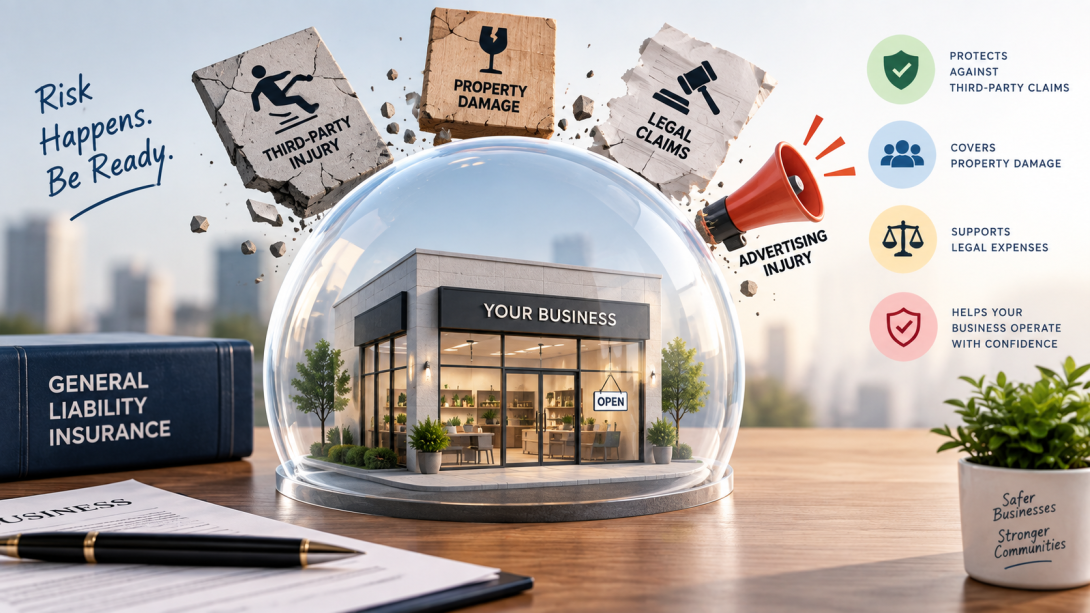
Running a business involves more than managing sales, employees and day-to-day operations. Businesses also interact with customers, suppliers, contractors, visitors and other third parties, creating the possibility of unexpected accidents, property damage or legal disputes. Even when a business follows appropriate safety procedures, incidents can still occur.
This is why general liability insurance can be an important part of a business's risk management strategy. It is designed to provide financial protection against certain third-party claims arising from covered incidents, such as bodily injury, property damage and specified personal or advertising injuries, depending on the policy terms.
For businesses of different sizes and industries, this type of insurance can help manage the financial impact of covered liability claims and related legal expenses. Understanding its importance can help business owners make more informed decisions about their overall insurance requirements.
What Is General Liability Insurance?
General liability insurance is a type of business insurance that provides coverage against certain third-party liability claims arising from the insured's business operations, premises or products, subject to the policy's terms, conditions and exclusions.
A third party may be a customer, visitor, supplier, contractor or another person or organisation that interacts with the business.
For example, imagine a customer visits a retail store and slips on a wet floor, suffering an injury. If the customer holds the business legally liable and the claim falls within the policy's coverage, the insurance may help cover eligible compensation and legal defence costs, subject to the policy limit and other conditions.
The exact coverage differs between policies, so businesses should review the wording carefully before purchasing a policy.
Why Is General Liability Insurance Important For Businesses?
1. It Helps Manage Third-Party Liability Risks
Businesses regularly interact with people outside their organisation. Customers visit shops, clients enter offices, contractors work at business premises and suppliers deliver goods.
These interactions create potential liability exposures. An accident involving a third party could result in a claim against the business.
General liability insurance can help businesses manage eligible financial liabilities arising from covered incidents. This can be particularly important for businesses with physical premises or frequent customer interactions.
2. It Can Help With Legal Defence Costs
A liability claim does not necessarily end with a compensation demand. Depending on the circumstances, a business may need to respond to legal proceedings or defend itself against allegations.
Legal representation and associated defence expenses can place considerable pressure on a business's finances.
Where covered under the policy, general liability insurance may help with eligible defence costs, subject to applicable terms, limits and exclusions. This can allow a business to address a liability dispute without having to bear every covered expense directly.
3. It Provides Protection Against Property Damage Claims
Businesses can unintentionally damage property belonging to customers, suppliers, contractors or other third parties.
For example, an employee may accidentally damage a client's equipment while carrying out work at the client's premises. If the business is legally liable and the incident is covered by the policy, the insurance may help meet eligible costs.
The availability and extent of protection depend on the policy wording.
4. It Can Protect Against Bodily Injury Claims
Accidents can happen even when businesses have safety procedures in place. A customer could fall inside a store, a visitor could suffer an injury at a workplace or a third party could be injured due to certain business activities.
Such incidents can lead to claims for compensation and associated legal expenses.
General liability insurance can provide financial protection against covered bodily injury claims for which the business is legally liable, subject to the policy conditions.
5. It Supports Business Financial Stability
A significant liability claim can place unexpected pressure on a business's cash flow. For a small business, even one major claim could affect its ability to pay operating expenses, suppliers or employees.
Insurance does not eliminate the underlying risk, but transferring certain risks to an insurer can reduce the financial impact of covered events.
This makes liability insurance an important consideration when developing a broader business risk management strategy.
Who Should Consider General Liability Insurance?
The need for liability insurance depends on the nature and scale of a business. However, it can be particularly relevant for businesses that regularly interact with customers, visitors or other third parties.
These may include:
- Retail stores and commercial establishments
- Restaurants, cafes and food businesses
- Construction and contracting companies
- Manufacturers and industrial businesses
- Event organisers
- Property owners and facility operators
- Wholesalers and distributors
- Businesses providing services at customer locations
- Small and medium-sized businesses with physical premises
Professional service providers may also have liability exposures, although they may require other specialised covers for risks associated with professional advice, errors or omissions.
What Does General Liability Insurance Typically Cover?
The precise coverage depends on the insurer and policy, but a general liability policy may provide protection for certain:
- Third-party bodily injury claims
- Third-party property damage claims
- Personal and advertising injury claims, where included
- Legal defence expenses associated with covered claims
- Settlements or compensation for covered liabilities, subject to policy limits
Businesses should not assume that every claim falls within the policy. Exclusions, deductibles, conditions and coverage limits can significantly affect the protection available.
What Is Not Covered By General Liability Insurance?
General liability insurance is not designed to cover every risk faced by a business.
Common exclusions or areas that may require separate insurance can include:
- Employee injuries, which may require employee compensation-related coverage
- Professional errors and omissions
- Certain product-related liabilities
- Damage to the business's own property
- Cyber incidents and data breaches
- Intentional or fraudulent acts
- Certain contractual liabilities
The exclusions differ between policies, so businesses should review the specific policy wording rather than relying on general assumptions.
For example, businesses concerned about online fraud, data breaches or identity-related cyber risks may need specialised cyber insurance. Personal cyber security insurance is generally intended for individual or personal cyber risks rather than replacing business liability coverage.
General Liability Insurance And Other Business Insurance
General liability insurance is usually one component of a broader business insurance programme rather than a standalone solution for every business risk.
A company may need different policies depending on its activities. For example, property insurance can address specified risks to business assets, while professional indemnity insurance can address certain claims arising from professional services.
Similarly, cyber insurance may be relevant for businesses that collect, store or process sensitive digital information.
The appropriate combination depends on the business's operations, industry, assets, contractual obligations and risk profile.
What Should Businesses Consider Before Buying A Policy?
Businesses should evaluate more than the premium when selecting liability coverage.
Assess The Business's Risk Exposure
Consider the number of customers and visitors, business activities, premises, equipment and interaction with third parties.
Review Coverage Limits
The policy limit should be appropriate for the potential scale of liability exposure and any contractual requirements.
Understand Exclusions
Read the exclusions carefully to identify risks that require separate insurance policies.
Check Deductibles
Understand how much the business may have to pay towards a covered claim before the insurer's liability applies.
Review Claim Procedures
Businesses should understand how claims must be reported, what documents may be required and whether specific notification timelines apply.
Consider Contractual Requirements
Clients, landlords, project owners or other business partners may require certain liability insurance as part of a commercial agreement.
How Can Businesses Reduce Liability Risks?
Insurance should complement, rather than replace, good risk management practices.
Businesses can reduce potential liability exposures by:
- Maintaining safe and accessible premises
- Training employees on workplace and customer safety
- Keeping equipment properly maintained
- Documenting safety procedures
- Using clear contracts with customers and suppliers
- Managing contractor and vendor relationships carefully
- Responding promptly to incidents and complaints
- Reviewing insurance coverage regularly
These measures can help businesses identify potential risks before they result in costly incidents.
Conclusion
Unexpected accidents, property damage and third-party claims can create significant financial and legal challenges for businesses. General liability insurance can help manage some of these risks by providing financial protection against covered third-party liabilities and associated legal expenses.
However, the policy should be viewed as one part of a broader risk management strategy. Businesses should assess their specific exposures, understand coverage limits and exclusions and determine whether additional policies are necessary.
The right insurance programme will depend on the business's industry, size, operations and risk profile. By reviewing these factors carefully, businesses can make better-informed decisions and strengthen their financial protection against unexpected liability claims.