

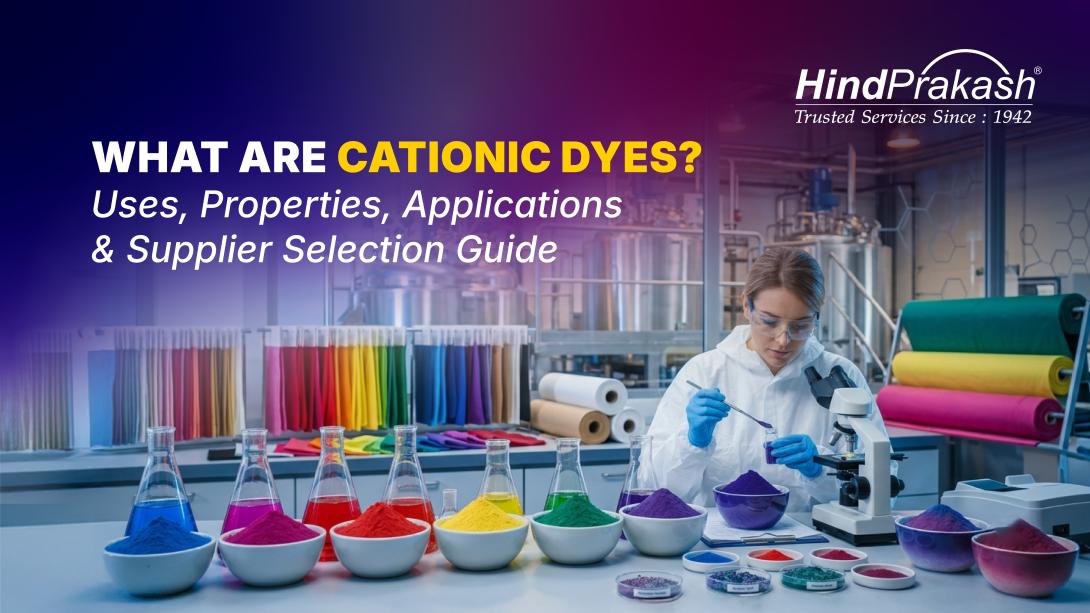
Cationic dyes are positively charged, water-soluble dyes that have a strong affinity for fibres containing suitable negatively charged sites. They are commonly associated with basic dyes and are widely used for colouring acrylic fibres and certain modified synthetic materials. Learn what cationic dyes are, their properties, uses, and textile applications, and how to choose a reliable cationic dyes manufacturer, exporter, and supplier in Ahmedabad, Gujarat
The term "cationic" refers to the positive charge carried by the dye molecule in solution. This ionic characteristic allows the dye to interact strongly with suitable fibre structures, helping achieve high colour intensity and vibrant shades.
Historically, many cationic dyes were referred to as basic dyes because of their chemical classification. Today, the term cationic dyes is widely used when discussing dye systems designed for acrylic fibres and other compatible synthetic materials.
Their ability to produce bright, intense colours makes them an important choice for textile manufacturers seeking high visual impact, colour brilliance, and efficient dye uptake.
What Are Cationic Dyes?
Cationic dyes are positively charged, water-soluble dyes that have a strong affinity for fibres containing suitable negatively charged sites. They are commonly associated with basic dyes and are widely used for colouring acrylic fibres and certain modified synthetic materials.
The term "cationic" refers to the positive charge carried by the dye molecule in solution. This ionic characteristic allows the dye to interact strongly with suitable fibre structures, helping achieve high colour intensity and vibrant shades.
Historically, many cationic dyes were referred to as basic dyes because of their chemical classification. Today, the term cationic dyes is widely used when discussing dye systems designed for acrylic fibres and other compatible synthetic materials.
Their ability to produce bright, intense colours makes them an important choice for textile manufacturers seeking high visual impact, colour brilliance, and efficient dye uptake.
How Do Cationic Dyes Work?
The dyeing performance of cationic dyes is closely related to their positive ionic charge and the chemical characteristics of the fibre.
During dyeing, positively charged dye molecules are attracted to suitable negatively charged sites within the fibre structure. This interaction helps the dye penetrate and become fixed within the fibre under appropriate dyeing conditions.
The final dyeing performance depends on several factors, including:
- Fibre type and chemical composition
- Dye selection
- Dye concentration
- Dyeing temperature
- pH conditions
- Processing time
- Auxiliary chemicals
- Dyeing method
For this reason, manufacturers should select cationic dye products based not only on shade requirements but also on the specific fibre and process conditions involved.
Key Properties of Cationic Dyes
Understanding the properties of cationic dyes helps textile manufacturers select suitable products for their specific applications.
Excellent Colour Brilliance
Cationic dyes are known for producing bright, vivid, and visually attractive shades. This makes them suitable for textile applications where colour intensity and visual appeal are important.
High Affinity for Acrylic Fibres
Cationic dyes have a strong affinity for acrylic fibres, making them an important dye class for acrylic textile processing. Their ionic interaction with suitable fibre sites can support effective dye uptake under controlled processing conditions.
Strong Colour Intensity
Many cationic dye systems can produce deep and intense shades at relatively low concentrations, depending on the dye chemistry and application conditions.
Wide Shade Range
Cationic dye systems are available across a broad range of shades, including bright reds, blues, yellows, violets, greens, and speciality colours.
Efficient Dye Uptake
Under suitable processing conditions, the strong interaction between the dye and compatible fibre can support efficient dye exhaustion and help manufacturers achieve consistent colour development.
Application Flexibility
Depending on the dye chemistry and fibre type, cationic dyes can be used across different textile applications where bright shades and strong colour performance are required.
What Are Cationic Dyes Used For?
The primary uses of cationic dyes are associated with textile manufacturing, particularly applications involving acrylic fibres and compatible synthetic materials.
Common applications include:
- Acrylic fibre dyeing
- Acrylic yarn colouring
- Knitwear manufacturing
- Apparel and fashion textiles
- Home textiles
- Decorative fabrics
- Carpets
- Upholstery materials
- Selected specialty colouring applications
The suitability of a cationic dye depends on the fibre type, shade requirements, processing conditions, and required colour performance.
Cationic Dyes Applications in Textile Manufacturing
Among the various cationic dyes applications, textile processing remains one of the most significant areas.
Acrylic Fibre Dyeing
Acrylic fibres are one of the primary applications for cationic dye systems. Their fibre chemistry allows positively charged dye molecules to interact effectively with suitable sites within the fibre.
This can help textile manufacturers achieve:
- Bright and vibrant shades
- Good colour depth
- Uniform dyeing
- Efficient dye uptake
- Consistent colour development
Acrylic Yarn Dyeing
Cationic dyes are also used in acrylic yarn colouring for applications where bright shades and consistent colour performance are important.
The final result depends on factors such as yarn composition, dye selection, dye concentration, temperature, and process control.
Blended and Modified Synthetic Materials
Certain modified synthetic fibres and compatible fibre blends may also be suitable for cationic dyeing. However, suitability depends on the chemical structure of the fibre and the specific dyeing process.
Manufacturers should therefore evaluate fibre compatibility and conduct application trials before selecting a dye system for new materials.
Fashion and Home Furnishing Textiles
Cationic dyes can be used to develop visually striking shades for selected apparel, knitwear, upholstery, curtains, and decorative textile products.
As demand for vibrant textile products continues to evolve, cationic dye solutions remain relevant for applications requiring strong colour impact and consistent dyeing performance.
What to Consider When Choosing a Cationic Dyes Manufacturer, Exporter and Supplier
Selecting the right cationic dyes manufacturer, exporter, and supplier is important for maintaining consistent production quality and reliable supply.
Manufacturers and textile processors should evaluate the following factors:
Product Quality and Batch Consistency
Dye performance should remain consistent from batch to batch. Variations in colour strength or product quality can lead to shade inconsistencies and additional processing challenges.
Technical Expertise
A knowledgeable dye supplier should understand fibre compatibility, shade development, dyeing conditions, and application requirements.
Technical guidance can help manufacturers select suitable dye products and optimise their processes.
Manufacturing and Quality Infrastructure
A reliable chemical and dyestuff partner should have appropriate manufacturing, quality testing, storage, and supply systems to support consistent product availability.
Hindprakash states that its manufacturing operations include a separate laboratory for quality checking before dispatch and that it has expanded raw-material and finished-goods storage capacity.
Industry Experience
Experience in dyes and colour chemistry can help suppliers better understand the requirements of textile processors and industrial buyers.
Supply Reliability
Consistent supply is essential for textile manufacturers operating continuous or high-volume production. Suppliers should be evaluated on their ability to maintain product availability and meet delivery requirements.
Export and Documentation Capabilities
For buyers sourcing dyes internationally, export experience, documentation, logistics coordination, and compliance support can be important considerations.
Application Support
A supplier that can provide product selection guidance and application-specific support can help manufacturers reduce trial-and-error during product development and production.
Why Choose Hindprakash for Cationic Dye Solutions?
Hindprakash, based in Ahmedabad, Gujarat, brings decades of experience in dyes and colour chemistry to support manufacturers and industrial buyers seeking consistent and reliable colour solutions. With a focus on product quality, technical expertise, and dependable supply, Hindprakash offers dye solutions supported by application knowledge and quality-focused manufacturing practices.
For businesses evaluating a cationic dyes manufacturer, exporter, or supplier in Ahmedabad, Gujarat, Hindprakash provides access to an established chemical business with experience across dyestuffs, dye intermediates, chemicals, and related product categories.
Manufacturers and buyers can consider Hindprakash for:
- Decades of experience in dyes and colour chemistry
- Quality-focused manufacturing and testing practices
- Technical and application-oriented support
- Product sourcing and supply capabilities
- Experience serving domestic and international markets
- A broad portfolio across dyes, dye intermediates, chemicals, and auxiliaries
Hindprakash's company information states that it has been involved in the manufacturing, import, and export of dyestuffs and dye intermediates and serves industries including textiles, acrylic fibres, paints, pharmaceuticals, ceramics, agrochemicals, construction chemicals, and speciality chemicals.
For cationic dye requirements, manufacturers should evaluate the specific product, fibre compatibility, shade requirements, and application conditions with the supplier before making a final selection.
How to Select the Right Cationic Dye for Your Application
Choosing the right cationic dye requires more than selecting a colour from a shade card. Manufacturers should evaluate the complete application and production process.
Key considerations include:
- Identify the fibre type
- Determine whether the application involves acrylic or another fibre compatible with cationic dyeing.
- Define the required shade
- Consider the desired colour depth, brightness, and shade consistency.
- Evaluate dyeing conditions
- Review temperature, pH, dye concentration, processing time, and auxiliary requirements.
- Consider end-use performance
- Evaluate the required colour performance based on the intended textile application.
- Check batch consistency
- Consistent dye strength and shade performance are important for repeat production.
- Work with an experienced supplier
- A technically capable supplier can help assess application requirements and recommend suitable products.
This structured approach can help textile manufacturers reduce shade variation, improve process consistency, and achieve more predictable dyeing results.
Conclusion
Understanding what cationic dyes are, their properties, uses, and applications helps textile manufacturers make more informed decisions when selecting dye solutions for acrylic and other compatible synthetic fibres.
Their positive ionic nature, strong affinity for suitable fibre sites, colour brilliance, and ability to produce vibrant shades make cationic dyes an important option for selected textile applications.
However, achieving consistent results depends on more than dye chemistry alone. Fibre compatibility, dye selection, processing conditions, quality consistency, technical support, and supply reliability all play an important role.
For businesses looking for a cationic dyes manufacturer, exporter, and supplier in Ahmedabad, Gujarat, selecting an experienced and quality-focused partner can help support reliable sourcing and long-term production requirements. Hindprakash combines its experience in dyes and colour chemistry with manufacturing, sourcing, and supply capabilities to serve businesses across domestic and international markets.