

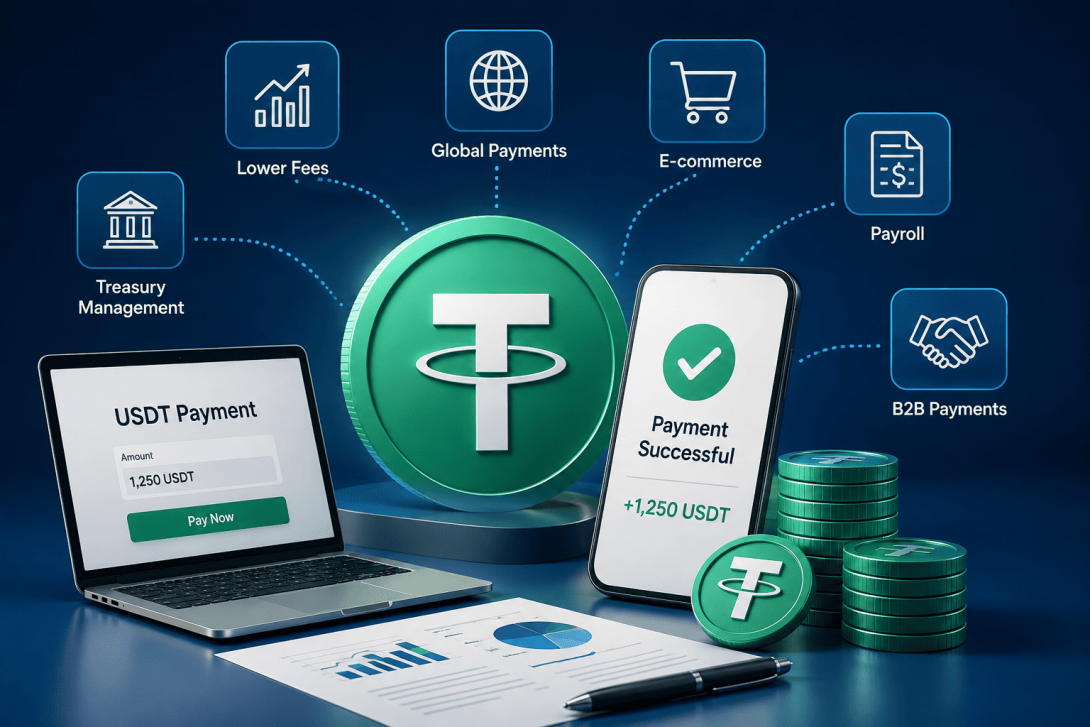
Digital currencies are no longer a niche interest. More companies now accept USDT, a stablecoin pegged to the US dollar, as a genuine payment option alongside cards and bank transfers. For businesses looking at ways to speed up transactions and reach international customers, USDT offers a practical middle ground between traditional cryptocurrency and standard banking. It combines the speed of blockchain technology with the price stability that most finance teams expect from everyday currency. This article looks at why USDT is gaining traction, where it fits into everyday business operations, and what firms should think about before adopting it. A reliable crypto payment gateway can make the whole process far simpler for teams that are new to digital assets, handling the technical work behind the scenes so staff can focus on running the business.
What Is USDT and Why Does It Matter?
USDT, short for Tether, is a stablecoin. Unlike Bitcoin or Ethereum, its value stays close to one US dollar because it is backed by reserves held by the issuer. This stability makes it far more predictable for everyday business use. Customers and suppliers do not need to worry about sudden price swings between the moment a payment is sent and the moment it arrives. For business owners, this predictability is often the deciding factor when choosing whether to accept crypto payments at all, since it removes the guesswork that comes with more volatile coins.
Key Benefits for Businesses
Accepting USDT brings several practical advantages. Transactions settle faster than most bank transfers, particularly across borders, where traditional payments can take several days to clear through correspondent banks. Fees are usually lower too, since there is no need for multiple intermediary banks passing money along the chain, each taking a small cut along the way. USDT also opens the door to customers who prefer paying with digital assets, which can widen a business's reach without much extra effort on the sales side. This is especially useful for firms selling to customers in regions where banking infrastructure is limited or where local currencies are unstable. Many providers offer clear pricing structures, so companies know exactly what they are paying before they commit, which helps with budgeting and avoids unwelcome surprises later on. There is also less exposure to chargeback fraud, since crypto transactions cannot be reversed by the payer once confirmed, which gives businesses more certainty once a sale is complete.
Common Use Cases
Businesses are finding creative ways to use USDT beyond simple sales transactions. Online shops accept it as an alternative checkout option for customers who already hold crypto and would rather not convert it back to standard currency. Freelancers and remote teams often prefer USDT for cross-border salary payments, since it avoids lengthy bank processing times and currency conversion charges that eat into earnings. Software companies and marketplaces are building USDT payments directly into their platforms using an API, which allows automatic, real-time settlement without manual checking. Subscription services also benefit, since recurring USDT payments can be set up to reduce the admin burden on finance teams and cut down on late payments.
Considerations Before Adopting USDT
Before jumping in, businesses should weigh a few practical points. Regulation around cryptocurrency varies by country, so it is sensible to check local rules before accepting USDT as a payment method. Staff may also need basic training to understand wallets, transaction confirmations, and how to handle refunds if a customer overpays or sends funds to the wrong address. Good record keeping matters too, particularly for tax purposes, since crypto transactions still need to be reported accurately like any other form of income.
Getting Started Smoothly
The easiest way to begin accepting USDT is to work with a payment provider that handles the technical side, so businesses do not need to manage wallets or blockchain details themselves. This lowers the barrier to entry considerably for teams without a technical background. Firms planning ahead, including those preparing for token presales, often find it helpful to set up payment infrastructure early, before demand picks up, using dedicated presale tools. Starting small, perhaps by accepting USDT alongside existing payment methods, is a sensible way to test the waters without disrupting current operations or confusing regular customers.
Final Thoughts
USDT payments are not a passing trend. They offer real, measurable benefits for businesses that trade internationally or want to reduce transaction costs. Like any financial decision, it pays to do proper research and choose trusted partners before making changes. With the right setup, and the right pricing plan behind it, accepting USDT can be a straightforward addition to a business's existing payment options, rather than a complicated overhaul.
Related Reads-
How Crypto Payment Invoices Can Simplify International Transactions
Stablecoin Payments for Businesses: What You Need to Know