

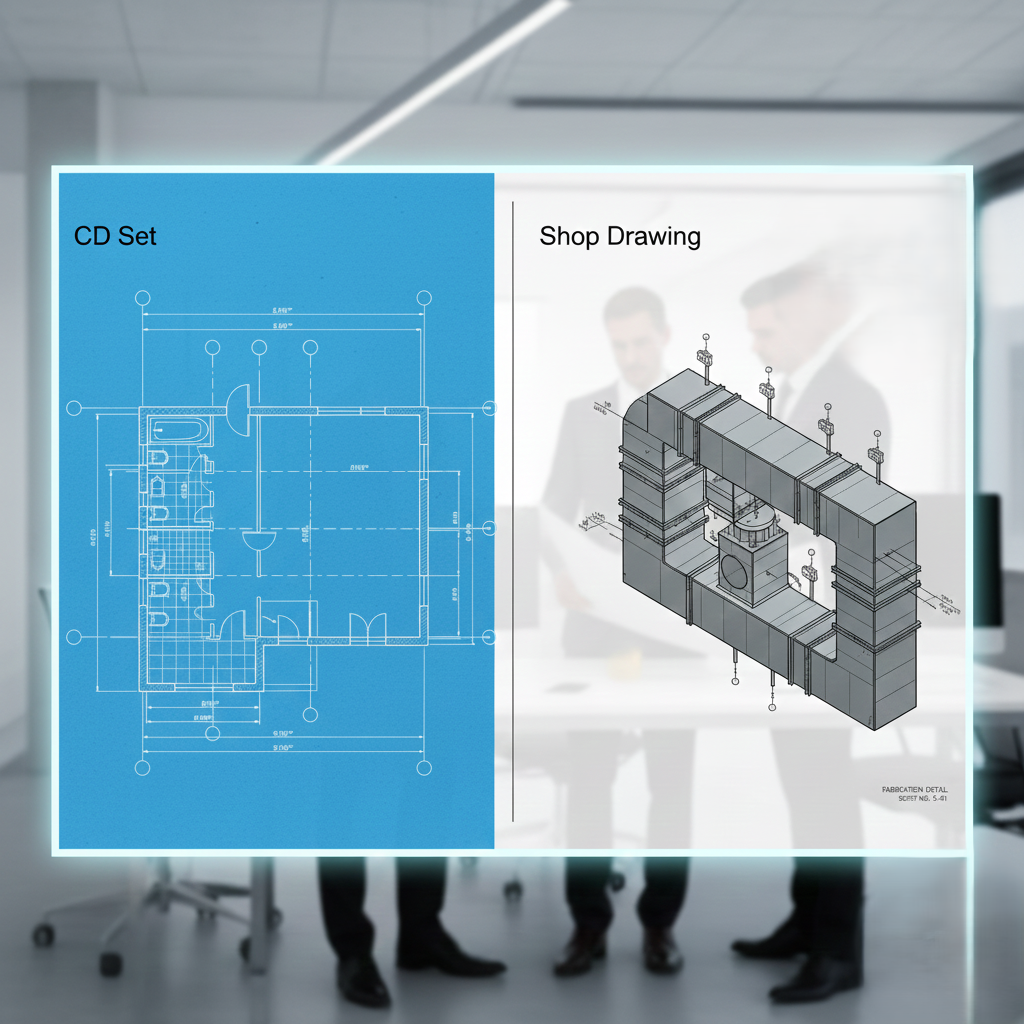
In the construction process, accurate documentation is critical to ensure smooth execution and avoid costly errors. Two essential components of construction documentation are Construction Document (CD) Sets and Shop Drawings. While both play vital roles, they serve distinct purposes at different stages of the project lifecycle. With reliable CAD Drafting Services, project teams can ensure clarity, accuracy, and coordination from design to construction.
Key Differences Between CD Sets and Shop Drawings
- Construction Document (CD) Sets:
CD sets are design-intent drawings prepared by architects and engineers. They define layouts, dimensions, materials, and specifications required for permitting, bidding, and construction. Created using professional CAD Drafting Services, these drawings establish the project’s technical foundation. - Shop Drawings:
Shop drawings are prepared by contractors, fabricators, or suppliers to show how specific components will be manufactured, assembled, and installed. These drawings provide fabrication-level details and are often developed using As-Built Drawings as references for accuracy. - Level of Detail:
CD sets communicate “what” needs to be built, while shop drawings explain “how” it will be built, installed, or fabricated. - Project Coordination:
Together, CD sets and shop drawings ensure seamless coordination between design intent and on-site execution, reducing errors and rework.
Why Accurate Documentation Matters
- Improved Design Clarity: Well-developed CD sets minimize ambiguities during construction.
• Efficient Fabrication & Installation: Detailed shop drawings streamline manufacturing and on-site assembly.
• Reliable As-Built Records: Updated As-Built Drawings reflect final site conditions for future maintenance and facility management.
Streamline Your Construction Workflow
By understanding the roles of CD sets and shop drawings—and leveraging expert CAD Drafting Services—construction teams can improve coordination, reduce project risks, and achieve higher-quality outcomes throughout the building lifecycle.