
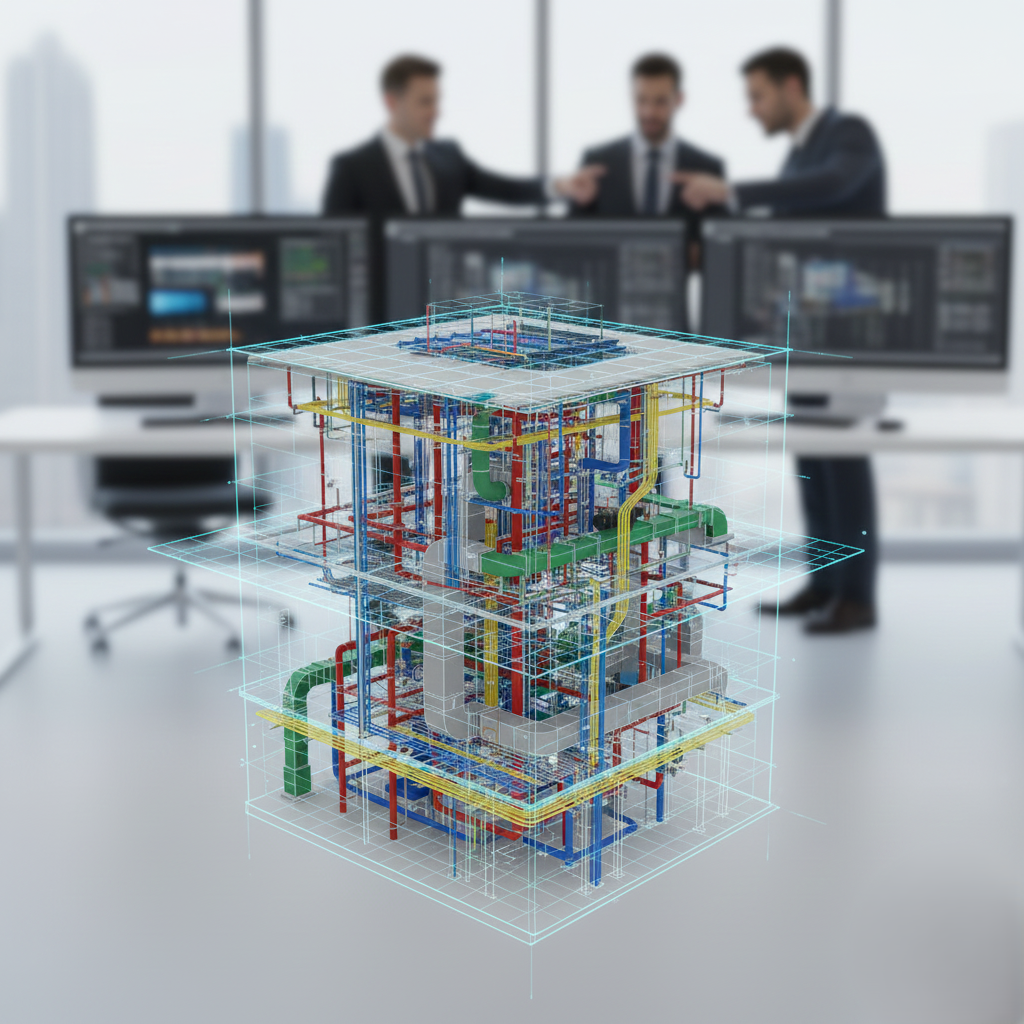
Building Information Modeling (BIM) is reshaping how MEP (Mechanical, Electrical, and Plumbing) systems are designed, coordinated, and delivered. With advanced Revit BIM Services, MEP engineers can move beyond traditional 2D drafting and adopt a data-rich, intelligent workflow that improves accuracy, coordination, and project outcomes. By leveraging MEP BIM Modeling Services, complex building systems are visualized, analyzed, and optimized long before construction begins.
Key Features of BIM for MEP Design
• Intelligent 3D MEP Modeling: Develop coordinated mechanical, electrical, and plumbing systems where every component carries technical and performance data.
• Clash Detection & Coordination: Identify and resolve conflicts between MEP, architectural, and structural elements early using Revit Modeling Services.
• 4D & 5D BIM Integration: Link MEP models with schedules and costs to enhance planning, sequencing, and budget control.
• Centralized & Coordinated Models: Enable seamless collaboration across disciplines using a single, reliable BIM environment powered by Revit BIM Services.
Why Use Professional MEP BIM Modeling Services?
Benefit
• Improved Design Accuracy: Minimize errors and rework with data-driven MEP models.
• Enhanced Collaboration: Real-time coordination improves communication between MEP, architectural, and structural teams.
• Efficient Construction & Installation: Clear layouts and prefabrication-ready models accelerate on-site execution.
Transform Your MEP Workflow
By adopting BIM for MEP design, engineers can simulate system performance, optimize layouts, and ensure constructability from day one. This proactive BIM-driven approach results in reduced project risks, controlled costs, and high-quality building systems throughout the project lifecycle.
#BIM #MEPBIM #RevitBIMServices #RevitModelingServices #ConstructionTechnology #MEPDesign