
A reliable piping system depends on more than just pipes. UPVC pipe fittings play an important role in connecting pipelines, changing flow direction, creating branches, reducing pipe sizes, and connecting piping systems to valves, tanks, pumps, and other equipment. For industrial applications, choosing the right fittings can improve system reliability, reduce maintenance requirements, and support efficient fluid transfer.
UPVC pipe fittings are widely used because of their corrosion resistance, lightweight construction, smooth internal surface, and suitability for many water and chemical-handling applications. However, every industrial piping project can have different requirements. Standard fittings may not always be sufficient. This is where custom solutions from an experienced UPVC Pipe Fittings Manufacturer become valuable.
Petron Thermoplast provides UPVC pipe fittings and customized thermoplastic piping solutions for industrial applications, bulk requirements, and project-specific needs.
What Are UPVC Pipe Fittings?
UPVC stands for Unplasticized Polyvinyl Chloride. UPVC pipe fittings are rigid piping components designed to connect UPVC pipes and create complete piping networks.
These fittings are available in different shapes, sizes, and connection configurations. They can be used for straight connections, directional changes, branches, transitions, and equipment connections.
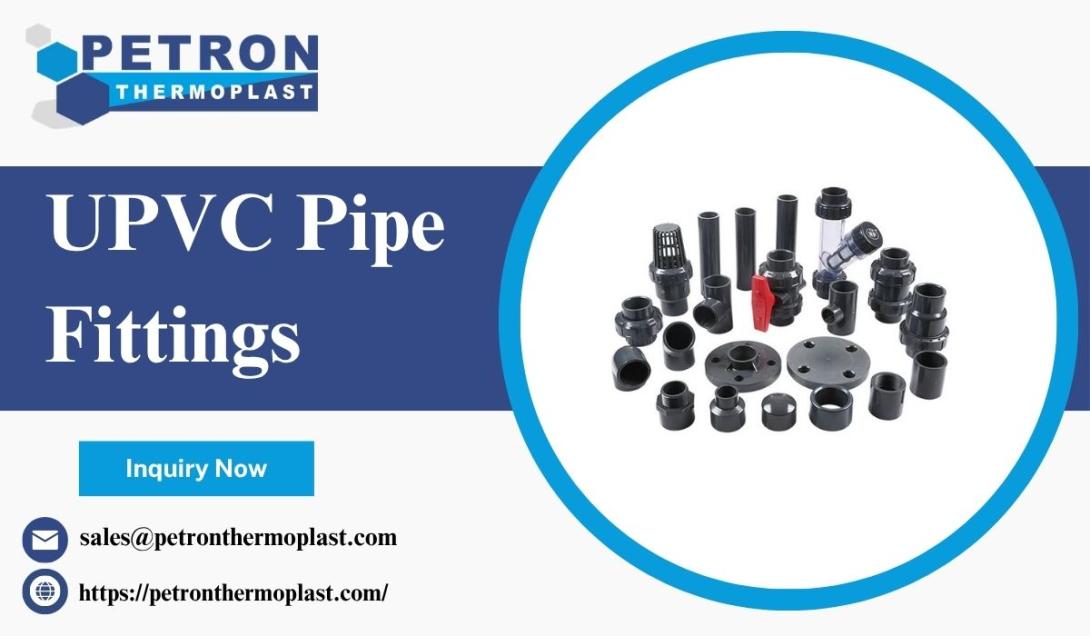
Common UPVC fittings include:
- UPVC Elbow
- UPVC Tee
- UPVC Reducer
- UPVC Coupling
- UPVC Union
- UPVC Flange
- UPVC Bush
- UPVC Adapter
- UPVC Cross
- UPVC End Cap
- UPVC Vanstone Flange
- UPVC Customized Fittings
Why Choose UPVC Pipe Fittings?
UPVC fittings offer several advantages for suitable industrial and fluid-handling applications.
1. Corrosion Resistance
Unlike many conventional metals, UPVC does not rust. It can provide good resistance to many corrosive substances when the material is properly selected for the application.
2. Lightweight Construction
UPVC fittings are significantly lighter than many metal alternatives. This makes transportation, handling, and installation easier.
3. Smooth Internal Surface
The smooth internal surface can help maintain efficient fluid movement and reduce the accumulation of deposits in suitable applications.
4. Low Maintenance
UPVC does not require conventional anti-rust coatings. When correctly specified and installed, the system can offer low maintenance requirements.
5. Easy Installation
Depending on the fitting design and joining method, UPVC piping systems can be relatively simple to install.
6. Long Service Potential
With correct material selection, installation, and operating conditions, UPVC piping components can provide reliable long-term service.
Applications of UPVC Pipe Fittings
UPVC pipe fittings are used in various industries and utility systems.
Chemical Processing
UPVC fittings can be used for compatible chemical fluid transfer and process piping applications.
Water Treatment
They are commonly considered for water treatment, filtration, and utility piping systems where operating conditions are suitable.
Industrial Fluid Transfer
Manufacturing facilities use UPVC piping systems for transferring water and compatible process fluids between different sections of a plant.
Chemical Storage Systems
Storage tanks require inlet, outlet, drain, overflow, and transfer connections. UPVC fittings can be integrated into these systems where chemically compatible.
Wastewater Applications
UPVC piping components can be used in selected wastewater and drainage systems depending on the chemical and temperature conditions.
Industrial Utilities
UPVC fittings can also be used in utility lines and supporting systems where the application requirements match the material's capabilities.
UPVC Fittings for Chemical Applications
UPVC offers resistance to many chemicals, but it should not automatically be considered suitable for every chemical service. Compatibility depends on the chemical type, concentration, temperature, pressure, and exposure conditions.
For chemical applications, buyers should provide the manufacturer with:
- Chemical name
- Concentration
- Operating temperature
- Operating pressure
- Required fitting size
- Connection type
- Service conditions
- Expected operating duration
Benefits of Buying from a Manufacturer
Purchasing directly from an experienced manufacturer can provide advantages for industrial buyers.
Consistent Product Specifications
A manufacturer can maintain consistent dimensions and specifications across larger quantities.
Customization Support
Project-specific fitting requirements can be discussed directly with the manufacturing team.
Bulk Supply
Large industrial projects often require different fitting types and sizes. A manufacturer with a broad product range can support consolidated procurement.
Technical Coordination
Direct communication can make it easier to discuss dimensions, materials, connections, and application requirements.
Competitive Pricing
Direct manufacturer supply can reduce unnecessary procurement layers and may provide more competitive pricing for bulk requirements.
UPVC Pipe Fittings for Bulk Industrial Projects
Large projects require proper planning to avoid delays caused by missing or incompatible components. A bulk supplier should be able to coordinate multiple fitting types and sizes according to project requirements.
Bulk orders may include:
- Different fitting sizes
- Multiple fitting configurations
- Standard and customized components
- Flanges and adapters
- Pipe connection accessories
- Project-specific quantities
Quality Considerations
Quality control is essential when manufacturing industrial UPVC fittings. Important inspection areas can include:
- Dimensions
- Wall thickness
- Connection accuracy
- Fitting geometry
- Surface finish
- Material consistency
- Visual defects
- Proper packaging
Why Choose Petron Thermoplast?
Petron Thermoplast provides UPVC pipe fittings and thermoplastic piping products for industrial applications. The company supports standard and project-specific requirements with options based on fitting type, size, connection, application, and quantity.
Customers can discuss requirements such as:
- UPVC fitting type
- Pipe size
- Required quantity
- Connection configuration
- Chemical or fluid being handled
- Operating temperature
- Operating pressure
- Customization requirements
- Bulk supply requirements
Advantages of Custom UPVC Fittings
Custom fittings can offer several practical benefits when standard products do not match a project's requirements.
- Better compatibility with existing pipelines
- Improved use of available space
- Application-specific connection arrangements
- Easier integration with equipment
- Reduced need for multiple adapters
- Flexible piping layouts
- Support for specialized industrial projects
Conclusion
Selecting the right UPVC Pipe Fittings Manufacturer with Custom Solutions is important for building a reliable industrial piping system. UPVC fittings offer several benefits, including corrosion resistance, lightweight construction, smooth internal surfaces, and relatively easy installation for suitable applications.
From elbows, tees, reducers, and couplings to flanges, adapters, bushes, and customized components, the right fittings help create efficient piping layouts for industrial fluid handling.
For bulk projects and specialized installations, customized UPVC fittings can provide greater flexibility and compatibility with existing systems. However, material compatibility, temperature, pressure, dimensions, and connection requirements should always be evaluated before selection.
Petron Thermoplast offers UPVC pipe fittings for industrial applications, including bulk supply and customized requirements. Looking for UPVC Pipe Fittings for your industrial project? Contact Petron Thermoplast with your required sizes, fitting types, quantities, and application details for a suitable solution.