

Introduction
In modern vehicles, safety and efficiency rely on a combination of advanced technologies working together to protect drivers, passengers, and the vehicles themselves. One of the most important - yet often overlooked - components is the Tire Pressure Monitoring System (TPMS). Whether you drive a brand-new model packed with sophisticated electronics or an older vehicle with a basic setup, understanding TPMS can help you maintain optimal performance, safety, and fuel economy.
Definition
A Tire Pressure Monitoring System (TPMS) is an onboard safety feature that continuously measures the air pressure inside a vehicle’s tires and alerts the driver when pressure drops too low. By using sensors located either inside the tire or on the wheel, TPMS helps maintain proper tire inflation, improving vehicle safety, fuel efficiency and tire lifespan.
What Is a Tire Pressure Monitoring System?
A Tire Pressure Monitoring System is a built-in safety feature designed to continuously monitor the air pressure inside your vehicle’s tires. When the pressure drops too low - usually below 25% of the manufacturer’s recommended PSI - the system triggers a warning light on the dashboard.
The primary purpose of TPMS is to alert drivers before underinflated tires lead to dangerous or expensive consequences, such as:
- Poor handling
- Increased braking distance
- Reduced fuel economy
- Premature tire wear
- Risk of tire blowouts
In many regions, TPMS is now a mandatory feature in new vehicles, largely because tire underinflation is one of the leading causes of tire-related accidents.
Why Tire Pressure Matters
Tire pressure plays a crucial role in overall vehicle performance. The right inflation ensures the tire maintains the ideal shape, footprint, and flexibility needed for safe operation. Even a slight drop in PSI can influence driving dynamics.
Safety Risks of Underinflated Tires
Underinflated tires generate excessive heat due to increased rolling resistance. Over time, this can cause:
- Tread separation
- Sidewall damage
- Blowouts at high speeds
Additionally, underinflated tires reduce steering precision and traction, especially in wet or slippery conditions.
Fuel Economy Impact
Tires low on air require more energy to rotate. According to automotive data, driving with underinflated tires can cause fuel efficiency to drop by 6% or more, costing drivers extra money and contributing to unnecessary emissions.
Premature Wear and Tear
Incorrect tire pressure - whether too low or too high - leads to uneven tread wear. This means tires need replacing much sooner, increasing long-term maintenance costs.
Given these factors, TPMS becomes an essential tool to keep drivers informed and vehicles performing at their best.
Types of TPMS: Direct vs. Indirect
Not all TPMS systems work the same way. There are two main types found in modern vehicles, each with unique advantages and limitations.
1. Direct TPMS
Direct TPMS uses pressure sensors mounted inside each wheel - typically attached to the valve stem - to measure the actual air pressure in real time. These sensors transmit data to the vehicle’s computer.
Advantages of direct TPMS:
- Highly accurate PSI readings
- Can display real-time pressure numbers for each tire
- Can detect rapid pressure loss (e.g., from a puncture)
- Not affected by tire rotation or replacement
Disadvantages:
- Sensors are more expensive
- Batteries cannot be replaced in most models (replacement requires new sensors)
- Needs to be reprogrammed after tire changes or sensor replacement
2. Indirect TPMS
Indirect TPMS does not measure air pressure directly. Instead, it relies on the ABS wheel speed sensors. When a tire is underinflated, its rolling diameter changes, causing it to spin slightly faster. The system detects this variation and triggers a warning.
Advantages of indirect TPMS:
- Lower cost
- No physical pressure sensors in the wheel
- Less maintenance involved
Disadvantages:
- Less accurate than direct systems
- Cannot detect slow leaks effectively
- Needs recalibration after adjusting tire pressure or rotating tires
Both systems aim for the same outcome - keeping drivers aware of unsafe tire pressure - but direct TPMS is generally considered the more reliable option.
Common Reasons the TPMS Light Turns On
When the TPMS symbol illuminates on the dashboard (typically a horseshoe-shaped icon with an exclamation point), it signals an issue requiring attention. Here are the most common triggers:
1. Temperature Changes
Tire pressure fluctuates with temperature. A drop of 10°F can cause a loss of about 1 PSI. This is why TPMS lights often appear during early morning drives in cold weather.
2. Slow Leaks
Small punctures, valve stem issues, or bead leaks can cause gradual air loss that triggers the system.
3. Seasonal Tire Changes
Switching to winter or summer tires without recalibrating indirect TPMS can cause false warnings. For direct TPMS, new tires may require sensor reprogramming.
4. Faulty Sensors
TPMS sensors have a battery life of roughly 5–10 years. When they begin to fail, the system may send inaccurate readings or a malfunction warning.
Understanding these triggers helps drivers react appropriately when the warning light appears.
How to Respond to a TPMS Warning
If your TPMS light comes on, here’s what you should do:
1. Check Tire Pressure with a Gauge
Use a reliable digital or manual pressure gauge to measure each tire’s PSI. Compare the results with the recommended PSI listed on the driver’s door placard, not the number printed on the tire’s sidewall.
2. Inflate Tires as Needed
If any tire is below the recommended pressure, inflate it to the proper level. Most gas stations and tire shops provide air pumps that allow you to set target PSI levels.
3. Inspect for Visible Damage
Look for nails, screws, cuts, or bulges. If you detect damage, have the tire repaired or replaced immediately.
4. Reset or Recalibrate the System
Some vehicles require a TPMS reset after adjusting tire pressure. The process varies by vehicle model and can usually be found in the owner’s manual.
If the warning light persists, it may indicate a faulty sensor or deeper issue requiring professional diagnosis.
Maintaining Your TPMS for Long-Term Reliability
Like any other component in a vehicle, TPMS requires occasional attention.
- Inspect valve stems for corrosion or cracks.
- Replace sensors when changing tires if they’re near the end of their battery life.
- Keep tires properly inflated, checking at least once per month.
- Avoid using sealants unless they are TPMS-safe, as some can damage sensors.
Proper maintenance ensures your TPMS continues to function accurately, giving you peace of mind on the road.
The Future of TPMS Technology
As vehicles become more connected, TPMS is evolving too. Modern systems can send notifications to smartphone apps, monitor temperature alongside pressure, and integrate with vehicle telematics. In electric vehicles, tire monitoring becomes even more critical due to higher weight and torque.
Future advancements may include predictive tire wear warnings, integration with autonomous driving systems, and cloud-based tire analytics.
Growth Rate of Tire Pressure Monitoring Systems Market
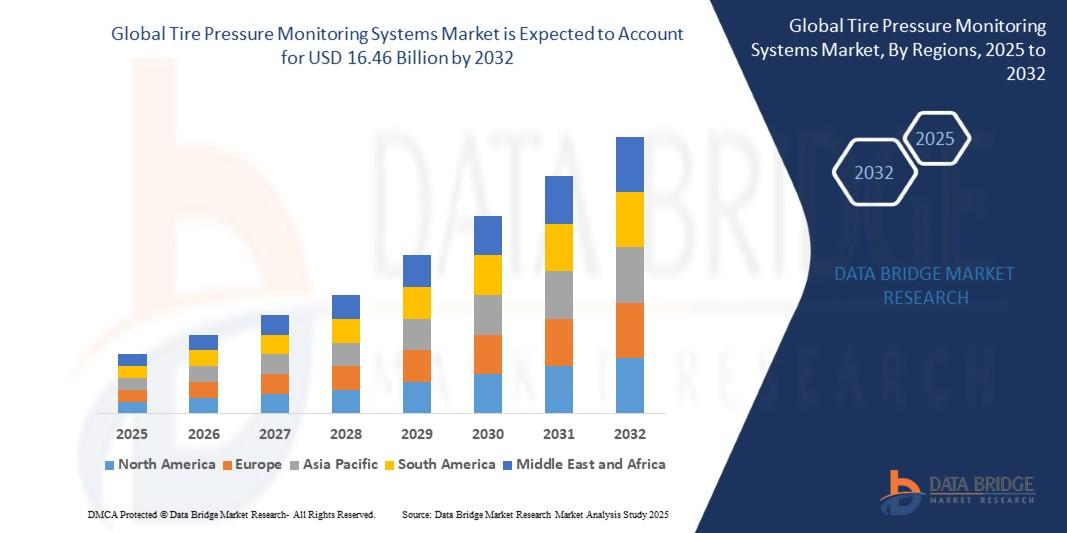
According to Data Bridge Market Research, the Tire Pressure Monitoring Systems Market was estimated to be worth USD 6.89 billion in 2024 and is projected to grow at a compound annual growth rate (CAGR) of 11.5% to reach USD 16.46 billion by 2032.
Learn More: https://www.databridgemarketresearch.com/reports/global-tire-pressure-monitoring-systems-market
Conclusion
A Tire Pressure Monitoring System may seem like a simple dashboard feature, but it plays a vital role in keeping drivers safe, saving fuel, and extending tire life. By understanding how TPMS works and responding promptly to warnings, drivers can avoid costly repairs, improve vehicle performance, and enjoy a safer driving experience.