

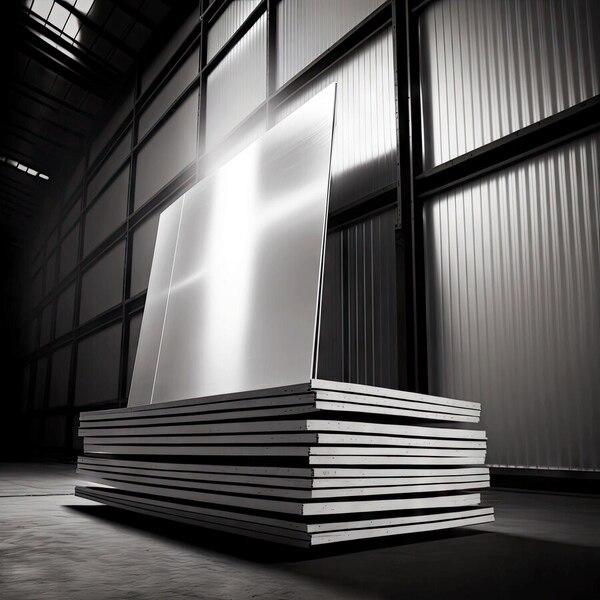
A wrong purchase can cause rusting, low quality, and expensive repair sooner than you could imagine. Some people consider only the cost while making their selection, but other qualities, such as grade, thickness, and anti-corrosion properties, become much more important later on.
A good selection can help you increase durability, decrease maintenance costs, and even save some money in the long run. Knowing the necessary things that should be taken into account before purchasing steel sheets will prove to be useful for all sorts of purposes.
Why the Right Steel Sheet Matters
Steel sheets find application in all possible industries. They can be found in buildings, kitchens, transportation, production lines, medical machinery, and even home interior decoration.
On the other hand, not all sheets provide the same quality of strength, durability, and protection from corrosion. The sheet that may be good for exterior decoration may prove to be useless in the chemical industry.
Things to Consider When Buying Stainless Steel Sheet
Choosing the right steel sheet depends on factors like grade, thickness, finish, and corrosion resistance to ensure long-term performance and value.
1. Check the Steel Sheet Grade Carefully
The grade of steel sheet determines its resistance and strength. Selecting the correct grade will contribute to improving the performance of sheets.
Grade 304
Grade 304 is popular due to its high strength, affordable price, and resistance. This grade can be found in kitchens, furniture, storage tanks, and other applications that require decoration.
Grade 316
Grade 316 provides better resistance against water, chemicals, and salts. It is popular in marine industries, chemical industries, and coastal areas.
2. Thickness Plays a Bigger Role
The choice of sheet thickness will impact strength, durability, weight, and cost. Selecting the right thickness can help increase efficiency and avoid problems with the material later.
Thin Sheets
Lighter thin sheets of stainless steel are easy to manipulate into desired shapes. Thin sheets find application in designing, interior design, and fabrication.
Thick Sheets
Heavy sheets of steel are durable and have good strength. These sheets are commonly employed in industrial building constructions and machinery.
Surface Finish Changes the Look and the Function
The finishing of stainless steel sheets plays an important role in not only aesthetics but also its effectiveness. The finish could affect the cleaning, protection and ease of fingerprint removal.
Popular Finishes Explained
- Brushed Finish: Frequently chosen for commercial or architectural purposes. It conceals marks very well and is popularly used in lift doors, kitchen fixtures, and wall panels.
- Mill Finish: Smooth and shiny. Used for industrial purposes or other types of fabrication.
- Mirror Finish: Shiny and decorative. Appearing luxurious, however, it gets fingerprints and marks easily.
- Hairline Finish: Finer markings compared to the brushed finish. Mostly used in architectural and interior projects.
Choose the finish according to the surroundings and the maintenance it will need.
Corrosion Resistance for Singapore's Climate
and humidity in Singapore may affect stainless steel after some time. Proper selection of grades can help avoid any rust formation and ensure better durability.
- Use Grade 316 for applications located near the coast, rooftop locations, and all outdoor applications owing to its better corrosion resistance.
- Grade 304 may be used indoors where there is limited moisture present.
- Do not allow your stainless steel to come into contact with carbon steel tools/ surfaces.
Check the Mill Certification
MTC (Mill Test Certificate) is proof that the metal is of good quality and correct composition.
- The certificate confirms the characteristics of the metal.
- This is particularly significant in terms of construction, industrial use, and food processing.
- Failure of a seller to produce a certificate may mean a bad quality product.
Think About Fabrication and Welding
There is an easy-to-cut, bend and weld stainless steel sheet and selecting the appropriate type can lower possible damage, labour problems and wastage.
- Look whether the sheet requires welding, bending or shaping while manufacturing.
- Type 304 is an excellent choice because of its flexibility and welding properties.
- Harsher types can get cracked when they are shaped improperly.
Size Accuracy Matters More Than You Expect
Inaccurate sizing might result in problems with fitting and possible project delays. Any inaccuracies in measurements can cause difficulties during installation and even impact the functionality of your item.
- Make sure that you know the measurements of your sheets before ordering.
- Do not forget to check the accuracy of flatness tolerances.
- High-quality suppliers conduct proper testing before shipment.
How to Choose the Right Supplier
Selecting the right supplier will also guarantee the quality of the product and service reliability.
Experience Matters
Experienced suppliers can recommend the right stainless steel sheets depending on the application. They have more experience in the industry.
Look for Certification
The best suppliers offer certification and quality documentation that confirms that your material is according to industry standards.
Evaluate Stock Inventory
Strong stock inventory will make urgent orders faster and will prevent potential project delays.
Evaluate Customer Support
Proper customer support will minimise difficulties in ordering or resolving technical problems.
Conclusion
Purchasing an appropriate steel sheet goes beyond just looking at its price. Factors such as quality grade, sheet thickness, surface finishing, anti-corrosive properties, and supplier integrity should also be taken into account.
The right type of stainless steel sheet will serve you for many years to come in terms of functionality and aesthetic value. The opposite is also true in that the wrong selection will make you incur maintenance and replacement expenses faster than anticipated.
Investigate your requirements before purchasing because doing so will increase durability and efficiency in the long run.
FAQs
What's the difference between stainless steel sheet 304 and 316 grades?
While 304 is good enough for all general purposes, 316 is a molybdenum-based alloy and hence more resistant to corrosion from salt and water. Due to high humidity in Singapore, 316 grade will be preferable for outdoor usage.
Which stainless steel sheet thickness should I order?
It varies depending on the application. For decorative purposes and general cladding, a thickness of 0.7mm to 1.2mm will suffice. Countertops will be 1.2mm to 2mm. A thickness of 2mm or more is required for any structural application.
Why does my stainless steel sheet show rust spots?
Stainless steel is likely to become contaminated through contact with carbon steel products. It causes what we call contamination rusting. Sometimes it happens that an inappropriate grade is selected for the environment. It should always be avoided.
Do Singapore stainless steel suppliers provide mill test certificates?
Most reliable suppliers do provide mill test certificates. A mill test certificate (MTC) is a certificate that guarantees the mechanical properties of the steel.