

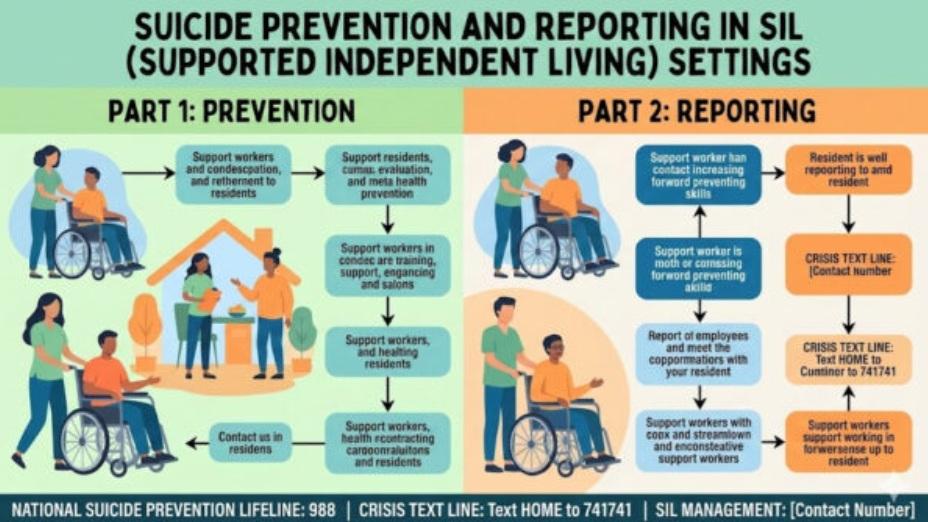
Disability support workers assist and offer emotional support to people with diverse needs. In the process of supporting their clients, they may notice various changes that raise concerns about mental health. Appropriate training equips these workers to recognize some of these concerns and assist their clients to a considerable extent. Suicide risk training prepares support workers to identify indicators that a client may be at risk of suicide and to take appropriate action to address the situation.
What is Suicide Risk Training?
Suicide risk training for disability support workers is designed to help them recognize suicide risks and respond in an appropriate, supportive manner to clients who may be at risk of suicide. The training equips support workers to identify some of the indicators and risk factors for suicidal clients and to assess the level of risk that a client may pose to themself.
The training is designed to complement mental health professional support, not replace such professionals. It is important for disability support workers because it helps them become aware of changes that may be noticed in a client.
Disability support workers complete suicide risk training to learn how to:
· Recognize changes in behavior and emotional patterns
· Identify potential warning signs of suicide risk
· Communicate in an empathetic and respectful manner
· Understand and respond to the needs of the individual in a given situation
· Understand when and how to request further assistance
Many of the skills developed during the training help create an environment where individuals feel supported and empowered.
How eMaster HUB Supports Disability Professionals
eMaster HUB’s professional training helps workers build the knowledge and skills required to work confidently in their field. The training provides the practical skills needed for workers to function effectively in a support environment.
Completing the relevant courses helps disability support workers feel more prepared to handle the various situations they may face in their work and support individuals to improve their outcomes. Training also helps organizations enhance the standards of their care and services by preparing their staff to manage better and respond to complex situations.
Building Confidence Through Education and Awareness
Working with someone who is emotionally distressed can be challenging, but with the right training, employees can learn to communicate effectively while reinforcing professional boundaries.
Supporting continuous learning helps employees increase their knowledge and become better equipped to assist clients in a caring and compassionate manner.
Creating Safer Support Communities
eMaster HUB’s makes mental health training more widely available. This aligns with the “no person left behind” approach, as disability support workers are part of a client’s support community. eMaster HUB is helping professionals acquire the skills they need to better support clients in an empowered and safe manner.
Training disability support workers in suicide risk management enables them to improve their skills and provide appropriate care to clients who may be feeling emotionally unsafe, while helping those clients feel supported and valued. Learn more! Visit https://emasterhub.com.au/product/suicide-prevention-and-reporting-in-sil-settings/