

As organizations across the globe accelerate their sustainability goals and strive to optimize operational efficiency, Energy Management Software (EMS) has emerged as a mission-critical technology. The growing need to monitor, control, and reduce energy consumption—combined with rising regulatory pressures and the global shift toward clean energy—is reshaping the EMS market at a rapid pace. Today, EMS platforms are no longer optional add-ons but essential strategic assets that empower enterprises to cut costs, achieve transparency, ensure regulatory compliance, and build long-term resilience.
Against this backdrop, EMS market research plays a pivotal role in helping both technology vendors and end-users understand the evolving market landscape, emerging innovations, and long-term opportunities. From tracking adoption trends to evaluating competitive strengths, EMS market research provides a comprehensive view of where the market stands today—and where it is headed.
Understanding the EMS Market Landscape
Energy Management Software integrates real-time data, automation, analytics, and advanced reporting to help organizations optimize energy use across facilities, assets, and processes. As energy becomes a growing strategic concern—driven by rising costs, decarbonization mandates, and the widespread digital transformation of infrastructure—EMS adoption is increasing across industries such as manufacturing, commercial real estate, utilities, government, data centers, and retail.
Market research evaluates both short-term and long-term growth opportunities, uncovering insights such as:
- The rising demand for cloud-based EMS platforms
- Increased integration of IoT sensors for granular, real-time energy monitoring
- The transition from reactive to predictive energy management
- AI- and ML-driven solutions for automated optimization
- Growing focus on carbon footprint tracking and ESG reporting
This detailed research also assesses market maturity, barriers to adoption, and sector-specific opportunities—enabling organizations to plan effectively and stay ahead of the curve.
Compare products used in Energy Management Software
Short-Term and Long-Term Market Growth Opportunities
Short-term growth is driven by organizations aiming to cut operational expenses while responding to energy price volatility and carbon reduction initiatives. Modern EMS platforms enable businesses to achieve immediate ROI through automation, energy audits, real-time monitoring, and actionable insights.
Long-term growth, on the other hand, is associated with the global push toward sustainability and digital transformation. As governments around the world implement stricter carbon emissions regulations, EMS will increasingly serve as the digital backbone of energy optimization strategies. The shift from on-premises infrastructure to AI-driven, cloud-based EMS will also support long-term scalability and innovation.
Emerging Technology Trends Shaping the EMS Market
Technology evolution is at the core of EMS market expansion. Some of the most influential trends include:
1. Artificial Intelligence and Machine Learning
AI and ML algorithms analyze large volumes of energy data to predict consumption patterns, detect anomalies, automate processes, and optimize performance. Predictive energy management is quickly replacing manual tracking.
2. IoT-Driven Real-Time Energy Monitoring
IoT devices help organizations monitor energy usage at granular levels—down to specific equipment or zones. This real-time visibility is essential for accurate forecasting and informed decision-making.
3. Cloud-Native EMS Platforms
Cloud-based solutions offer scalability, easier integration, lower costs, and faster deployment—driving widespread adoption across mid-sized and large enterprises.
4. Integrated Carbon & Sustainability Tracking
EMS platforms today integrate energy reporting with carbon footprint analysis, enabling organizations to meet ESG and compliance requirements.
5. Automation & Smart Controls
Advanced EMS solutions incorporate automated responses such as load shifting, demand response actions, and equipment optimization—boosting efficiency while minimizing human intervention.
Comprehensive Market Forecast & Adoption Rates
Market research provides an in-depth forecast of EMS demand across regions, verticals, and technology segments. Adoption is especially strong in:
- North America, driven by smart infrastructure investments
- Europe, propelled by aggressive sustainability policies
- Asia-Pacific, fueled by industrial growth and rising energy needs
The adoption rate is set to rise consistently as organizations embrace digital transformation and sustainability-linked technologies. EMS is central to the shift toward smart buildings, smart factories, and smart grids.
Strategic Insights for Vendors and End-Users
For technology vendors, EMS market research offers strategic insights into:
- Customer expectations and purchasing behavior
- Competitive differentiation and innovation opportunities
- Market gaps and emerging use cases
- Regional growth strategies
For end-users, it provides clarity on:
- Vendor capabilities and strengths
- Platform performance and scalability
- Integration flexibility
- Total cost of ownership and long-term value
This helps organizations evaluate EMS platforms meticulously and choose solutions aligned with their operational and sustainability goals.
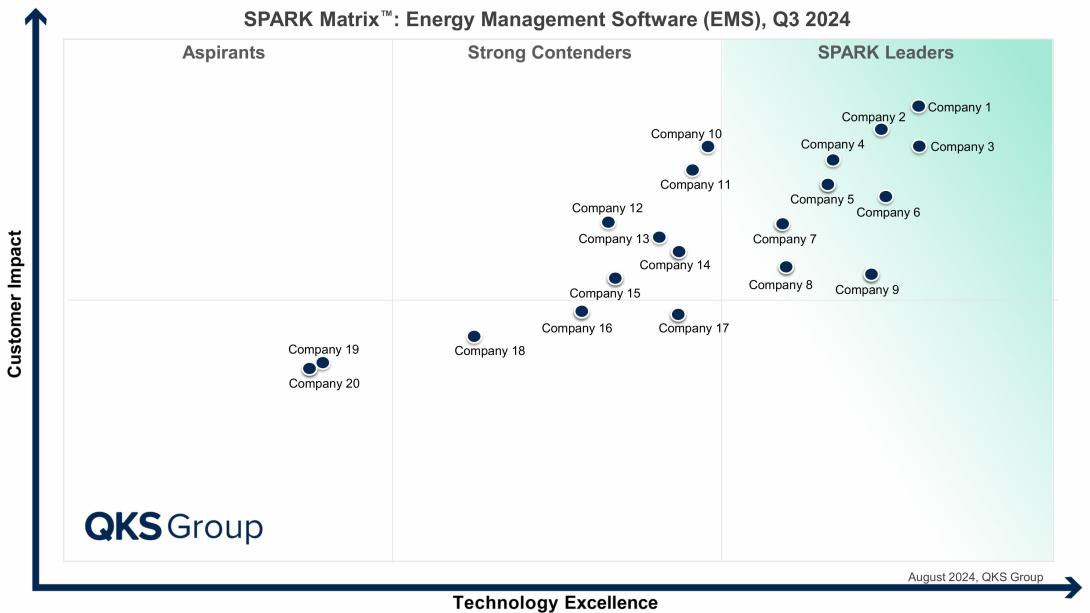
Competitive Landscape: Insights from SPARK Matrix™
The market research includes a detailed vendor evaluation using the proprietary SPARK Matrix™ analysis, which positions vendors based on technology excellence and customer impact. Key EMS providers analyzed include:
Johnson Controls, Schneider Electric, Siemens, ABB, Honeywell, MRI Software, Accruent, Nordomatic, Spacewell, Bueno, Carrier, Rockwell Automation, Iconics, Facilio, GridPoint, Emerson, Eaton, C3 AI, Enel X, and EnergyCAP.
SPARK Matrix™ helps organizations understand:
- Vendor strengths and weaknesses
- Technology advancements
- Market penetration
- Product scalability and differentiation
This competitive insight ensures users can make confident decisions and select platforms that meet their exact requirements.
Conclusion: EMS as a Catalyst for Future-Ready, Sustainable Operations
The global shift toward sustainability, digitalization, and data-driven operations makes Energy Management Software indispensable. As organizations navigate rising energy demands and regulatory expectations, EMS offers a powerful pathway to efficiency, compliance, and long-term resilience.
Backed by advanced analytics, automation, AI, and IoT, EMS platforms are evolving into intelligent ecosystems that optimize energy usage while supporting sustainability goals. Through comprehensive market research and SPARK Matrix™ evaluation, organizations gain the strategic knowledge needed to select the right partners, leverage emerging technologies, and unlock the full potential of energy management.
In the years ahead, EMS will play a vital role in shaping the intelligent, sustainable enterprises of the future.