
Introduction
In today’s fast-paced digital environment, organizations rely heavily on software systems to manage operations, serve customers, and drive growth. Ensuring that software performs reliably, securely, and as intended is critical before it goes live. A professional software testing consultancy provides independent verification and validation to minimize risks, reduce failures, and improve overall software quality. One of the most important stages in this process is Quality Acceptance Testing, commonly known as QAT, which ensures that software meets business, technical, and user expectations prior to final deployment.
What Is a Software Testing Consultancy
A software testing consultancy is a specialized service provider that supports organizations by planning, executing, and managing testing activities across the software development life-cycle. Unlike in-house testing teams, an external consultancy brings objectivity, proven frameworks, and experienced testers who can identify defects that internal teams may overlook.
Key areas covered by a software testing consultancy include functional testing, integration testing, system testing, performance testing, security testing, and user acceptance support. By applying structured methodologies, consultancies help organizations deliver stable, scalable, and compliant software systems.
Understanding Quality Acceptance Testing (QAT)
Quality Acceptance Testing is the final validation phase conducted before software is formally accepted and released into production. QAT focuses on confirming that the solution satisfies defined acceptance criteria, business requirements, and quality standards.
This testing stage ensures that:
- Business workflows function as expected
- Data integrity and system integrations are reliable
- Performance aligns with agreed benchmarks
- The system is ready for real-world usage
QAT acts as a gatekeeper, preventing defective or incomplete software from reaching end users.
Importance of QAT in Modern Software Projects
Quality Acceptance Testing (QAT) plays a crucial role in reducing post-deployment issues and costly rework. Without proper QAT, organizations risk system downtime, user dissatisfaction, regulatory non-compliance, and reputational damage.
By implementing a structured QAT process, businesses gain confidence that the software aligns with operational needs and delivers value from day one. It also supports smoother go-live transitions and faster user adoption.
How a Software Testing Consultancy Supports QAT
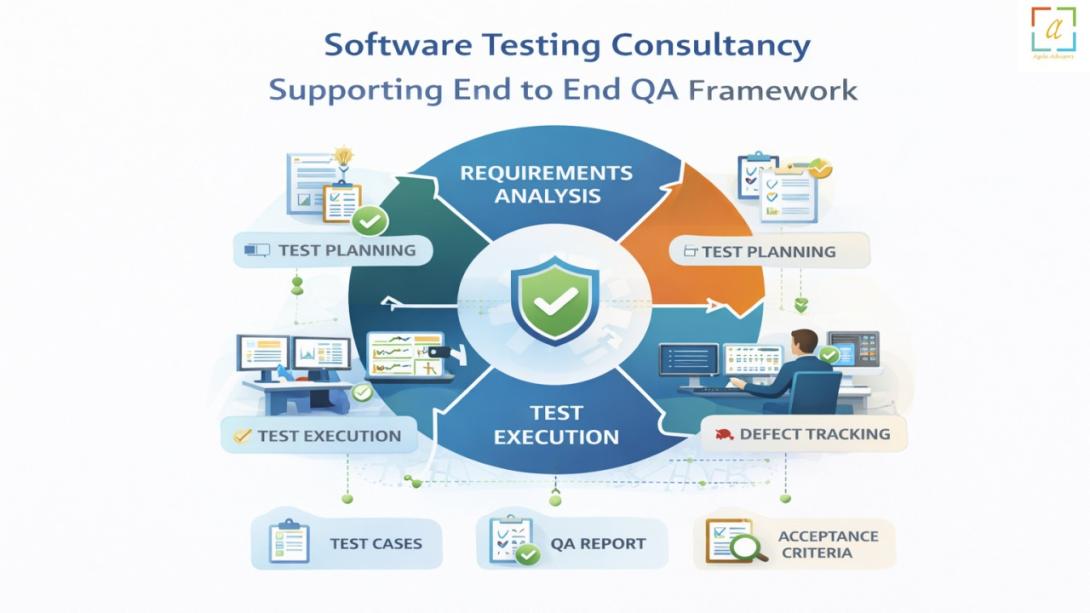
A professional software testing consultancy provides end-to-end support for Quality Acceptance Testing. This includes defining acceptance criteria, designing test scenarios, preparing test data, executing test cases, and documenting results.
Consultants work closely with stakeholders to ensure testing reflects real business usage. They also provide clear defect reports, risk assessments, and go-live recommendations, enabling informed decision-making.
Benefits of Engaging a Software Testing Consultancy
Organizations that engage an experienced software testing consultancy benefit from:
- Improved software quality and stability
- Reduced project risks and delays
- Independent and unbiased testing outcomes
- Faster issue identification and resolution
- Enhanced user satisfaction and trust
These benefits translate into lower long-term costs and stronger digital performance.
Conclusion
As software systems become more complex, the role of independent testing becomes increasingly important. A reliable software testing consultancy, combined with structured Quality Acceptance Testing, ensures that applications are production-ready, aligned with business objectives, and capable of delivering consistent performance. Investing in professional testing services is not just a quality measure but a strategic decision that supports sustainable digital success.