
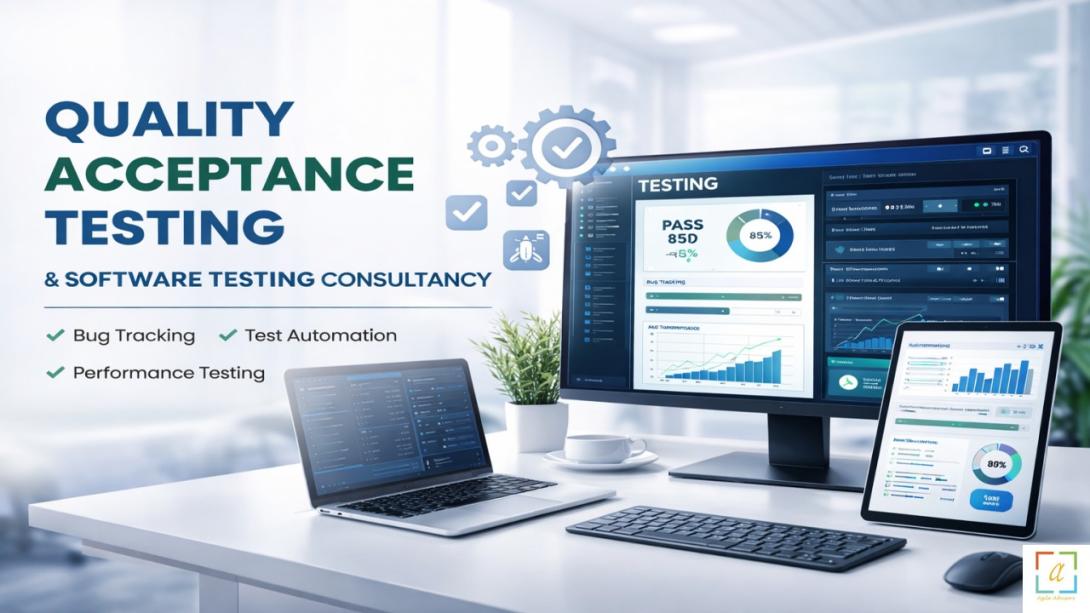
In today’s fast-paced digital environment, delivering high-quality software is essential for business success. Organizations must ensure that applications perform reliably, securely, and efficiently before reaching end users. This is where Quality Acceptance Testing (QAT) and professional software testing consultancy services play a crucial role.
Quality Acceptance Testing is a structured process that validates whether a software product meets defined business requirements and quality standards. Combined with expert software testing consultancy, organizations can identify defects early, reduce risks, and ensure smooth system performance.
What Is Quality Acceptance Testing (QAT)?
Quality Acceptance Testing (QAT) focuses on verifying that software meets user expectations and business objectives. It is typically performed after functional and system testing phases, acting as a final validation step before deployment.
QAT ensures that:
The software aligns with business requirements
All critical functionalities work as expected
User experience meets quality standards
System performance is stable under real conditions
This testing phase helps organizations confidently release software with minimal risk of failure.
Importance of Software Testing Consultancy
A professional software testing consultancy provides specialized expertise, tools, and methodologies to ensure comprehensive testing coverage. Businesses often lack the internal resources or experience required for advanced testing, making consultancy services highly valuable.
Software testing consultants help organizations:
Design effective test strategies
Implement automated and manual testing processes
Ensure compliance with quality standards
Improve testing efficiency and accuracy
Reduce time-to-market while maintaining quality
With expert guidance, companies can significantly enhance software reliability and performance.
Benefits of Quality Acceptance Testing QAT
Implementing QAT provides several advantages for organizations aiming to deliver high-quality digital solutions.
Improved software reliability and stability
Reduced post-release defects and maintenance costs
Enhanced user satisfaction and experience
Better alignment between business requirements and system functionality
Increased confidence in product deployment
By integrating QAT into the development lifecycle, businesses can minimize risks and ensure consistent performance.
Why Choose a Software Testing Consultancy
Partnering with an experienced software testing consultancy enables organizations to leverage industry best practices and advanced testing tools. Consultants bring an objective perspective, identifying issues that internal teams may overlook.
They also help optimize testing processes, reduce costs, and ensure faster delivery without compromising quality. For organizations handling complex applications or large-scale systems, consultancy services are essential for achieving reliable outcomes.
Ensuring Long-Term Software Quality
Quality assurance does not end with deployment. Continuous testing, monitoring, and improvement are necessary to maintain software performance over time. Software testing consultancy services support organizations in establishing long-term quality strategies that adapt to evolving business needs.
By combining Quality Acceptance Testing (QAT) with ongoing testing practices, businesses can ensure consistent performance, scalability, and user satisfaction.
Conclusion
Quality Acceptance Testing (QAT) and software testing consultancy services are essential for delivering reliable and high-performing software solutions. As digital transformation continues to accelerate, organizations must prioritize quality assurance to remain competitive.
With expert consultancy support, businesses can achieve robust testing processes, reduce risks, and deliver software that meets both technical standards and user expectations.