
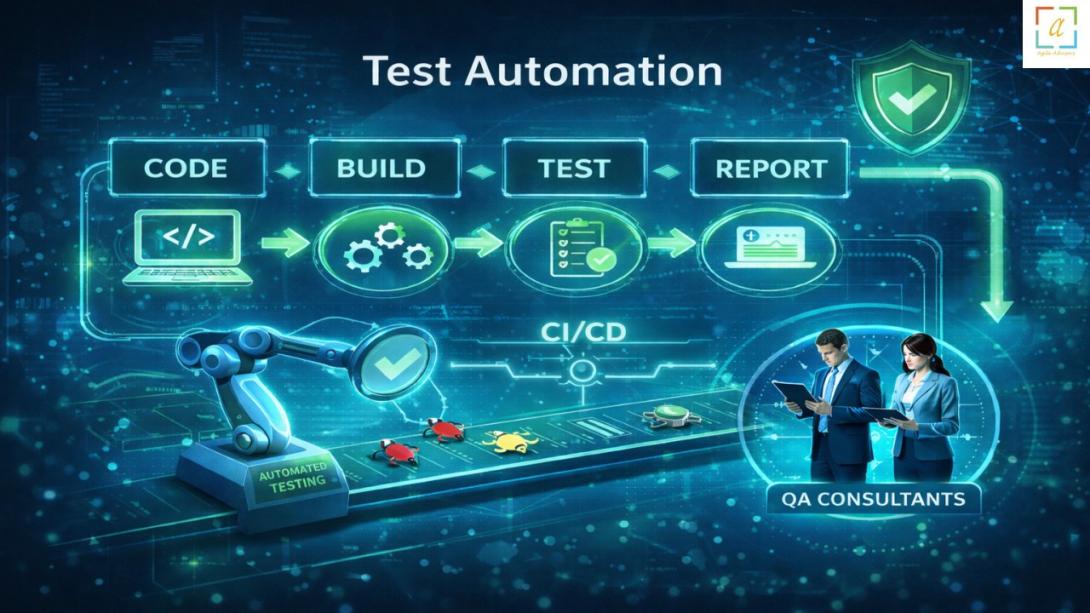
In today’s digital world, businesses rely heavily on software applications to deliver services, manage operations, and engage customers. Ensuring that these applications perform reliably and efficiently is essential. This is where Quality Acceptance Testing (QAT) and software testing consultancy services become critical.
Organizations must deliver software that meets user expectations and business requirements. With structured testing processes and expert consultancy, companies can achieve consistent performance and minimize risks.

What Is Quality Acceptance Testing (QAT)
Quality Acceptance Testing (QAT) is the final phase of the software testing lifecycle. It ensures that the application meets business requirements and is ready for real-world use.
This stage focuses on validating functionality, usability, and performance. It confirms that the system behaves as expected and delivers a seamless user experience.
QAT acts as the final quality checkpoint before deployment, helping businesses avoid costly issues after release.
What Is Software Testing Consultancy?
Software testing consultancy provides expert support throughout the software development lifecycle. Consultants help organizations design testing strategies, implement frameworks, and ensure quality at every stage.
These services include planning, execution, and continuous improvement of testing processes.
Key Services in Software Testing Consultancy
A professional software testing consultancy offers a wide range of services:
- Test strategy and planning
- Functional and regression testing
- Automation testing implementation
- Performance and load testing
- Security testing
- Quality Acceptance Testing support
Each service plays a vital role in ensuring software reliability and performance.
Benefits of Quality Acceptance Testing
Implementing QAT provides significant advantages:
- Ensures alignment with business requirements
- Reduces risk of system failures
- Improves user satisfaction
- Enhances application reliability
- Identifies defects before deployment
QAT helps organizations deliver software with confidence.
Why Businesses Need Software Testing Consultancy
Modern applications are complex and require structured testing to ensure quality. Without proper testing, organizations risk performance issues and user dissatisfaction.
Software testing consultancy helps businesses:
- Improve software quality
- Reduce development costs
- Accelerate time-to-market
- Ensure compliance with standards
- Enhance performance and scalability
Consultants bring expertise that improves efficiency and results.
Integration of QAT and Consultancy Services
Quality Acceptance Testing and software testing consultancy work together to create a complete quality assurance framework. Consultancy focuses on strategy and execution, while QAT ensures final validation.
This integration ensures that software meets both technical and business expectations.
Future of Software Testing
With advancements in automation and artificial intelligence, software testing is evolving rapidly. Continuous testing and automated processes are becoming essential for modern development environments.
Organizations that invest in testing consultancy services can stay competitive and deliver high-performance applications.
Conclusion
Quality Acceptance Testing (QAT) and software testing consultancy are essential for delivering reliable and high-quality software. By adopting structured testing processes and expert guidance, businesses can reduce risks, improve performance, and ensure successful deployments.
Investing in professional testing services supports long-term growth and customer satisfaction.