
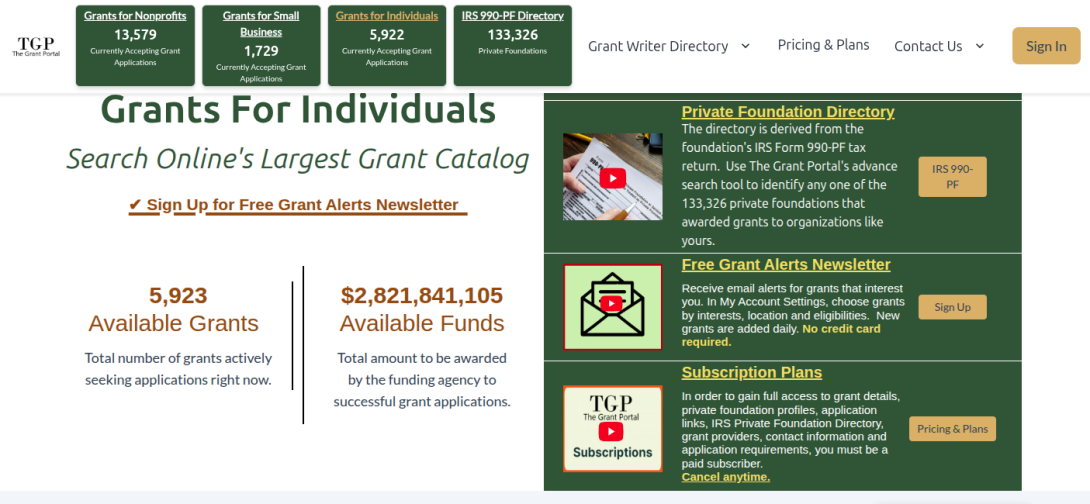
Finding private foundation grants can feel challenging, especially for nonprofits and organizations that are trying to balance program delivery with fundraising. The strongest grant strategies usually begin with research rather than a rushed application. Every foundation has its own charitable mission, funding priorities, geographic interests, eligibility requirements and application process. Understanding those differences helps organizations spend their time on opportunities that genuinely fit their work. Platforms such as The Grant Portal can support the research process by helping grant seekers explore funding opportunities and organize their search more efficiently.
What Are Private Foundation Grants?
Private foundations are charitable organizations typically funded by an individual, family, corporation or other private source. They distribute funds to support causes that align with their philanthropic goals. Private foundation grants may support education, healthcare, community development, environmental programs, arts, research, social services and many other initiatives. However, not every foundation accepts unsolicited applications and some only fund organizations in specific locations or program areas. This is why careful research matters. A grant opportunity may appear attractive because of its funding amount, but a strong mission match is often far more important.
Why the Right Funder Match Matters
One of the most common mistakes in grant seeking is applying to every available opportunity without considering whether the organization truly fits the funder's priorities. Foundations generally want to support projects that connect clearly with their mission and intended impact. A nonprofit focused on youth education, for example, should prioritize funders with a demonstrated interest in education, young people or community development. A well-matched proposal is easier to explain because the connection between the organization's work and the foundation's purpose is already clear. Researching grant history can also reveal useful patterns in the types of organizations and projects a funder has supported.
Start With a Clear Organizational Story
Before searching for funding, organizations should be able to explain their purpose in simple and specific language. A strong organizational story includes the problem being addressed, the people being served, the program or solution being offered and the results the organization hopes to achieve. Grant seekers often focus heavily on the funding request but forget that foundations first need to understand the organization behind the proposal. Clear communication builds confidence. When staff members, board members and grant writers all describe the organization's mission consistently, applications become more focused and professional.
Research Before Writing the Application
Good grant research can save a significant amount of time. Before preparing a proposal, review the foundation's mission, eligibility rules, geographic preferences, funding interests, deadlines and application instructions. Some foundations provide detailed guidelines, while others share limited information and expect applicants to submit an initial inquiry. The Bank of America philanthropic foundation search, for example, highlights how funders may be researched by program area and geography, with individual foundation profiles providing details about missions and procedures. Taking time to understand these requirements before writing can prevent an organization from investing hours in an application that was never eligible.
Build a More Focused Grant Search
A practical funding strategy is usually more effective than a long, unorganized list of opportunities. Create categories based on your organization's major needs, such as program funding, general operating support, equipment, research or community expansion. Then identify foundations that regularly support similar purposes. Keep notes about deadlines, contact requirements, geographic restrictions and previous applications. This creates a grant pipeline rather than a last-minute search. A well-organized approach also helps organizations plan ahead, because some foundations only accept applications during specific periods or may require a preliminary inquiry before inviting a full proposal.
Write a Proposal That Sounds Human
Strong grant writing does not need complicated language. In fact, overly formal or technical writing can make a proposal difficult to understand. The best applications explain the need clearly, describe the proposed solution realistically and provide evidence that the organization can deliver the promised work. Use specific examples when appropriate and avoid making claims that cannot be supported. Foundations want to understand both the human impact and the practical plan. A proposal should answer simple questions: What problem exists? Who is affected? What will the organization do? How will the funding be used? What results are expected?
Show Measurable and Meaningful Impact
Funders increasingly want applicants to demonstrate how progress will be measured. This does not mean every project needs complex data systems. The measurements should simply make sense for the program. A youth mentoring organization might track participation, retention and educational progress. A community food program could measure households served, meals distributed, and changes in access to nutritious food. Meaningful outcomes help foundations understand whether their investment is making a difference. When discussing impact, it is important to be realistic. Clear and achievable goals often create more trust than ambitious promises with no practical plan for delivery.
Prepare Documents Before Deadlines Arrive
Grant applications often require supporting information such as organizational budgets, financial statements, leadership details, project plans, tax documentation, or other records. Preparing these materials in advance reduces stress and makes the application process more efficient. Keep frequently requested documents updated and organized in one secure location. It is also helpful to maintain a library of approved organizational descriptions, staff biographies, program summaries and impact statistics. These materials should not simply be copied into every application, but having accurate information available allows grant writers to customize proposals more effectively for each foundation's priorities.
Build Relationships With Funders Carefully
Relationship building can be valuable, but it should never replace eligibility research or a strong proposal. If a foundation welcomes questions or introductory conversations, use that opportunity respectfully. Ask focused questions about fit, priorities, or the application process rather than requesting a guarantee of funding. Some funders clearly publish their contact procedures, while others prefer applicants to follow formal submission instructions. For example, foundation grant systems often require applicants to complete online eligibility or application processes and follow the individual foundation's guidelines. Respecting these procedures demonstrates professionalism and helps build a positive impression.
Learn From Rejections and Improve Your Strategy
A declined application does not always mean the project was weak. Foundations have limited budgets and may receive more qualified proposals than they can fund. Sometimes the timing, geographic focus or current priorities simply do not align. Review any feedback provided and consider whether the funder was truly the right match. Track applications and outcomes so patterns become visible over time. If several proposals receive similar feedback, that information can guide future improvements. Grant seeking is often a long-term process, and organizations that continuously refine their research, messaging and planning can build stronger funding strategies.
Frequently Asked Questions About Private Foundation Grants
1. What are private foundation grants?
Private foundation grants are charitable funds provided by privately established foundations to support eligible organizations, programs, projects or initiatives that align with the foundation's mission and funding priorities.
2. Who can apply for private foundation grants?
Eligibility varies by foundation. Many opportunities are designed for nonprofit organizations, charitable institutions, educational organizations and community programs. Always review the specific funder's requirements before applying.
3. How do I find the right foundation for my organization?
Start by researching foundations that support your mission, geographic area, and type of program. Review previous grants, eligibility requirements, deadlines and application instructions before investing time in a proposal.
4. Do all private foundations accept applications?
No. Some foundations accept open applications, while others use invitation-only processes or require an initial inquiry. Each foundation establishes its own grantmaking procedures.
5. What should a strong grant proposal include?
A strong proposal should explain the problem, describe the proposed solution, identify the people served, present a realistic budget and explain how success will be measured.
6. How can organizations improve their grant success rate?
Organizations can improve their approach by focusing on strong funder matches, researching guidelines carefully, preparing accurate documentation, writing clearly and tracking lessons from previous applications.
Building a Smarter Path Toward Private Foundation Funding
The search for private foundation grants becomes more manageable when organizations focus on preparation, research and genuine alignment instead of simply submitting a large number of applications. A clear mission, realistic goals, organized documentation, and thoughtful funder research can create a stronger foundation for future funding efforts. Grant seekers can also explore resources through The Grant Portal as part of a broader research strategy. The goal is not just to find funding, but to identify opportunities where an organization's work and a funder's purpose can come together to create meaningful, measurable impact.