
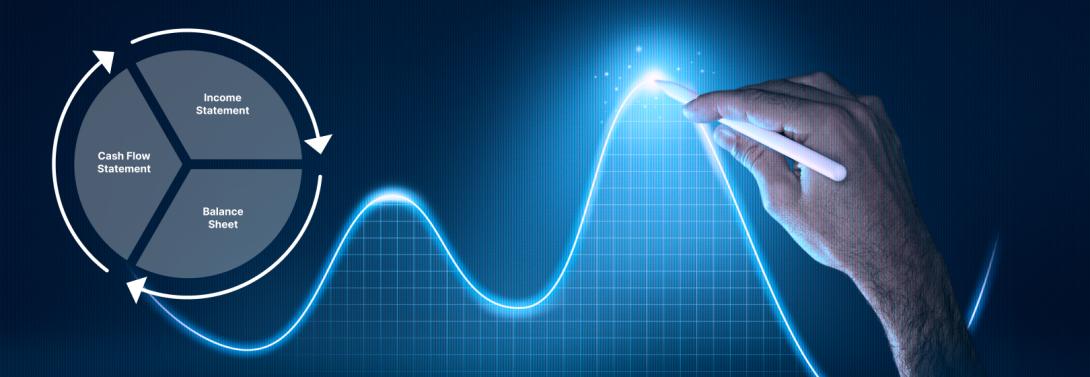
Financial forecasting is the heartbeat of informed business planning. Whether you're a startup preparing for funding rounds or an established company optimizing for growth, having a robust financial forecast is essential. At the core of this process lies a powerful tool-the three-statement model. This dynamic framework integrates a company’s income statement, balance sheet, and cash flow statement into one cohesive model, offering a 360-degree view of financial performance.
What Is the Three-Statement Model?
The three-statement model is a fully integrated financial model that links the three core financial statements:
- Income Statement - Shows profitability over a period (revenues, expenses, net income)
- Balance Sheet - Reveals the financial position at a point in time (assets, liabilities, equity)
- Cash Flow Statement - Tracks the movement of cash in operating, investing, and financing activities
Each statement feeds into the other, making it easier to see the cause-and-effect relationships between decisions and outcomes.
Why Is It Powerful for Financial Forecasting?
The strength of the three-statement model lies in its ability to show the ripple effect of any change in a business. If revenue grows, how does that impact margins, capital expenditures, working capital needs, and ultimately, the cash position? This interconnected view empowers analysts and decision-makers to:
- Run dynamic forecasts
- Stress test financial strategies
- Plan scenarios and contingencies
- Build investor-ready models
Key Components to Consider
- Revenue Drivers: The top line must be broken down into drivers like price, volume, seasonality, or customer segments.
- Cost Structure: Fixed vs. variable costs must be modeled to understand profitability.
- Working Capital: Changes in accounts receivable, inventory, and payables affect cash flow.
- CapEx & Depreciation: Investments in assets and their depreciation schedule must align with the balance sheet and cash flow.
- Debt & Equity Financing: Financing decisions influence interest expense, cash flow, and shareholder equity.
Building the Model
Creating a three-statement model involves:
- Starting with revenue assumptions
- Estimating costs and expenses
- Calculating EBITDA and net income
- Forecasting changes in working capital
- Linking net income to retained earnings on the balance sheet
- Modeling CapEx and debt schedules
- Integrating cash flow from operations, investing, and financing
Software like Excel or tools such as Model Reef streamline the building and analysis process, helping financial analysts avoid errors and gain real-time insights.
Practical Example
Let’s say a SaaS business expects 20% YoY growth. The three-statement model can show:
- How rising subscription revenue affects gross margin
- Whether hiring more engineers stretches payroll expenses
- The impact of capitalizing software development costs
- When additional funding will be needed due to a cash shortfall
Benefits of Using a Three-Statement Model
- Accuracy - Keeps financial projections realistic and tied to underlying assumptions
- Consistency - Ensures numbers flow correctly across all statements
- Clarity - Helps communicate financial strategy to stakeholders
- Speed - Accelerates decision-making with real-time outputs
Conclusion
The three-statement model is not just a spreadsheet’s a strategic weapon. It gives finance teams and business leaders the power to make proactive decisions, anticipate outcomes, and chart a financially sustainable path forward. In today’s data-driven world, mastering this model is a must for anyone serious about financial forecasting.