

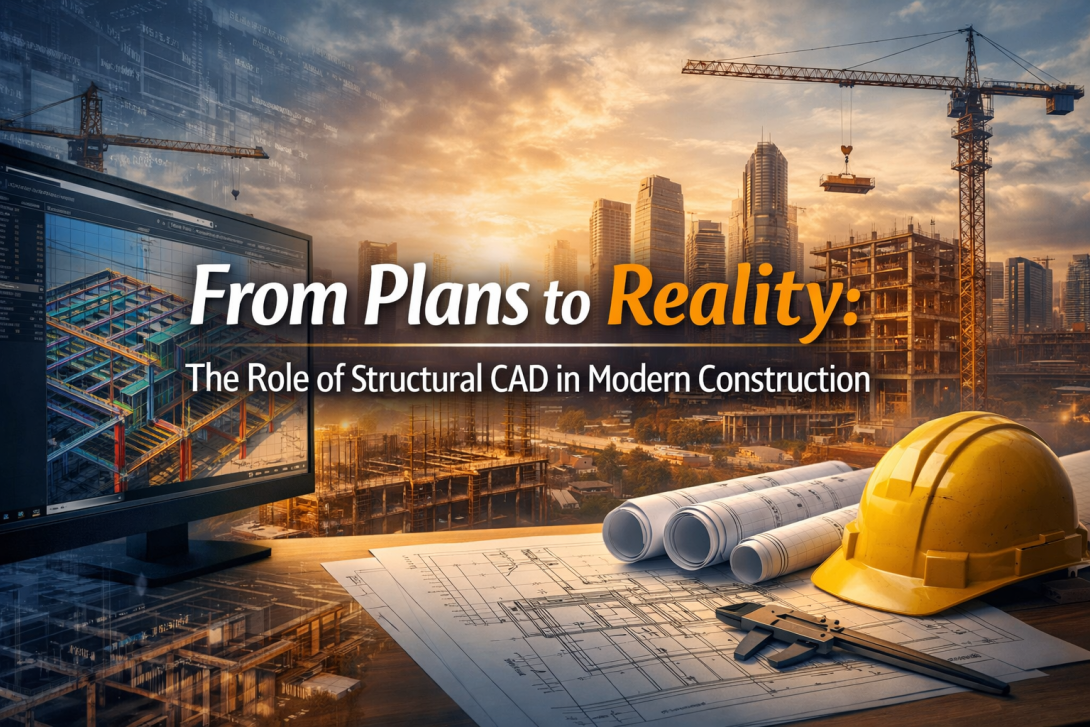
Modern construction projects demand clarity, coordination, and precision from the very beginning. A small error on paper can easily turn into a costly issue on site. That is why structural CAD has become an essential part of today’s construction workflow. It helps transform early design ideas into clear, buildable drawings that teams can trust.
Structural CAD sits at the center of planning, design, and execution. Whether it is a residential building or a large commercial project, accurate drafting ensures that every structural element is planned properly before construction begins. To support this level of accuracy, many project teams rely on engineering drafting services to reduce errors, maintain consistency, and ensure drawings are ready for real-world construction.
Understanding the Role of Structural CAD
Structural CAD drafting focuses on creating detailed digital drawings that define how a building stands and performs. These drawings clearly represent load-bearing elements and structural systems, making it easier for construction teams to follow the design intent.
A typical structural CAD drawing set may include:
- Foundation and footing layouts
- Beam and column plans
- Slab and reinforcement details
- Section views and connection details
Each drawing works together to communicate how the structure should be built safely and efficiently.
Why Structural CAD Is Essential in Modern Construction
As construction projects grow more complex, relying on manual drafting or incomplete documentation is no longer practical. Structural CAD provides the level of detail needed to manage today’s expectations around safety, accuracy, and performance.
Some key reasons why structural CAD is critical include:
- Reducing design errors before construction starts
- Improving coordination between architects, engineers, and contractors
- Supporting accurate material planning and estimation
- Helping teams meet strict timelines and budgets
These benefits make structural CAD a core part of modern construction planning.
From Early Concepts to Construction-Ready Drawings
Every building starts with an idea, but that idea must be translated into clear instructions for construction teams. Structural CAD plays a major role in this transition.
Initial layouts are created based on architectural plans and engineering calculations. As the design develops, CAD drawings are refined to include precise dimensions, notes, and specifications. Any changes made during this phase are easier to manage digitally, without affecting the overall consistency of the drawing set.
This structured approach ensures that what reaches the site is accurate, complete, and ready for execution.
Improving Accuracy and Reducing On-Site Issues
Construction errors are often the result of unclear or inconsistent drawings. Structural CAD minimizes this risk by maintaining precision across all plans.
With CAD drafting, engineers can:
- Maintain consistent dimensions across multiple drawings
- Check alignment and spacing before construction
- Identify conflicts between structural components early
When issues are resolved during the drafting stage, construction teams face fewer surprises on site.
Supporting Better Coordination Across Teams
Construction projects involve multiple stakeholders, and smooth coordination is essential. Structural CAD drawings act as a common reference point for everyone involved.
Clear drawings help ensure that:
- Architects and engineers stay aligned on design intent
- Contractors understand structural requirements clearly
- Revisions are communicated quickly and accurately
When everyone works from the same updated drawings, collaboration becomes more efficient and mistakes are reduced.
Saving Time Through Efficient Drafting
Time is one of the most valuable resources in construction. Structural CAD helps save time during both the design and construction phases.
Drafting tasks become faster through the use of standardized details and reusable templates. On-site, well-prepared drawings reduce the number of clarification requests, allowing work to continue without unnecessary delays.
This efficiency helps projects stay on schedule without compromising quality.
Managing Costs with Smarter Planning
Unexpected costs often arise from rework, material waste, or last-minute design changes. Structural CAD helps prevent these issues through better planning and documentation.
Accurate drawings allow teams to:
- Estimate materials more precisely
- Reduce over-ordering and waste
- Avoid costly changes during construction
By resolving design concerns early, projects benefit from better cost control throughout the construction process.
This connection between planning and execution is discussed further in an article that focuses on structural CAD drafting for stronger building foundations, showing how accurate drawings help maintain design intent, improve coordination, and support safer construction from early planning through project completion.
Supporting Modern Construction Methods
Structural CAD also plays a key role in supporting modern construction techniques such as prefabrication and modular construction.
Detailed CAD drawings enable:
- Accurate off-site fabrication
- Faster on-site assembly
- Improved overall build quality
As construction methods continue to evolve, structural CAD remains flexible and adaptable.
Reliable Documentation for the Entire Building Lifecycle
Structural CAD drawings are not only useful during construction. They also serve as long-term documentation for inspections, maintenance, renovations, and future expansions.
Having well-organized drawings available makes it easier to manage the building long after construction is complete. This long-term value makes structural CAD an investment that continues to pay off.
Structural CAD brings structure, clarity, and confidence to modern construction projects. By transforming complex engineering concepts into clear, build-ready drawings, it ensures that ideas move smoothly from plans to reality—strong, accurate, and built to last.