
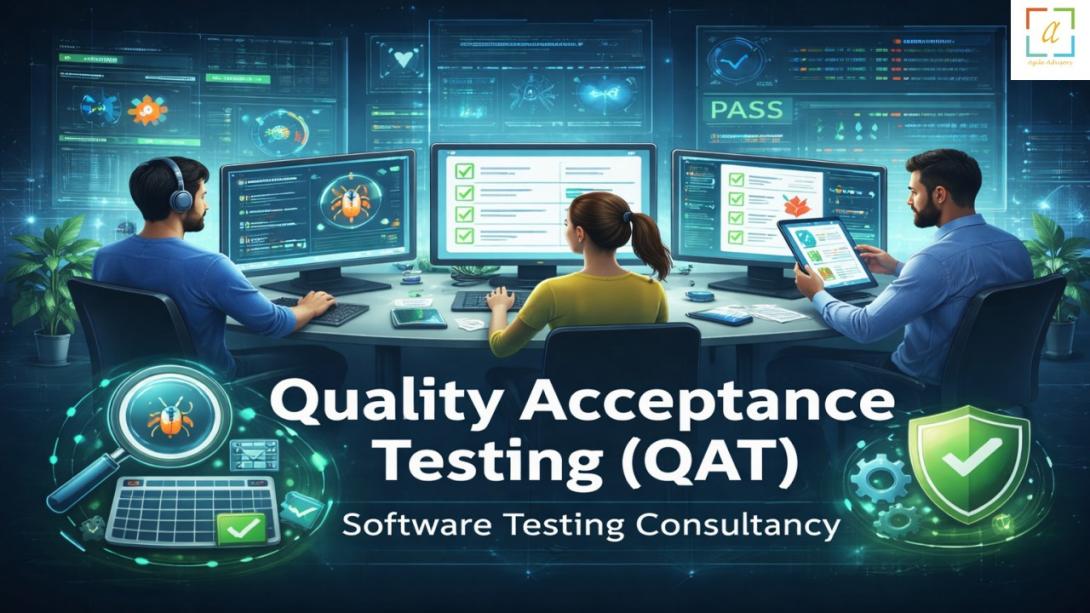
In 2026, the digital landscape moves at a velocity that leaves no room for "patch-later" mentalities. As microservices architectures and agentic AI integrations become the standard for enterprise systems, the risk of a single point of failure has never been higher. To achieve absolute market readiness, organizations are moving beyond basic quality assurance and embracing Quality Acceptance Testing (QAT).
In the current enterprise environment, "quality" is no longer a subjective goal, it is a measurable, engineered outcome. As organizations transition to fully distributed systems and real-time data processing, the traditional testing phase at the end of a sprint is insufficient. Enter Quality Acceptance Testing (QAT): the rigorous, data-driven final gate that ensures a system doesn't just work but thrives under real-world operational stress.
What Is QAT in 2026?
Unlike standard UAT (User Acceptance Testing), which focuses primarily on the front-end experience, QAT is a multi-dimensional validation process. It integrates automated performance benchmarking, security hardening, and contract testing for interconnected APIs. When managed by a professional software testing consultancy, QAT acts as the definitive go/no-go signal for deployment.
The Role of a Specialized Software Testing Consultancy
Building an internal team capable of handling the specialized tools required for 2026-level QAT is often cost-prohibitive. A consultancy provides the high-level expertise needed to:
- Architect Automated QAT Gates: Designing CI/CD pipelines where QAT is a non-negotiable automated checkpoint.
- Execute Chaos Engineering: Intentionally stressing systems to ensure the QAT protocols can handle unpredictable outages.
- Verify Compliance and Security: Ensuring that the final product meets the latest 2026 data privacy mandates and cybersecurity standards before it touches the public cloud.
The QAT Value Proposition: Risk Mitigation at Scale
The cost of a post-release failure in a modern microservices environment is exponential. By investing in a robust QAT framework, businesses secure three decisive advantages:
- Accelerated Time-to-Market: By identifying integration bottlenecks early, QAT prevents the dreaded last-minute rollbacks.
- Enhanced Brand Integrity: Delivering a flawless initial release builds the kind of user trust that is impossible to recover after a public glitch.
- Operational Efficiency: Streamlined QAT protocols reduce the technical debt that usually accumulates from rushed deployments.
Conclusion: Making Quality a Competitive Advantage
In 2026, the winners are not necessarily those who code the fastest, but those who release with the highest degree of certainty. By leveraging Quality Acceptance Testing (QAT) and the strategic insight of a software testing consultancy, your organization turns quality from a checkbox into a powerful competitive edge.