
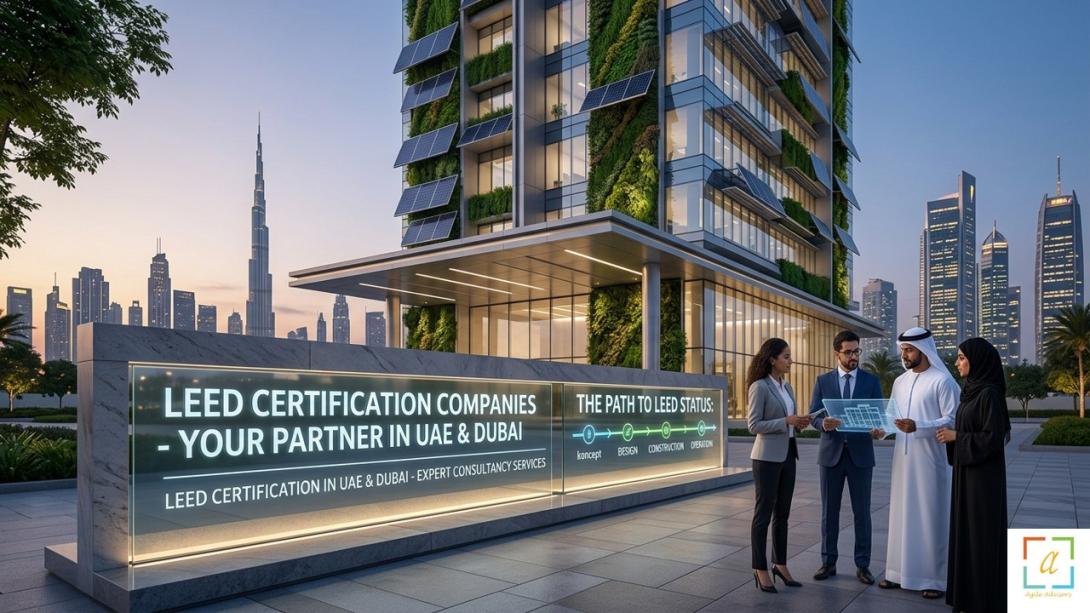
The United Arab Emirates has long been a global pioneer in architectural innovation, but in 2026, the focus has shifted from soaring heights to profound sustainability. With the implementation of the UAE Net Zero 2050 Strategic Initiative, the real estate sector is facing unprecedented pressure to decarbonize. Central to this transformation is the pursuit of Leadership in Energy and Environmental Design (LEED) status. Navigating this path requires a deep partnership with specialized LEED Certification Companies that understand the unique intersection of desert climates and green engineering.
In the current landscape of 2026, sustainability is no longer an optional add-on for developers in the Middle East. It is a fundamental requirement for financial viability. As Dubai continues its evolution under the 2040 Urban Master Plan, the demand for LEED Certification in Dubai has reached an all-time high. High-tier multinational tenants now explicitly require LEED Gold or Platinum ratings before signing long-term leases, viewing green certification as a proxy for operational excellence and corporate responsibility.
The Regional Context of LEED Certification in the UAE
While the UAE has its local green building codes, such as Al Sa’fat in Dubai and Estidama in Abu Dhabi, LEED remains the most recognized global benchmark. Obtaining LEED Certification in UAE allows local developers to compete on a global stage, attracting international investment funds that are strictly governed by ESG mandates.
The challenge, however, lies in the environment. Achieving high scores in water efficiency and energy performance in a region with extreme heat requires more than just standard solutions. It requires an integrated design process in which architecture, mechanical systems, and material selection work in perfect harmony to reduce cooling loads and water consumption.
The Role of a LEED Certification Consultant
The path to certification is a rigorous, data-heavy process that spans from the initial concept to post-occupancy. This complexity is why the role of a LEED Certification Consultant has become indispensable. These specialists act as the strategic bridge between the design team and the Green Business Certification Inc. (GBCI).
A dedicated consultant provides value by:
- Feasibility and Gap Analysis: Determining the most cost-effective credits to pursue based on the project’s specific constraints and goals.
- Energy Modeling and Commissioning: Using advanced simulations to predict building performance and ensuring that systems are installed and calibrated to meet those high standards.
- Documentation Management: Handling the massive volume of technical data required to prove compliance, ensuring a smooth and successful submittal process.
Choosing Among LEED Certification Companies
In 2026, the best LEED Certification Companies are those that offer more than just a certificate. They provide a roadmap for long-term asset value. By focusing on indoor environmental quality, they help create spaces that improve occupant health and productivity, which in turn leads to higher retention rates and better yields for property owners.
Conclusion: A Legacy of Sustainability
The skyscrapers of the UAE are no longer just symbols of wealth; they are becoming symbols of wisdom. By prioritizing LEED Certification in Dubai and across the Emirates, the nation is proving that rapid urban growth and environmental stewardship can coexist. For developers, the choice is clear: embrace the green mandate today, or risk obsolescence in the high-performance market of tomorrow.