

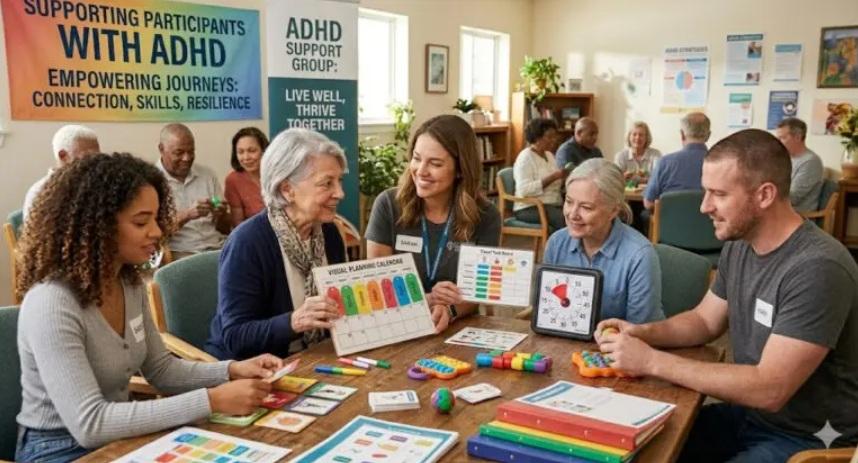
Working with individuals with ADHD takes understanding, patience, and knowledge. ADHD can impact a person’s ability to focus and sustain attention, stay organized, regulate emotions, exercise impulse control, and engage in social activities. For disability support professionals, having the right skills can help the participants they support attain their personal objectives, including enhancing their independence. The National Disability Insurance Scheme (NDIS) training on ADHD gives support workers, carers, and disability professionals the opportunity to learn about and better understand the nature of ADHD so they can provide appropriate support.
Understanding ADHD and Individual Support Needs
ADHD is a neurodevelopmental disorder that affects people in different ways. For some, it impacts their ability to control their actions, emotions, and attention. Others may have challenges with time management and planning.
To better understand the individual needs of people with a disability and provide appropriate support, it is important to understand each person’s strengths, challenges, preferences, and goals.
Developing Practical Skills Through Professional Training
Training disability support workers builds their confidence in providing practical, appropriate support to people with ADHD. It gives them the skills to create and sustain safe, supportive, and structured environments.
Workers develop skills to:
· Recognize and understand the causes of difficulties with attention and distractions.
Support individuals to develop and implement daily routines.
· Recognize and interpret body language and develop and practice effective verbal communication.
· Improve and practice time management.
· Build emotional regulation and self-control in response to environmental changes and challenges.
· Support individuals to make informed choices and exercise independence.
eMaster HUB provides learning opportunities to extend knowledge and enhance the support practices of disability professionals.
Applying Person-Centered Approaches in NDIS Support
Tailoring support to a participant’s individual abilities, choices, and support requirements is known as a person-centered approach. ADHD is a neurodiverse condition, which means that support can be tailored so the individual is less restricted and more self-directed in achieving their goals.
It is important that support practices remain flexible and accommodate the individual needs of each participant.
ADHD training can build awareness of ADHD, and support workers can learn ways to structure their support to make participants more independent.
Some examples of structuring support to promote greater independence for individuals with ADHD include breaking tasks into smaller, more manageable steps; using visual aids to assist with task completion; and allowing adequate processing time to complete an activity.
Ultimately, individualized practice and person-centered supports determine what assistance is required for each participant to achieve the most meaningful outcome.
NDIS ADHD training can improve disability professionals’ understanding so they can better support participants.
We offer professional development opportunities for disability support workers to build their knowledge about how best to assist and to promote meaningful participation for individuals. Explore the opportunities offered by eMaster HUB to enhance your professional capacity in the disability support sector. Learn more! Visit https://emasterhub.com.au/product/supporting-participants-with-adhd/