

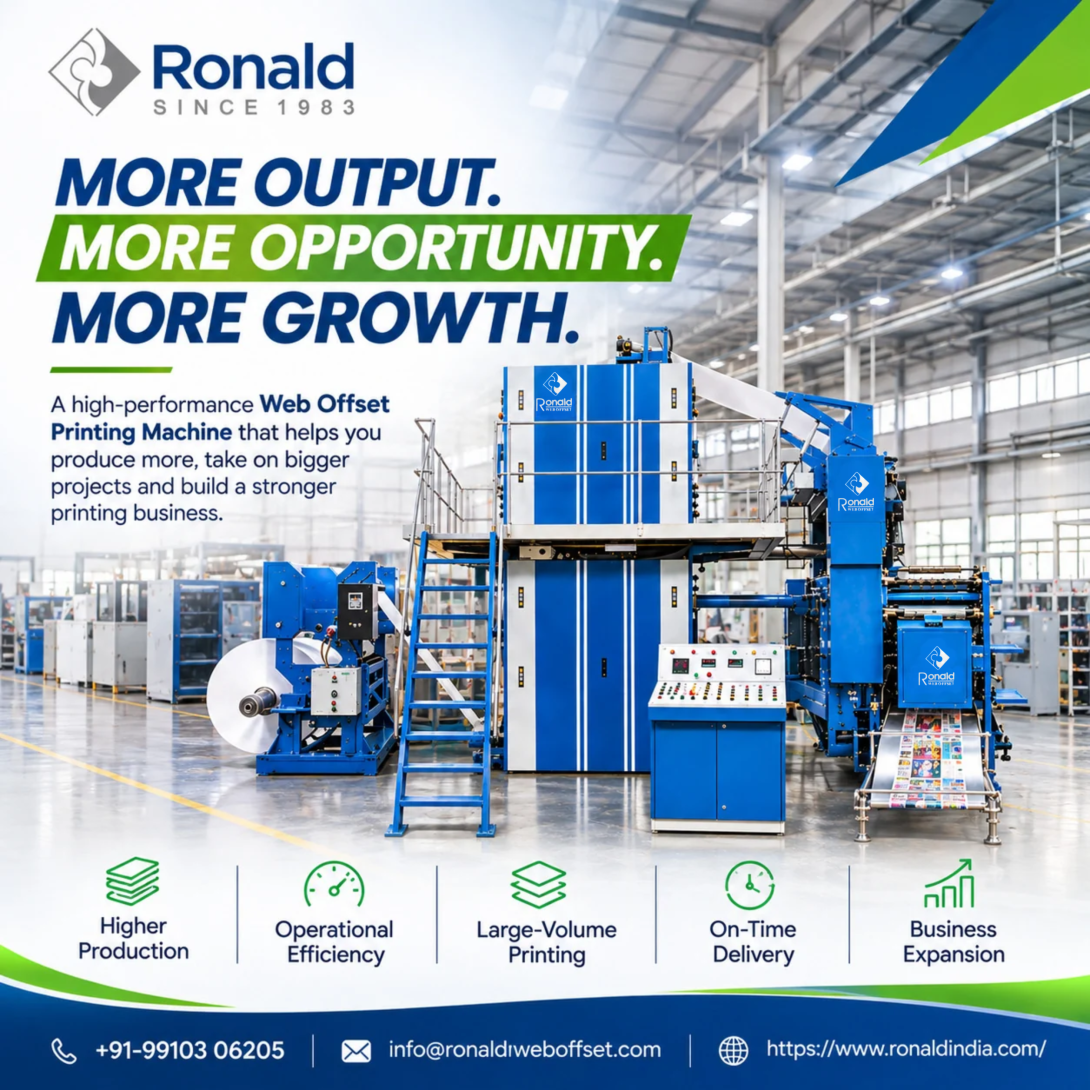
The printing industry requires efficient production systems that can handle large quantities of printed material without unnecessary interruptions. A web offset printing machine is designed to meet these requirements by using continuous rolls of paper instead of individual sheets. This technology allows printing businesses to maintain consistent production while managing high-volume publishing requirements.
Continuous paper production has become an important part of modern printing operations, particularly for businesses involved in books, newspapers, magazines and other large-scale publications.
Understanding Continuous Paper Production
Continuous paper production involves feeding a large paper reel through a printing press. Unlike sheet-fed systems, where individual sheets are loaded separately, web offset technology uses a continuous paper web.
The paper travels through different sections of the machine, where printing operations take place. Once the required printing process is completed, the printed web moves towards the next production stage.
This arrangement helps printing companies maintain a continuous workflow and reduce interruptions associated with individual sheet feeding.
How a Web Offset Printing Machine Works
A web offset printing machine generally operates through several coordinated stages:
1. Paper Reel Loading
The production process begins with loading a large paper reel onto the reel stand. The paper web is prepared for continuous movement through the machine.
2. Paper Web Feeding
The paper passes through rollers and guiding systems that help maintain controlled movement throughout the printing process.
3. Printing Process
The paper web moves through the printing units, where the required text, images and other content are transferred onto the paper.
4. Drying and Delivery
Depending on the machine configuration and printing requirements, the printed web passes through suitable drying and delivery arrangements before further processing.
Benefits of Continuous Paper Production
Continuous paper feeding offers several advantages for industrial printing businesses.
- Consistent workflow: Continuous feeding helps maintain an uninterrupted production process.
- High-volume capability: Reel-based printing is suitable for large production requirements.
- Reduced manual handling: Individual sheet loading is not required throughout the printing process.
- Production planning: Printing businesses can organize long production runs more efficiently.
- Publishing applications: The technology supports different types of large-scale publications.
Applications Across the Publishing Industry
Web offset printing technology is commonly associated with high-volume publishing applications. These include educational books, newspapers, magazines, catalogues and other printed materials.
The choice of machine depends on paper specifications, publication requirements, printing configuration and expected production volume.
Choosing the Right Printing Equipment
Before investing in a web offset printing machine, printing businesses should evaluate production capacity, paper compatibility, printing configuration, automation features and maintenance requirements.
It is also important to understand the manufacturer's technical support capabilities and the availability of spare parts.
Companies exploring industrial printing equipment can visit Ronald Web Offset Pvt. Ltd. to learn about its printing machinery and solutions.
Conclusion
Continuous paper production plays an important role in modern industrial printing. A web offset printing machine provides a suitable production approach for businesses handling large publishing requirements. By selecting the right equipment and planning production processes carefully, printing companies can improve workflow management and support long-term manufacturing requirements.