

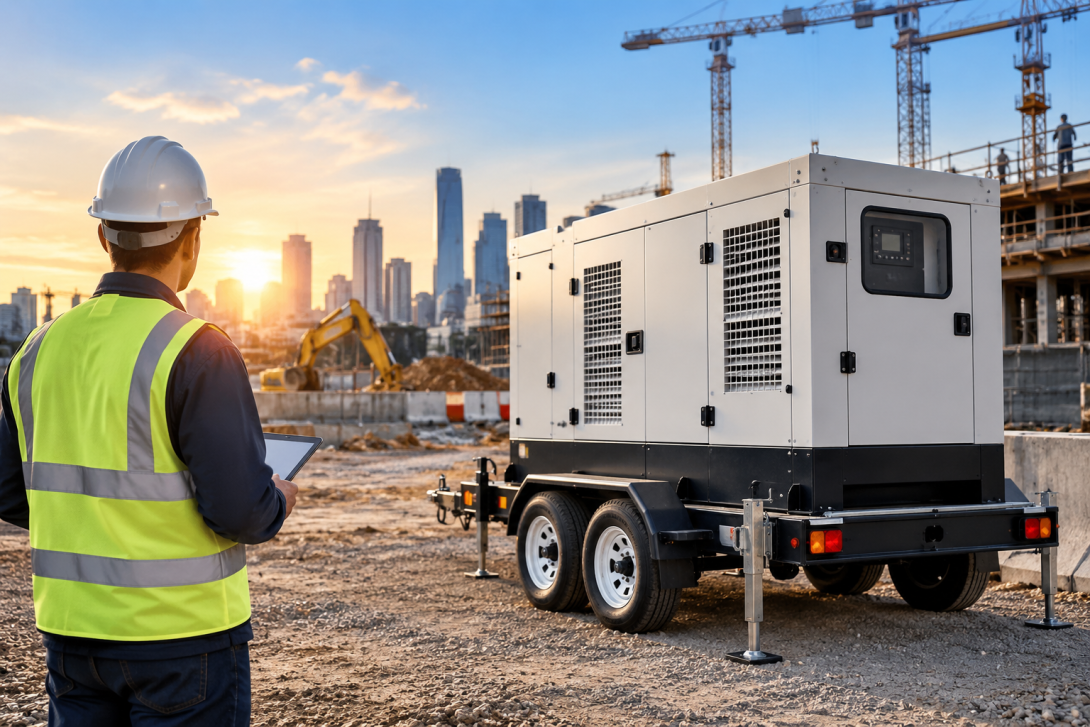
Mobile diesel generators Perth are the go‑to solution when you need reliable power on the move, whether it’s a construction site in East Perth or a mining camp out near Kalgoorlie. In this guide I’ll walk you through sizing, regulations, noise control, service contracts & real‑world examples so you can pick the right unit without a hassle.
Understanding Your Power Needs —
First thing’s first – know exactly what you’re feeding — A typical café in Subiaco draws about 15 kW for kitchen equipment, while a medium‑scale construction crew may need 120 kW for cranes and site lighting. And you can’t just guess; you need a load‑profile sheet that lists every piece of equipment, its starting and running amps, & the total demand at peak.
- List every device include start‑up surge (often 2‑3× running load).
- Group loads by critical (emergency lighting) and non‑critical (office PCs).
- Factor in future expansion – a 10 % buffer is common in Perth’s hot climate.
In my experience, businesses that skip this step end up with generators that stall under load, especially when the temperature hits 38 °C in February. That’s why a detailed audit saves time & money.
Sizing the Right Unit
Calculating kVA to kW
Mobile diesel generators Perth are rated in kVA, but you’ll be using kW. The conversion factor in Australia is about 0.8, so a 100 kVA unit delivers roughly 80 kW usable power. But remember, diesel engines lose about 5 % efficiency when the ambient temperature exceeds 30 °C, which is common in Perth’s summer.
- Determine total kW demand.
- Divide by 0.8 to get kVA.
- Add 10‑15 % for temperature and altitude (Perth sits at sea level, but dust can affect cooling).
For a 120 kW construction load, you’d look at a 150 kVA generator, giving you headroom for dust‑related power loss.
Fuel‑Consumption Charts
What typically happens is that a 200 kVA unit burns about 18 L per hour at 75 % load in 25 °C, but in Perth’s 35 °C heat the same load can push consumption to 22 L per hour. Honestly, i keep a simple table on hand for quick reference.
- 50 kVA – 6 L/h @ 75 % load (25 °C).
- 100 kVA – 12 L/h @ 75 % load (25 °C).
- 200 kVA – 18 L/h @ 75 % load (25 °C).
- Adjust +20 % for ambient temps above 30 °C.
That’s a solid baseline for budgeting fuel and planning tank sizes on site.
Regulatory and Permitting Landscape —
WA has specific noise limits: 70 dB(A) for daytime operation in residential zones and 65 dB(A) after 10 pm. Mobile diesel generators Perth must also meet Euro IV emission standards unless you have a special exemption for remote sites.
- Check council bylaws for site‑specific noise curfews.
- Obtain a temporary road‑use permit if you’re moving a 10‑ton unit on public streets.
- Ensure the unit carries a valid compliance label for grid‑interconnection.
And don’t forget the environmental impact statement if you’re operating near a protected area like the Swan River wetlands. The Department of Water and Environmental Regulation can issue a quick turnaround permit if you submit a diesel‑emission test report.
Choosing a Supplier and Service Partner
Perth’s market is concentrated around a few key dealers – Cummins Power Solutions in West Perth, Bradwell in Osborne Park, & the locally‑owned DieselTech in Karrinyup. What I tell people is to look for a supplier that offers a full service package: delivery, installation, a 24‑hour response team, and a stocked parts warehouse.
- Ask for a service‑level agreement (SLA) that guarantees parts on site within 4 hours.
- Check that the dealer has a certified OHS trainer on staff.
- Verify warranty terms – most reputable brands give a 2‑year parts‑only warranty but local dealers may extend that to 3 years.
In my experience, those who pick a dealer without a local parts hub end up waiting days for a critical component, which can halt a construction project.
Noise and Emission Management...
Noise‑mitigation isn’t optional in suburbs like Leederville where a generator sits next to a school. Portable diesel generators Perth can be fitted with acoustic enclosures that cut noise by up to 15 dB, and you can add a rubber‑mounted base to reduce vibration.
- Acoustic cab – 8 mm steel with 30 mm foam liner.
- Rubber isolators – 150 mm diameter, rated for 10 ton units.
- Exhaust muffler – Euro IV compliant reduces emissions by 30 %.
And if you’re operating in a mining camp near Port Hedland, the WA Mine Safety Authority requires a continuous emissions monitoring system (CEMS) on units over 300 kVA.
Maintenance, Fuel and Cost‑of‑Ownership —
What typically happens is that owners focus on upfront price and forget the ongoing maintenance. Like, a mobile diesel generator perth needs a filter change every 250 hours, oil change every 500 hours, and a coolant flush annually – especially in the salty coastal air of fremantle.
- Filter change – every 250 h, use OEM 10‑µm air filter.
- Oil change – every 500 h, synthetic 15W‑40.
- Coolant – 10‑year service, replace with glycol‑based mix.
Here’s a quick cost‑of‑ownership comparison: renting a 150 kVA unit for a 6‑month construction stint can be cheaper than buying, if you factor in depreciation, fuel, and maintenance. But if you run it daily for a mining operation, purchase with a service contract wins.
Real‑World Perth Case Studies
Construction Site – East Perth —
A mid‑size contractor needed 80 kW of power for a 12‑month office trailer and site lighting. They rented a 100 kVA Cummins unit from Bradwell, added a sound‑attenuated cab, and used a 2,000 L fuel tank with a diesel‑stabiliser. The project ran without a single power outage, and the rental cost was offset by the lack of a purchase price.
Mining Camp – Kalgoorlie —
A mining company installed two 250 kVA diesel generators Perth on a remote camp. They chose a hybrid set‑up with a 100 kW solar array and a remote‑monitoring IoT platform from PowerSmart — The hybrid reduced diesel consumption by 30 % during daylight hours, & the IoT alerts cut emergency service calls by half.
Hybrid and Remote Monitoring Options
In 2026, the trend in Perth is to pair diesel with solar and battery storage. A typical hybrid configuration looks like this: diesel generator for baseload, 50 kW solar panel array on the roof of a warehouse, and a 200 kWh lithium‑ion battery for peak shaving.
- Solar reduces diesel runtime by up to 40 % in summer.
- Battery stores excess solar for night‑time operation.
- Remote monitoring platform – real‑time fuel level, temperature, & fault alerts via mobile app.
And the WA government offers a small rebate for hybrid systems that meet the State’s renewable‑energy targets so it’s worth checking the latest incentive list.
Safety and Training
OHS requirements in WA mandate that anyone operating a mobile diesel generator Perth must complete a 2‑day training course covering start‑up, shutdown, emergency stop, and fuel handling. The training includes a practical demo on a 30 kVA unit.
- Certificate of competency – required for site‑specific risk assessments.
- Monthly safety drills – focus on fire‑extinguishers and spill kits.
- Personal protective equipment – ear protection gloves and safety glasses.
But the most important safety tip is to always keep the generator at least 3 metre away from combustible materials & to use a fire‑resistant mat under the unit.
Logistics, Permits, and Insurance...
Moving a 10‑ton diesel generator around Perth’s ⚠️suburbs means you need a road‑use permit from Main Roads WA — The permit specifies the route, time window, & any escort requirements. For example, a delivery to a site on the Swan River foreshore requires a low‑clearance check because of the nearby bridge.
- Permit cost – modest fee, usually approved within 3 business days.
- Insurance – public liability of at least million for on‑site operation.
- Risk assessment – include fuel spillage, noise, and fire hazards.
And always keep a copy of the manufacturer’s compliance certificate on the unit; inspectors will ask for it during a site audit.
Conclusion
Choosing mobile diesel generators Perth for your business boils down to three things: match the load, respect the local regulations, and partner with a dealer who offers fast service and local parts. By sizing correctly, planning fuel consumption, and adding noise‑reduction or hybrid options where needed, you’ll get reliable power without surprises. Keep the safety checklist handy, stay on top of maintenance, and you’ll avoid the common pitfalls that bite many Perth operators. Follow these 2026 insider tips and you’ll have a power solution that runs as smoothly as a Sunday drive along the coast.