

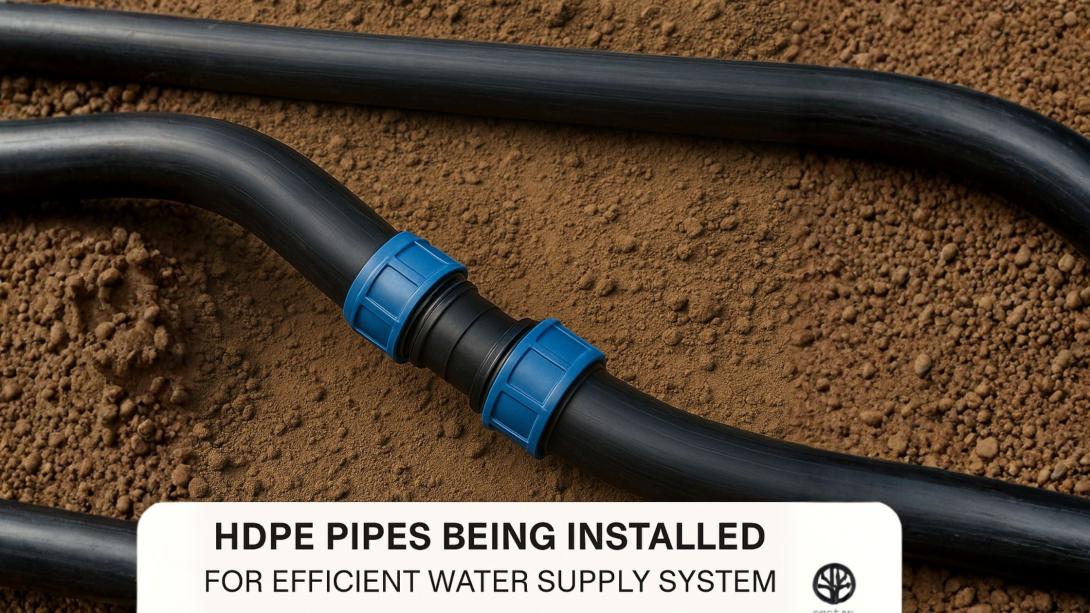
Residential, commercial and industrial projects heavily depend on a water supply system that is reliable. When the HDPE pipes are installed properly the chances of leakage are minimized, water wastage is eliminated and water supply is guaranteed. Unproductive installation may cause unforeseen downtimes, expensive repairs and loss of operations.
HDPE pipes installation enhances the durability and lifespan of water networks while promoting efficient water management. Through appropriate installation guidelines, the project managers would be able to guarantee the long term performance, reduce the costs of maintenance and preserve the water infrastructure well into the future. Properly laid HDPE systems are particularly crucial in current infrastructure developments where the regular supply of water is critical.
What Are HDPE Pipes?
High-Density Polyethylene (HDPE) pipes have a high strength, flexibility, and reliability. They are corrosion resistant and therefore suited to water distribution systems such as drinking and non drinking water systems.
Key Advantages:
- Durability: Resistant to corrosion, chemicals, and environmental stress.
- Flexibility: Can accommodate ground movement or uneven terrain without cracking.
- Pressure tolerance: Suitable for high-pressure water applications.
- Long lifespan: Capable of serving water networks for decades with minimal maintenance.
Applications:
- Residential: Homes and apartment complexes benefit from leak-free and flexible water distribution.
- Commercial: Offices, shopping centers, and hotels maintain consistent water supply with HDPE networks.
- Industrial: Factories, warehouses, and processing plants rely on robust HDPE installations for reliable operations.
The growing adoption of HDPE pipes in modern infrastructure projects reflects their proven reliability and efficiency for long-term water supply solutions.
Common Challenges in HDPE Pipe Installation
System performance is undermined even in high quality HDPE pipes due to improper installation. Key challenges include:
1. Improper Trenching or Alignment:
Wrong trenching depth or misalignment may create pressure on the pipes leading to deformation or cracks in future.
2. Incorrect Jointing or Fusion:
The bad fusion, misalignment of joints or the poor quality of fittings would cause leakage, which would decrease the system life.
3. Environmental Factors:
- Soil conditions: Rocky or shifting soil can stress pipes.
- Temperature fluctuations: Extreme heat or cold may cause expansion or contraction.
- UV exposure: Unprotected HDPE pipes can degrade under sunlight.
4. Lack of Planning and Quality Control:
By neglecting site surveys, inspection and quality checks during installation, one is likely to have leaks, pressure drops, and high maintenance.
Understanding these challenges helps ensure that HDPE pipes installation is executed efficiently and reliably.
Step-by-Step HDPE Pipes Installation Guide
Installation is done in a systematic manner, which guarantees long lasting power and leak free water systems.
Step 1: Site Preparation and Route Planning
- Conduct site survey to identify the route of pipes.
- Determine barriers, soil parameters and the environment.
- Trench depth, slope and bedding to be minimal in stressing pipes.
Step 2: Proper Handling and Storage
- Keep HDPE pipes in the shaded locations to avoid UV damage.
- Pipes should not be dragged on uneven surfaces to avoid being scratched or broken.
- Proper handling practice before installation should also be maintained to guarantee integrity of the pipes.
Step 3: Jointing Techniques
- Electrofusion: Melts the pipe surface into the fitting for a strong, leak-proof connection.
- Butt Fusion: Fuses pipe ends directly, creating seamless joints.
- Mechanical fittings: Allow quick assembly while maintaining system integrity.
Step 4: Pressure Testing and Inspection
- Carry out hydrostatic pressure test prior to backfilling of trenches.
- Check the joints of the proper alignment and fix fittings.
- Quality assurance on document inspection.
Step 5: Backfilling
- Even support should be done using sand or fine-grained soil.
- Sharp rocks or rubbish should be avoided as they may destroy pipes.
- Soil moulded in small portions to avoid deformation or stress.
These steps are to guarantee the long-standing and efficient HDPE water supply system.
Case Study / Real-Life Application
A city water project had constant water leakages as well as uneven water distribution because of improperly laid pipes. The community experienced frequent interruptions in services, higher costs of maintenance and wastage of water.
Problem: Ineffective installation, wrong fitting joints and lack of uniformity in fusion methods.
Solution: The new system installed in the project involved replacement of the current system with HDPE pipes that were properly installed through trenching, fusion, and testing.
Results:
- Leaks reduced by 85%.
- Regulation of water pressure throughout the city network.
- Decrease in maintenance and operation costs in the long term.
Other water supply firms such as goflo have focused on the installation of HDPE which is of high quality and thus reliable overtime and minimum downtime.
Industry Trends in HDPE Pipe Installation
The use of HDPE pipes in the contemporary urban and industrial infrastructure is becoming more popular because it is durable and efficient.
Emerging Trends:
- Advanced Fusion Techniques: Modern electrofusion and butt fusion technologies reduce the risk of leaks.
- Eco-Friendly Materials: Sustainable, recyclable HDPE is gaining popularity in water infrastructure projects.
- Standardized Fittings: Improved manufacturing ensures compatibility, minimizing installation errors.
Reliable HDPE solutions have become a primary concern to contractors in pursuit of effective and leak free water systems in more complicated projects.
HDPE vs. Other Pipe Materials
Selecting the right pipe material is critical for water system efficiency, reliability, and cost-effectiveness.
Material
Advantages
Limitations
HDPE
Flexible, corrosion-resistant, leak-proof, long lifespan
Higher upfront cost than PVC
PVC
Low cost, easy to install
Prone to cracking, less flexible
GI (Galvanized Iron)
Strong initially, durable
Corrodes over time, heavy
MDPE
Flexible, corrosion-resistant, long lifespan
Less high-pressure tolerance than HDPE in some cases
Pipes made of HDPE are susceptible to high dependability, low chances of leakage, and durability.
Q1: What is HDPE pipes installation?
HDPE pipes installation is the process of laying, joining, and testing HDPE pipes to create a reliable water supply system. Adequate installation will guarantee leak proof operation and durability.
Q2: Why is proper HDPE pipes installation important?
Proper installation eliminates leakages, minimizes downtimes, and minimizes the cost of maintenance. It also maintains the even flow of water and increases the lifespan of the entire system.
Q3: How long do HDPE pipes last after proper installation?
Installation Properly installed HDPE pipes have a service life of 50-100 years. The environmental conditions and the usage influence the longevity, though the correct installation contributes greatly to the longevity.
Q4: Can HDPE pipes be used for all types of water supply projects?
Yes, HDPE pipes can be used in residential, commercial and industrial use. They are corrosion resistant, durable, flexible and can resist a high pressure water system.
Q5: What are common mistakes in HDPE pipes installation?
Some of the mistakes are improper trenching, inadequate jointing method, and negligence of environmental factors. Providing water supply that is reliable and efficient follows recommended installation procedures.
Q6: How does HDPE pipes installation compare to other pipe materials?
HDPE pipes are much better in terms of leaks, flexibility and durability as opposed to PVC, GI and MDPE pipes. They need little maintenance and also have long time reliability to the water systems.
Conclusion
Proper HDPE pipes installation is essential for minimizing leaks, reducing downtime, and ensuring efficient water distribution. Proper trenching, fusion, alignment and pressure test ensure maximum performance and durability of the system. The HDPE pipes are resistant to corrosion, flexural, and sturdy especially when compared to most of the old materials. Firms that provide professional installation of HDPE like goflo are crucial in making sure that water flows smoothly, reliably and efficiently in residential, commercial and industrial applications.
Investing in proper HDPE pipes installation safeguards water infrastructure, reduces maintenance costs, and promotes sustainable, long-term water management.