

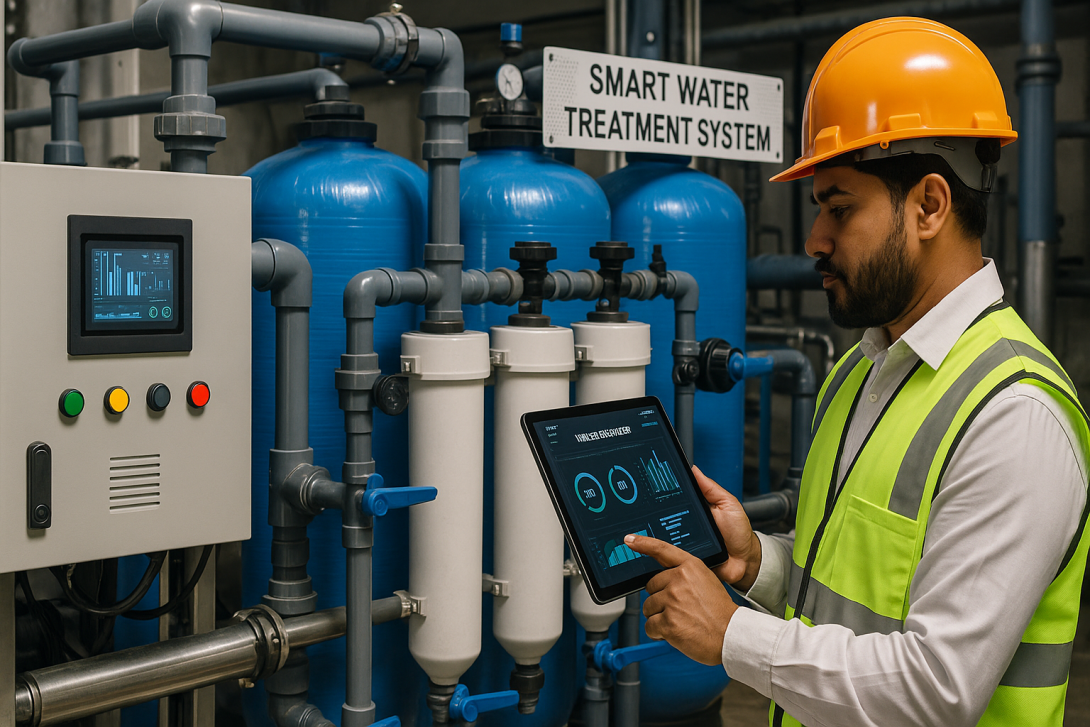
Indian industries are continuously transforming and as the transformation progresses with it is a significant problem, viz. efficient management of water. The manufacturing units, chemical plants, textile units and pharmaceutical facilities, food-processing units among some others are now subjected to stricter discharge norms, high costs of operations and a growing pressure to conserve water. New installations of industries will no longer be able to use traditional methods of treatment as the instances of freshwater scarcity continue to increase in India.
This is where modern water treatment systems equipped with automation, IoT, real-time monitoring, high-efficiency filtration, and smart controls are transforming industrial operations. These systems are also known to deliver environmental compliance as well as assist industries to reduce costs, optimize on manual intervention as well as enhance resource recovery.
Supporting these advanced treatment systems is the need for a robust water and wastewater pipeline network. Industrial facilities depend on reliable installation support, especially from an experienced mdpe installation service provider in Delhi and professional hdpe installation service in Delhi, ensuring that transportation of raw water and treated wastewater remains leak-proof, safe, and efficient.
Why Industries in India Are Shifting to Smart Water Treatment Systems
The use of smart water treatment is no longer a choice. There are various reasons that are driving the industries into the automation-based systems:
Rising freshwater scarcity
A large number of industrial belts are experiencing a tremendous depletion of groundwater. Intelligent water systems are used to recycle wastewater and lessen reliance on exogenous water supply.
Higher operational costs
Manual systems require more labour, more maintenance as well as more consumption of chemicals. These processes are automated using smart systems and reduce the cost of operation.
Stricter environmental norms
There is increased strictness in CPCB and SPCB legislations. BOD, COD, TSS, oil and grease, nitrogen and bacteria discharge limits are becoming stricter hence automation is required.
Industrial expansion
The rising level of industrialisation in the Tier -1, Tier-2 and Tier-3 cities will demand scalable, efficient and compliance ready water treatment solutions.
Demand for consistency
The manual systems are not able to guarantee uniform quality of output. Reproduced and predictable performance of treatment is ensured using automated systems.
Core Features of Smart Water Treatment Systems
Smart industrial water treatment systems stand out because of their advanced capabilities. These features help improve efficiency, reduce costs, and simplify operations.
IoT-Based Real-Time Monitoring
The parameters of water quality constantly monitored by sensors include pH, turbidity, and TDS, DO, BOD indicators, and flow rates. Any diversion sends out alerts.
Automated Dosing and Flow Control
Chemicals, coagulants and disinfectants are also automatically regulated according to the quality of water. This saves wastage and becomes more efficient.
Energy-Efficient Aeration
The recent systems also operate VFD-controlled blowers, diffusers and aeration grids that automatically regulate the supply of oxygen. This does assist in minimizing the use of energy.
Membrane-Based Technologies
Smart systems commonly use:
- UF (Ultrafiltration)
- RO (Reverse Osmosis)
- MBR (Membrane Bioreactor)
- Nano-filtration
These ensure high-purity water output suitable for reuse.
Remote Supervisory Access
Plant managers can monitor system performance using mobile apps or control panels. Remote troubleshooting reduces downtime.
AI-Based Alerts and Predictive Maintenance
Artificial intelligence detects early signs of equipment failure and process inefficiencies, preventing shutdowns.
Importance of Pipeline Infrastructure in Smart Water Networks
Even the most advanced treatment systems depend on strong, durable pipeline infrastructure. Industrial water and wastewater require secure transport across different sections of the plant.
Role of MDPE and HDPE Pipelines
MDPE Pipelines: Stability and Precision
Industries rely heavily on MDPE pipes for internal distribution, treated water transfer, and supply networks. A skilled mdpe installation service provider in Delhi ensures:
- Precise alignment
- Leak-proof joints
- Correct pressure handling
- Long-term durability
- Reduced maintenance
MDPE is ideal for low- to medium-pressure networks and chemically aggressive environments.
HDPE Pipelines: Strength for High-Capacity Flow
Industries trust HDPE pipelines because they withstand:
- High pressure
- Abrasion
- Corrosive industrial wastewater
- Long-distance transport requirements
A professional hdpe installation service in Delhi ensures:
- Proper welding
- Durable jointing
- Correct sizing
- Effective integration with treatment systems
This enhances reliability and prevents leaks that may halt operations or cause environmental violations.
Corrosion-Resistant Materials Improve Sustainability
MDPE and HDPE pipes can last decades without major repairs. Their resistance to chemical reactions ensures safe, consistent transport of raw and treated water.
How Smart Water Treatment Systems Improve Industrial Efficiency
Reduced Energy Consumption
IoT sensors regulate blower speeds, pump loads, and aeration systems based on actual demand, significantly cutting energy costs.
Predictive Maintenance Helps Avoid Breakdowns
AI-based platforms detect anomalies in pumps, clarifiers, membranes, and blowers early, preventing expensive shutdowns.
Higher Wastewater Recycling Rates
Advanced filtration systems help industries recover more water that can be reused in:
- Cooling towers
- Boilers
- Utility washing
- Process water applications
Reduced Freshwater Demand
By reusing treated water, industries reduce dependency on groundwater or municipal water supply.
Better Compliance with ZLD and ETP Norms
Smart water treatment systems consistently maintain discharge quality, ensuring compliance and avoiding penalties.
Key Industries Driving the Demand
Smart water treatment systems are seeing high adoption across several sectors:
Manufacturing
Consistent water quality is essential for production cycles.
Pharmaceuticals
Strict norms require precise treatment standards.
Chemicals and Petrochemicals
High contamination load demands advanced treatment.
Textiles
Large water requirements push textile plants toward recycling.
Food and Beverage
Hygiene-sensitive operations need stable water quality.
Steel and Mining
High TDS, metals, and suspended solids require strong treatment systems.
Power Generation
Cooling tower operations benefit greatly from water recycling.
Economic and Environmental Benefits for Industries
Lower Operational Costs
Automation reduces manpower, energy use, and chemical consumption.
Extended System Lifespan
Smart controls reduce stress on treatment components.
Reduced Water Procurement Expenses
Recycling limits the need for external water sources.
Lower Environmental Footprint
Less wastewater discharge means lower pollution risks.
Better Compliance with Government Regulations
Avoiding penalties saves industries substantial recurring expenses.
FAQs
Q1. Why are smart water treatment systems becoming necessary for industries?
Because they ensure operational efficiency, environmental compliance, and reduced water consumption.
Q2. Can smart systems help industries achieve ZLD or high-recovery rates?
Yes. Technologies like MBR, RO, UF, and evaporators significantly improve recovery and recycling.
Q3. What role do MDPE and HDPE pipelines play in industrial water systems?
They ensure safe, leak-proof transport of raw water, treated water, and wastewater.
Q4. Why choose hdpe installation service in delhi for industrial plants?
Because it ensures proper welding, high-pressure compatibility, and long-lasting pipeline durability.
Conclusion
Indian industries are rapidly embracing smart water treatment systems to improve efficiency, reduce water consumption, and meet environmental regulations. The use of automation, real-time monitoring, advanced membranes and predictive maintenance is changing the way the water industry is treated.
These systems however heavily rely on robust and resilient pipeline infrastructure. Professional support from a skilled mdpe installation service provider in Delhi and reliable hdpe installation service in Delhi ensures leak-proof, efficient, and long-life water networks.
Collectively, intelligent technologies and strong pipelines are assisting Indian industries in developing future-oriented, sustainable, and water management systems that are not only environmentally friendly.