
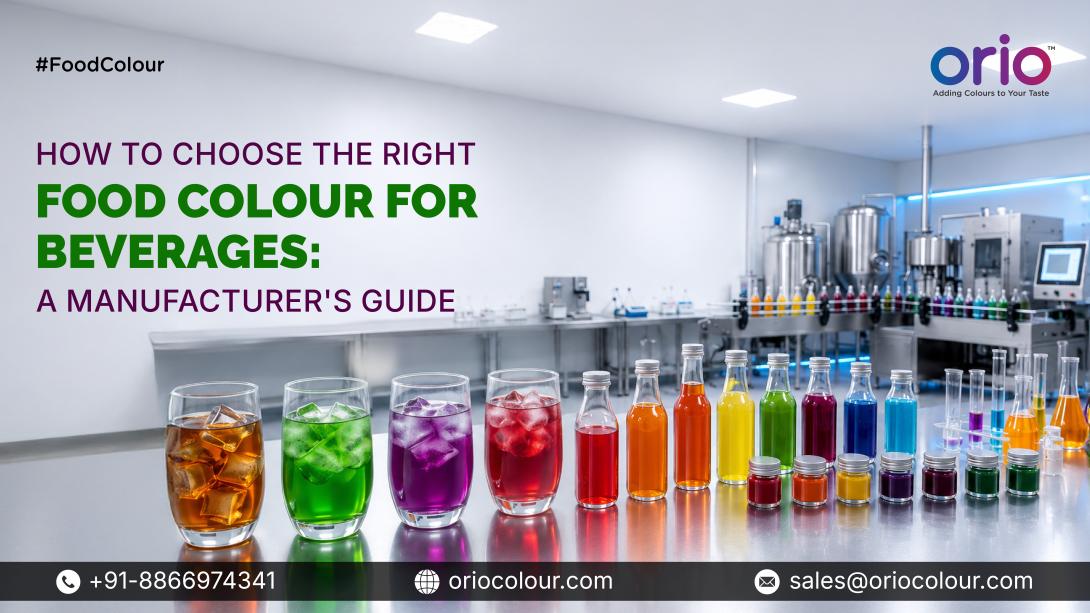
Choosing the right food colours for beverages is essential for creating visually appealing products while ensuring stability, consistency, regulatory compliance, and long-term brand recognition. Whether manufacturing soft drinks, fruit juices, dairy beverages, sports drinks, energy drinks, or functional beverages, selecting the right colour solution directly influences consumer perception, product quality, and market success.
Consumers often associate colour with flavour before taking their first sip. A vibrant orange suggests citrus freshness, deep red represents berry flavours, while bright yellow indicates tropical fruit notes. For beverage manufacturers, colour selection goes far beyond appearance—it requires balancing formulation compatibility, processing stability, shelf-life performance, and regulatory requirements. This guide explains how beverage manufacturers can choose the right food colours for different beverage applications. Expert guide to choosing food colours for beverages - stability, shade consistency, FSSAI compliance & bulk supply from Orio Colours, India
Why Food Colours Matter in Beverage Manufacturing
Food colour is one of the most influential visual elements in beverage development. It helps consumers recognise flavours, strengthens brand identity, improves shelf appeal, and creates a consistent product experience across multiple production batches.
The right beverage colour solution helps manufacturers:
- Improve product appeal
- Enhance flavour recognition
- Maintain colour consistency
- Strengthen brand identity
- Differentiate products in competitive markets
- Support long-term consumer trust
As the beverage industry continues to evolve, selecting the right food colour has become an important part of product formulation and brand positioning.
Types of Food Colours Used in Beverages
Beverage manufacturers generally select food colours based on product formulation, processing conditions, regulatory requirements, and desired visual appearance.
Synthetic Food Colours
Synthetic food colours remain widely used because they offer:
- High colour strength
- Excellent stability
- Uniform batch consistency
- Wide shade availability
- Cost-effective performance
These colours are commonly used in:
- Carbonated soft drinks
- Energy drinks
- Syrups
- Functional beverages
- Flavoured drinks
Natural Food Colours
Growing consumer demand for naturally derived ingredients has increased the use of natural food colours across beverage manufacturing.
Natural colours are selected based on:
- Beverage formulation
- pH stability
- Processing conditions
- Shelf-life requirements
- Regulatory preferences
Proper colour selection helps manufacturers achieve both visual appeal and formulation stability.
Custom Beverage Colour Solutions
Many beverage brands require customised shades that match their brand identity and product positioning.
Custom colour development helps manufacturers:
- Create unique product identity
- Maintain colour consistency
- Improve shelf differentiation
- Support product innovation
How to Choose Food Colours for Beverages
Choosing the right beverage colour involves evaluating both technical and commercial requirements.
Select Colours Based on Beverage Type
Different beverages require different colour characteristics.
For example:
- Soft drinks require brilliant shades with excellent acid stability.
- Fruit juices need colours compatible with fruit ingredients and natural formulations.
- Energy drinks often require highly stable colours that maintain appearance throughout shelf life.
- Sports and functional beverages require colours that remain stable under different storage conditions.
- Dairy beverages require colours compatible with milk-based formulations.
Matching colour performance with beverage formulation improves product quality and consumer acceptance.
Evaluate Colour Stability
Food colours should maintain their original appearance throughout production, packaging, transportation, and storage.
Manufacturers should evaluate stability against:
- Light exposure
- Heat
- Processing conditions
- Acidity (pH)
- Ingredient interaction
- Shelf life
Stable colours help ensure consistent product appearance across every production batch.
Match Colour with Consumer Expectations
Consumers naturally associate colours with flavours.
Examples include:
- Orange – Citrus
- Red – Berry
- Yellow – Mango or Tropical Fruits
- Green – Lime or Mint
- Purple – Grape
- Blue – Mixed Berry or Energy Drinks
Choosing colours that match flavour expectations improves the overall consumer experience.
Beverage Colour Selection Checklist
Before selecting a beverage food colour supplier, manufacturers should consider:
Regulatory Compliance
Reliable food colour manufacturers provide products supported by:
- FSSAI Compliance
- FDA Compliance (where applicable)
- ISO 22000 Systems
- GMP Manufacturing
- Halal Certification
- Kosher Certification
Batch-to-Batch Consistency
Consistent colour quality is essential for maintaining brand identity and production efficiency.
Manufacturers should choose suppliers capable of delivering reliable colour performance across every production batch.
Technical Expertise
A reliable food colour manufacturer should provide:
- Shade development support
- Product recommendations
- Application guidance
- Stability testing assistance
- Regulatory documentation
Technical collaboration reduces development time and improves formulation success.
Why Beverage Manufacturers Choose Orio Colours
Orio Colours is a trusted food colour manufacturer and supplier in India, providing high-performance colour solutions for beverage manufacturers across domestic and international markets.
Our expertise includes:
- Synthetic Food Colours
- Natural Food Colours
- Custom Shade Development
- Application Support
- Quality Assurance
- Regulatory Documentation
- Consistent Batch Quality
- Technical Assistance
Every colour solution is developed to deliver excellent performance, consistent appearance, and reliable manufacturing outcomes.
Explore More Food Colour Solutions
Looking for specialised colour solutions beyond beverages?
Explore our complete range of Food Colours developed for confectionery, bakery, dairy, snacks, pharmaceuticals, and other food applications.
Conclusion
Choosing the right food colours for beverages requires balancing visual appeal, formulation compatibility, colour stability, regulatory compliance, and consumer expectations. By selecting the appropriate colour technology and working with an experienced manufacturer, beverage companies can create products that deliver consistent quality, strengthen brand identity, and stand out in competitive markets.