

Businesses across different industries often need additional funding to develop new products, improve operations, adopt modern technology and expand into new markets. Exploring grants for corporations can help eligible companies identify funding opportunities that support specific business objectives without necessarily taking on traditional debt. Depending on the funding provider, corporate grant programs may focus on research and development, environmental sustainability, workforce training, community development or technological innovation. However, not every grant is open to for-profit companies and eligibility requirements vary significantly. The Grant Portal helps businesses explore funding opportunities and discover programs that may align with their goals. Understanding how corporate grants work and where to search can help organizations make more informed funding decisions.
Grant Funding for Corporations
Corporate grants are funds awarded by government agencies, private foundations, corporations, and other eligible funding organizations to support defined projects or objectives. Unlike conventional business loans, grants generally do not require repayment when recipients comply with the award's terms and conditions.
These funding opportunities are not available to every company. Some programs target small and medium-sized businesses, while others support research institutions, technology developers, manufacturers or organizations working toward specific economic and social goals. Certain programs may also require matching funds, progress reports or detailed financial documentation.
Corporations should begin by identifying their funding needs and determining whether a grant is an appropriate option. Reviewing the official program guidelines is essential because a grant listing does not guarantee eligibility, approval or funding.
Types of Corporate Grants Across Different Industries
Technology and Innovation
Technology companies often invest in research, product development, software solutions, cybersecurity, and emerging technologies. Certain grant programs support projects that demonstrate innovation, solve industry problems or contribute to broader economic development.
Eligible projects may involve developing prototypes, improving digital infrastructure, testing new technologies or advancing research. Companies should explain the problem their project addresses, its potential impact, and how grant funding would support measurable progress.
Because some technology grants are limited to particular research areas or business stages, applicants should confirm whether their proposed project matches the funder's priorities before preparing a full application.
Manufacturing and Industrial Businesses
Manufacturing companies may explore funding opportunities related to production efficiency, equipment modernization, worker training, waste reduction and advanced manufacturing techniques. Some programs focus on improving productivity or encouraging businesses to adopt more efficient technologies.
Funding requirements depend on the provider and the project's objectives. A company seeking support for manufacturing improvements should prepare a clear description of its current challenges, proposed changes, expected results and project budget.
Organizations should also determine whether a program supports direct equipment purchases or only certain research, training or modernization activities.
Healthcare and Biotechnology
Healthcare and biotechnology businesses may find funding opportunities for scientific research, medical technology development, diagnostic tools and innovative healthcare solutions. Some programs support projects that address specific public health priorities or advance scientific knowledge.
Applicants may need to provide technical documentation, research objectives, project milestones and evidence of feasibility. Regulatory considerations and ethical requirements may also apply, depending on the proposed work.
Businesses in this sector should carefully distinguish between grants available to commercial companies and funding reserved for universities, hospitals, nonprofit organizations or other research institutions.
Agriculture and Food Production
Agriculture and food-related companies may investigate programs that encourage sustainable farming, food safety, agricultural technology, resource efficiency or improvements in food production and distribution.
Potential projects could involve developing agricultural technologies, reducing waste, improving water management, or testing more efficient production methods. Funding providers may prioritize specific regions, business types, environmental outcomes or research objectives.
Companies should demonstrate how their proposed project meets the program's requirements and explain the expected benefits for their operations or the wider agricultural sector.
Energy and Environmental Sustainability
Businesses working in renewable energy, energy efficiency, recycling, and environmental technology may find funding opportunities tied to sustainability goals. Depending on the program, support may be available for research, demonstrations, cleaner production methods or the development of innovative environmental solutions.
A strong application should describe the proposed project, its expected environmental benefits, and the methods used to measure progress. Applicants should avoid relying on general sustainability claims without providing a practical plan and realistic outcomes.
Not every clean-energy or environmental funding program provides grants directly to corporations, so companies should verify the applicant requirements and funding structure.
Where to Find Corporate Grant Opportunities
Finding suitable funding requires research across multiple sources. Different providers support different industries, project types, and business objectives, making it important to search strategically.
Government Funding Programs
Government agencies may offer funding for research, innovation, economic development, workforce initiatives and other defined public objectives. In the United States, businesses can explore federal opportunities through Grants.gov.
Each funding announcement contains its own eligibility rules and application instructions. Companies should check whether for-profit corporations are eligible, whether their industry qualifies, and whether the proposed expenses are permitted.
State and local economic development agencies may also provide information about regional programs, incentives, or specialized funding opportunities.
Private Foundations and Corporate Sponsors
Some private foundations and corporate sponsors support projects aligned with their missions or strategic priorities. These may include innovation, environmental improvement, education, workforce development or community investment.
Businesses should research the sponsor's funding history and eligibility criteria before applying. Some programs may require a nonprofit partner or restrict funding to organizations with a particular legal structure.
Online Grant Search Platforms
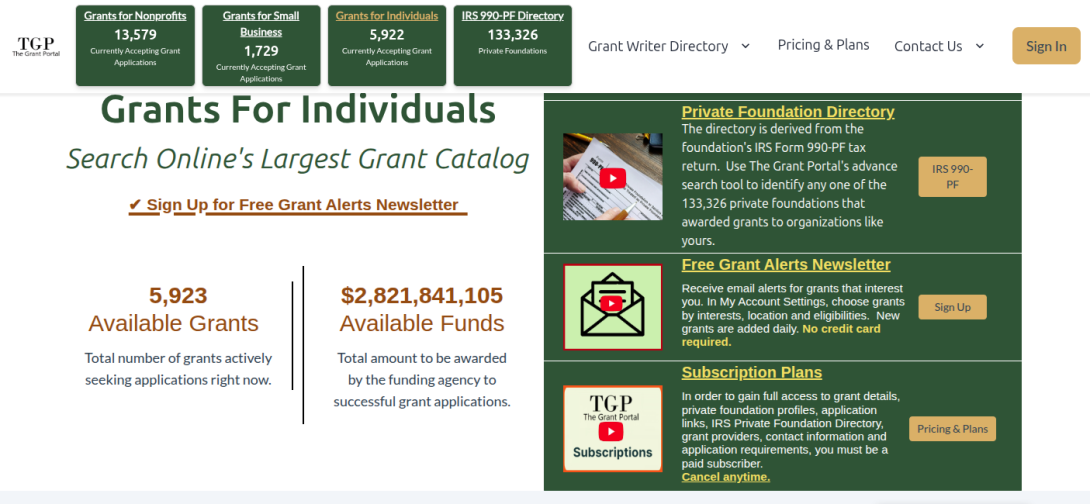
Online directories can help businesses discover funding opportunities across multiple categories without searching every provider individually. The Grant Portal offers a starting point for exploring grants and identifying programs that may match a company's objectives.
Visit The Grant Portal to research available opportunities. Use search results to identify potential matches, then verify current availability, deadlines, eligibility requirements, and application procedures directly with the official funder.
How to Prepare a Strong Corporate Grant Application
Define the Project and Funding Requirements
Before applying, establish what the company wants to accomplish and how much funding the project requires. Identify the activities the grant would support, the expected timeline and the results the business intends to achieve.
A focused proposal makes it easier for funders to understand the project's purpose and evaluate its alignment with their objectives.
Prepare Financial and Business Documents
Depending on the program, an application may require corporate registration details, financial statements, a project budget, business plans, technical proposals or evidence of organizational capacity.
Prepare the required documents in advance and ensure the information is accurate and consistent. Follow the funder's instructions regarding financial records, supporting materials and submission formats.
Explain the Expected Impact
Grant providers need to understand why a project deserves support. Explain how the proposed work addresses a specific challenge, what activities will be completed and how success will be measured.
Where possible, use realistic targets, clear milestones and measurable outcomes. The proposal should also explain how the company plans to manage the project and comply with any reporting or spending requirements.
Common Mistakes Corporations Should Avoid
One frequent mistake is assuming that all business funding programs are available to commercial companies. Some grants are restricted to nonprofits, research institutions, public bodies or specific business categories. Checking eligibility first can prevent unnecessary application work.
Another mistake is submitting the same generic proposal to every funder. Applications should address the particular objectives of each program and explain why the proposed project fits its requirements.
Corporations should also monitor deadlines, review permitted expenses and understand any matching-fund or reporting obligations. Be cautious of services that promise guaranteed grant approval or request suspicious upfront payments. Verify the funding provider and official application process before sharing sensitive business information.
Explore Grants for Corporations With The Grant Portal
Finding suitable funding across different industries requires a clear project plan, careful research and an understanding of each funder's priorities. Technology, manufacturing, healthcare, agriculture and sustainability businesses may encounter different opportunities depending on their activities and eligibility. By reviewing official guidelines, preparing accurate documentation and focusing on measurable outcomes, companies can make their funding search more efficient. Exploring grants for corporations through The Grant Portal can help organizations identify potential opportunities that align with their business goals. Before applying, confirm all requirements directly with the funding provider and remember that grant availability and approval are never guaranteed.
Frequently Asked Questions
1. What are grants for corporations?
Grants for corporations are funds provided by eligible government agencies, foundations, corporate sponsors or other organizations to support specific projects or objectives. Availability depends on the funding program and the company's eligibility.
2. Which industries may qualify for corporate grants?
Depending on the program, opportunities may support technology, manufacturing, healthcare, biotechnology, agriculture, renewable energy, environmental sustainability and other sectors. Each provider establishes its own eligibility requirements.
3. Can for-profit companies apply for government grants?
Some government programs accept applications from for-profit companies, while others are restricted to specific organizations or activities. Businesses should review the official funding announcement to confirm eligibility.
4. What documents are needed to apply for a corporate grant?
Requirements vary, but applications may request corporate registration information, financial statements, a project budget, a business plan, technical documentation and measurable project objectives.
5. Where can businesses search for corporate grants?
Businesses can research government funding portals, economic development agencies, private foundations, corporate sponsorship programs and online grant directories such as The Grant Portal.
6. Do corporations have to repay grant funding?
Grants generally do not require repayment when recipients comply with the award conditions. However, violations of the funding agreement may result in repayment obligations or other consequences. Companies should review the complete terms before accepting an award.