

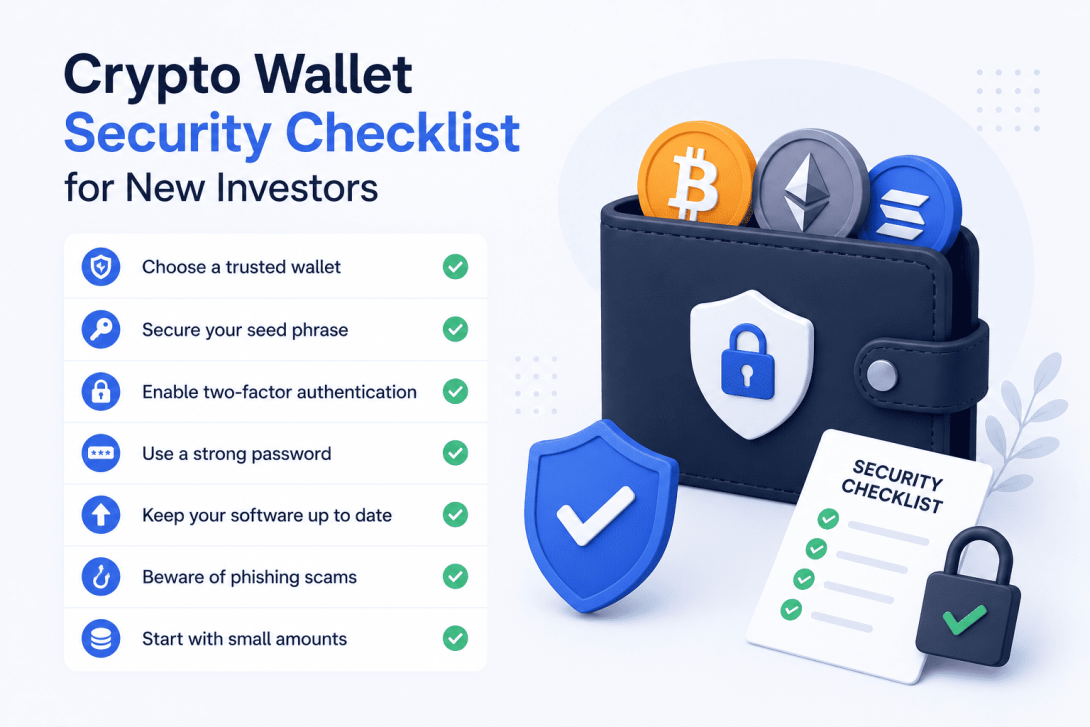
Choosing a crypto wallet is one of the first important decisions a new investor makes. A wallet is not simply an app for viewing cryptocurrency balances. Depending on the type of wallet, it can be responsible for protecting the information needed to access and manage your digital assets.
With so many wallets available, it can be tempting to choose one based only on its appearance, supported cryptocurrencies or popularity. Security should come first.
Before selecting a wallet, use this checklist to understand what protection it offers, how you control access and what responsibilities you will have as the user.
1. Understand Who Controls Your Private Keys
The first question to ask is who controls your private keys.
With a self-custody wallet, you control the keys and are responsible for protecting them. With a custodial service, another company generally holds the keys on your behalf.
Neither model is automatically right for everyone. New investors should understand the difference before depositing funds.
If you choose self-custody, make sure you understand how recovery works and what happens if you lose access to your device. You can get more ideas from this guide on how to manage your own private keys.
2. Check How the Wallet Handles Recovery
A secure recovery process is essential.
Many self-custody wallets provide a recovery phrase, usually consisting of a series of words. This phrase can be used to restore access to your wallet if your device is lost or replaced.
Before choosing a wallet, understand when the recovery phrase is created, whether you can access it and how it should be stored.
Never share your recovery phrase with another person. A genuine wallet provider should not ask you to send it through email, messaging apps or support chats.
3. Look for Strong Access Protection
A wallet should provide sensible ways to protect access to the application.
Look for features such as device security, strong passwords and biometric authentication where supported. These features can reduce the risk of someone accessing your wallet if they gain physical access to your device.
However, these protections are only one part of wallet security. Your recovery information remains extremely important, particularly with self-custody wallets.
4. Check Whether the Wallet Supports Your Assets
Security is the priority, but compatibility also matters.
Before choosing a wallet, check whether it supports the cryptocurrencies and blockchain networks you actually plan to use. Do not assume that a wallet supporting one token automatically supports every version of that token on different networks.
For investors who use several ecosystems, a multi-chain wallet may be more practical. You can learn more about this approach in why multi-chain wallets are replacing single-chain wallets.
Always verify the supported network before sending cryptocurrency.
5. Download Only From Official Sources
Fake wallet applications and phishing websites can look surprisingly convincing.
Download wallet software only from the provider's official website or a recognised app store. Before installing an application, check the developer information and other details carefully.
Avoid downloading wallet software from links sent through unexpected emails, social media messages or online advertisements.
If a website asks for your recovery phrase before you can use the wallet, stop immediately. This is a major warning sign.
6. Review Transaction Confirmation Features
A good wallet should make it clear what you are about to approve.
Before confirming a transaction, you should be able to review important details such as the recipient address, cryptocurrency, network and amount.
This is particularly important when connecting a wallet to decentralised applications. Some transactions can involve permissions that allow another service to interact with your assets.
Do not approve a transaction simply because a website tells you to do so. Take time to understand what you are confirming.
7. Consider Multi-Chain Security Carefully
A wallet supporting several blockchain networks can be convenient, but more features do not automatically mean better security.
If you use multiple networks, check whether the wallet clearly separates supported assets and networks. You should be able to identify which blockchain you are using before sending funds.
A mistake involving the wrong network can cause serious problems, even when the wallet itself is legitimate.
If you do not need multi-chain functionality, choosing a simpler wallet may also make your experience easier to manage.
8. Check the Wallet's Reputation
Before trusting a wallet with your money, research the provider.
Look for information about the company or development team, security practices, wallet history and how clearly it explains its products. Independent reviews can also help you identify recurring user concerns.
Do not rely solely on star ratings or promotional claims. A wallet handling valuable assets should provide clear information about how it works and what users are responsible for.
You can also check whether the provider publishes security updates when vulnerabilities or important issues arise.
9. Think About Everyday Spending
Some investors use their cryptocurrency only for holding, while others want to spend it.
If everyday spending is important to you, check whether the wallet offers suitable payment features or integrates with a supported card service.
For example, virtual crypto card may allow eligible users to spend supported digital assets at merchants that accept the relevant card network.
Check the card's supported countries, assets, fees and spending conditions before relying on it for regular purchases.
10. Check Fees and Network Costs
Security should not be judged separately from usability.
Before selecting a wallet, understand which fees you may encounter. These could include blockchain network fees, swapping fees or other service charges.
The wallet itself may not control blockchain network fees, as these can depend on network activity. However, a good wallet should make relevant costs clear before you confirm a transaction.
Unexpected costs can lead to poor decisions, particularly for new investors.
11. Make a Backup Plan
Finally, think about what happens if your phone is lost, damaged or replaced.
If you use a self-custody wallet, make sure you know how to restore access before you need to do it. Store your recovery information somewhere secure and protected from accidental damage.
Do not keep your recovery phrase in a screenshot, email or ordinary cloud document. Anyone who gains access to it may potentially gain access to your cryptocurrency.
Final Crypto Wallet Security Checklist
Before selecting a wallet, ask yourself:
- Do I understand who controls the private keys?
- Do I understand how wallet recovery works?
- Can I protect access with strong security features?
- Does the wallet support the assets and networks I need?
- Am I downloading it from an official source?
- Can I clearly review transactions before approving them?
- Have I researched the wallet provider?
- Are its fees and limitations clear?
- Do I understand how to protect my recovery phrase?
- Does it offer the spending features I actually need?
A crypto wallet should make managing digital assets practical without encouraging careless behaviour. For new investors, the safest approach is to understand how the wallet works before transferring significant funds.
Security is not a feature you check once and forget. It is an ongoing responsibility. Choosing a wallet carefully, protecting recovery information and reviewing every transaction can help you build safer habits from the beginning.