
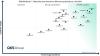
QKS Group’s SPARK Matrix™: Cloud Management Platforms (CMP), Q3 2025 provides a comprehensive analysis of the global market, including emerging technology trends, competitive dynamics, and future market outlook. Through its proprietary SPARK Matrix analysis, the research evaluates leading vendors and provides strategic insights into their capabilities, competitive differentiation, and market positioning.
Download free sample report here: https://qksgroup.com/download-sample-form/spark-matrix-cloud-management-platforms-cmp-q3-2025-8994
Key Trends Shaping the Cloud Management Platforms Market
1. Unified Management Across Hybrid and Multi-Cloud Environments
Enterprises increasingly use multiple cloud providers alongside private cloud and on-premises infrastructure. Although this approach provides flexibility, it also creates challenges involving resource visibility, workload portability, security policies, and operational consistency.
Cloud Management Platforms help organizations manage these environments through centralized dashboards, standardized workflows, and unified resource monitoring. By bringing cloud operations into a more coordinated management framework, CMPs can help enterprises simplify administration and improve visibility across distributed infrastructure.
As multi-cloud adoption grows, organizations increasingly value platforms that support interoperability and consistent management without adding unnecessary operational complexity.
2. AI-Enabled Cloud Operations and Automation
AI and automation are transforming cloud management by reducing manual tasks and improving operational decision-making. Modern CMP capabilities can support automated provisioning, workload monitoring, anomaly identification, resource recommendations, and incident response workflows.
Automation enables IT teams to standardize repetitive activities, accelerate deployment processes, and reduce the risk of human error. AI-driven insights can further help organizations identify operational inefficiencies and respond to changing workload requirements.
Vendors that combine deep automation with contextual intelligence can help enterprises improve operational agility while managing increasingly complex cloud environments.
3. FinOps-Driven Cloud Cost Optimization
Cloud spending has become a strategic concern as organizations expand their cloud workloads. Limited visibility into resource consumption, unused capacity, and inconsistent cost allocation can lead to unnecessary expenditure.
Cloud Management Platforms increasingly incorporate capabilities that help organizations monitor spending, identify underutilized resources, establish budgets, and optimize resource allocation. These features support FinOps practices by bringing financial accountability into everyday cloud operations.
Click Here: https://qksgroup.com/market-research/spark-matrix-cloud-management-platforms-cmp-q3-2025-8994
The convergence of cloud management and FinOps allows IT, DevOps, and finance teams to work toward shared goals: maintaining performance, improving resource efficiency, and aligning cloud expenditure with business priorities.
4. Policy-Based Governance and Compliance
Managing security and compliance consistently across different cloud environments is a growing challenge. Enterprises need to enforce internal policies, manage access, maintain visibility, and support regulatory requirements without slowing down innovation.
Policy-based governance helps organizations define and apply rules for resource provisioning, configuration, security, and usage. Automated policy enforcement can reduce configuration inconsistencies and help teams identify deviations more efficiently.
CMPs that provide flexible governance controls and clear operational visibility can help organizations balance cloud agility with enterprise requirements for security, accountability, and compliance.
5. Extensible Integrations and Cross-Functional Collaboration
Cloud management does not operate in isolation. Enterprises often depend on connected systems for IT service management, infrastructure monitoring, security, application development, and financial reporting.
Extensible integrations help CMPs connect these systems and support coordinated workflows across teams. Strong integration capabilities can improve information sharing, reduce operational silos, and enable more consistent management processes.
As cloud environments evolve, enterprises increasingly value platforms that fit into their existing technology ecosystems and support collaboration between IT operations, DevOps, platform engineering, and finance.
What Enterprises Should Consider When Selecting a Cloud Management Platform
Selecting the right CMP requires an assessment of organizational requirements, existing infrastructure, and long-term cloud strategy. Key considerations include:
- Multi-cloud and hybrid cloud support: Determine whether the platform can manage the cloud environments and infrastructure used by the organization.
- Automation and orchestration: Assess capabilities for provisioning, workload management, configuration, and repetitive operational tasks.
- Cost management and FinOps: Review spending visibility, budget monitoring, resource optimization, and cost allocation capabilities.
- Governance and compliance: Examine policy enforcement, access controls, configuration management, and audit support.
- AI and contextual intelligence: Evaluate how analytics and AI-assisted recommendations support operational decisions.
- Integration capabilities: Check compatibility with IT service management, DevOps, monitoring, security, and financial systems.
- Scalability and usability: Consider whether the platform can support growing workloads while remaining manageable for technical teams.
A structured evaluation helps enterprises identify platforms that align with their operational maturity, cloud architecture, governance requirements, and financial objectives.
Know more information: https://qksgroup.com/sparkplus?market-id=963&market-name=cloud-management-platform
SPARK Matrix™: Evaluating Leading Cloud Management Platform Vendors
QKS Group’s SPARK Matrix™: Cloud Management Platforms (CMP), Q3 2025 provides a structured assessment of the competitive landscape and the capabilities of leading vendors.
The proprietary SPARK Matrix methodology evaluates vendors through the dimensions of Technology Excellence and Customer Impact, helping decision-makers understand product capabilities, competitive differentiation, and market positioning.
The report includes the following vendors:
BMC Software, CloudBolt Software, CoreStack, emma, Facets.cloud, HPE Morpheus, IBM, Lumen Technologies, Nutanix, OpenText Corporation, ServiceNow, and Zesty.
This assessment helps enterprise technology leaders understand the strengths and positioning of participating vendors when evaluating cloud management solutions. It also provides technology providers with strategic market intelligence to support competitive analysis, product development, and growth planning.
For organizations reviewing CMP options, the SPARK Matrix™ offers a useful framework for understanding vendor capabilities in the context of evolving enterprise cloud requirements.
Future Outlook for the Cloud Management Platforms Market
The future of the Cloud Management Platforms market will be influenced by continued multi-cloud adoption, AI-assisted operations, automated governance, and growing demand for financial transparency.
Enterprises will increasingly seek platforms that simplify resource management while improving cost efficiency, compliance, and operational reliability. AI and automation are likely to play a growing role in resource optimization, workflow orchestration, and proactive issue identification.
At the same time, integration and interoperability will remain important as organizations connect cloud management with broader enterprise technology ecosystems. Providers that combine centralized visibility with actionable intelligence and flexible governance can help enterprises manage complexity while supporting business agility.
For technology vendors, differentiation will depend on their ability to deliver measurable customer value through automation, intelligent insights, cost optimization, and integration. For enterprise buyers, understanding vendor capabilities and competitive positioning will remain essential to building an effective cloud management strategy.
Become a client: https://qksgroup.com/become-client
Frequently Asked Questions (FAQs)
1. What is a Cloud Management Platform (CMP)?
A Cloud Management Platform is a solution that helps organizations manage cloud resources and operations. Depending on its capabilities, it can support provisioning, orchestration, monitoring, governance, automation, and cost optimization across cloud environments.
2. What are the major trends in the Cloud Management Platforms market?
Major trends include hybrid and multi-cloud management, AI-enabled automation, FinOps-driven cost optimization, policy-based governance, and extensible integrations.
3. How do CMPs help reduce cloud costs?
CMPs can provide spending visibility, identify underutilized resources, support resource rightsizing, monitor budgets, and automate selected optimization tasks.
4. Why is AI important in cloud management?
AI can support anomaly detection, resource recommendations, operational analytics, and automated workflows, helping teams make informed decisions and reduce manual effort.
5. Which vendors are covered in the Q3 2025 SPARK Matrix™?
The report covers BMC Software, CloudBolt Software, CoreStack, emma, Facets.cloud, HPE Morpheus, IBM, Lumen Technologies, Nutanix, OpenText Corporation, ServiceNow, and Zesty.