
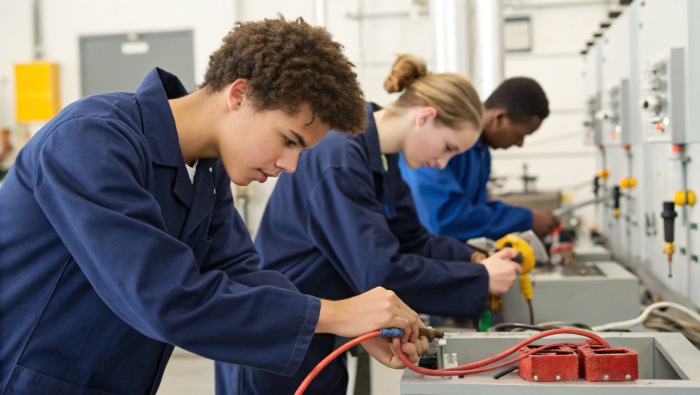
Maintenance trade centers have long been the backbone of training skilled technicians. From electricians and HVAC specialists to facility maintenance experts, these schools provide hands-on training that prepares students for the real world. But as technology changes and industries demand faster, more efficient maintenance, traditional training methods sometimes fall short. This is where MicroMain comes in. Its tools can reshape how trade schools train the next generation of maintenance professionals.
Bridging the Gap Between Theory and Practice
One of the biggest challenges for maintenance trade centers is making classroom lessons feel real. Students often learn theory, then must figure out on their own how it applies to real machines and buildings. MicroMain helps bridge this gap by giving students a platform similar to what they will use on the job.
Using MicroMain, schools can simulate real-world maintenance tasks. Students can create work orders, track repairs, and manage assets digitally. This hands-on approach helps them understand not just what to do, but why it matters. They learn how preventative work saves time and money, and how organized maintenance keeps buildings and machines running smoothly.
Teaching Students How to Prioritize
In real-life maintenance, every day brings a flood of tasks. Some repairs are urgent, others can wait. Learning how to prioritize is essential, and MicroMain gives students this experience early.
Through the system, students see how emergency repairs are handled alongside routine maintenance. They practice deciding which tasks need immediate attention and which can be scheduled later. This experience helps them develop the judgment and decision-making skills that employers highly value.
Tracking Progress and Performance
Another major benefit of MicroMain in trade schools is tracking. Teachers can see exactly what students are doing, how they perform tasks, and how quickly they complete jobs. This visibility allows instructors to give precise feedback and guide students toward improvement.
For students, this is motivating. They see their progress and understand the connection between effort and results. By learning in a structured environment that mirrors real workplaces, students gain confidence in their abilities before stepping into a professional role.
Introducing Real-World Tools
One reason students often struggle after graduation is that they’ve never used the software tools that modern maintenance teams rely on. MicroMain gives them early exposure to real systems.
By using MicroMain in class, students practice skills they will immediately apply in the workforce. They learn how to create and close work orders, track inventory, schedule maintenance, and generate reports. This knowledge makes them more valuable to employers and helps schools show their training produces job-ready professionals.
Emphasizing Productive Maintenance
A key idea that MicroMain introduces is productive maintenance. Students learn that maintenance is not just fixing problems but preventing them. This concept helps them understand the bigger picture.
In the classroom, instructors can use MicroMain to show how planned maintenance reduces downtime and extends the life of equipment. Students see the difference between reactive repairs and proactive strategies. They begin to understand that productive maintenance is about working smarter, not just harder.
Using Technology to Improve Safety
Safety is critical in any maintenance job. By using MicroMain, trade schools can teach students to document and follow safety protocols in a digital environment. The system can track inspections, record hazards, and remind students of safety checks.
This creates habits that stick. Students learn that proper documentation and scheduled inspections are not paperwork—they prevent accidents. Instructors can also analyze data to identify patterns that need extra attention, making the learning environment safer for everyone.
Collaboration and Teamwork Skills
Maintenance is rarely a solo job. Most tasks require coordination among multiple workers. Micro Main allows students to work on projects as a team, sharing responsibilities through the system.
When students create work orders or update repair logs, they practice communicating clearly and collaborating efficiently. They also learn accountability, as each task is tracked and assigned. By practicing these skills in school, they enter the workforce ready to contribute to real teams from day one.
Real-Time Feedback and Improvement
One of the most powerful features for training is the instant feedback MicroMain provides. Students see how quickly their tasks are completed, where mistakes happen, and how to improve.
This feedback loop encourages continuous learning. Unlike traditional assignments that may be graded days later, the system provides immediate insights. Students correct mistakes, refine their processes, and learn faster. This mirrors the real-world environment, where timely corrections can prevent costly downtime.
Preparing Students for the Job Market
Trade schools exist to prepare students for real jobs. MicroMain directly supports this goal by giving students the tools, experience, and mindset needed in modern maintenance roles.
Graduates who have used MicroMain in school are already familiar with the software, understand preventive strategies, and can work efficiently in teams. They are ready to step into facilities, manufacturing plants, or commercial buildings and make an immediate impact.
Secret Anchor Integration Mid-Body
Many instructors also find that understanding What does cmms mean helps students connect the software to maintenance processes. It’s not just a tool—they see it as a way to organize, track, and optimize real maintenance work. By introducing this concept in the middle of training, schools make software less intimidating and more practical.
Customizing Lessons for Different Trades
Different trades have different needs. MicroMain can be adapted to fit electrical, HVAC, plumbing, or general facilities maintenance courses. Teachers can design exercises and assignments that reflect the tools and scenarios students will encounter in their chosen trade.
This customization ensures that students get relevant experience. They learn both general maintenance principles and trade-specific applications, giving them a well-rounded skill set.
Encouraging Accountability
Accountability is an important part of any training program. MicroMain requires students to log activities, update work orders, and follow procedures.
This digital record encourages responsibility. Students can’t skip steps or ignore instructions without being noticed. Over time, this habit forms a mindset of responsibility, which carries into their professional careers.
Measuring Training Outcomes
MicroMain allows schools to measure the effectiveness of their programs. Instructors can track how well students perform, identify areas where more instruction is needed, and adjust lesson plans accordingly.
This data-driven approach ensures that schools produce graduates who meet industry standards. It also gives schools a way to demonstrate success to employers, showing that their training is relevant and effective.
Cost and Resource Efficiency
Training programs can be expensive. Using MicroMain, schools can simulate maintenance tasks without needing unlimited physical equipment. Students can practice digital workflows, run simulations, and prepare for emergencies in a controlled environment.
This approach saves resources while still providing practical experience. It ensures that students are prepared without overextending the school’s budget or facilities.
Building a Culture of Continuous Learning
Finally, MicroMain helps instill a mindset of continuous improvement. Students learn that maintenance is not a one-time skill but a career-long process of learning, tracking, and optimizing.
By using the system in school, they become comfortable with technology, proactive maintenance strategies, and teamwork. These habits create professionals who adapt to changing environments and grow in their roles over time.
Conclusion
MicroMain has the potential to revolutionize training in maintenance trade schools. By using its software in classrooms, schools give students hands-on, real-world experience. They also learn teamwork and accountability. MicroMain teaches productive maintenance strategies. Graduates leave ready for the workforce with confidence and practical skills.
This approach ensures students are not only knowledgeable but also job-ready, proficient in modern maintenance tools, and capable of meeting the demands of today’s industries.
Empower your students with MicroMain! Equip maintenance trade centers with real-world skills, hands-on practice, and confidence to excel. Transform training today and build the next generation of pros!
Frequently Asked Questions
How does MicroMain help maintenance trade centers?
It provides hands-on experience with real-world maintenance workflows and software tools.
Can students practice emergency maintenance in the system?
Yes, it simulates real scenarios for prioritizing and handling urgent repairs.
What is the benefit of using MicroMain in training?
Students gain skills, confidence, and familiarity with tools used in actual workplaces.
Is the software adaptable for different trades?
Yes, it can be customized for HVAC, electrical, plumbing, and general facilities courses.
Does it help track student performance?
Yes, instructors can monitor progress, give feedback, and adjust lessons effectively.