

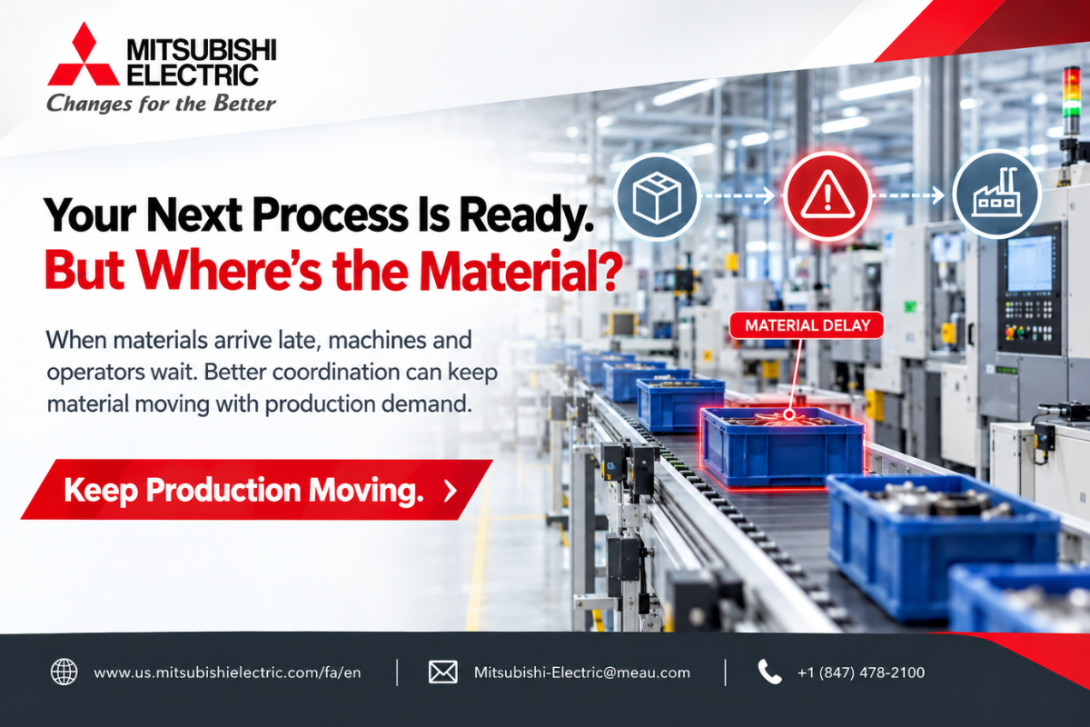
The movement of materials is directly correlated with production scheduling. When a particular part arrives late at the assembly station, there is nothing for the worker to do. If materials are moved slowly from the work in progress area, it can lead to the underuse of some equipment. On the other hand, if components arrive prematurely, they might take up the floor space, which creates extra work.
In production plants where material flow heavily relies on manual decision making, a person has to track multiple areas of production, respond to demands, move materials between stations, and choose priorities. With the increase in the number of production procedures, synchronization of these tasks becomes very complicated.
However, another issue is the fact that production does not usually proceed according to one particular pace. Machines have different cycle times, orders may change, machines sometimes break down, and priorities in production may be shifted. Thus, material flow systems that consider all operations to proceed according to schedule face some delays.
Material handling automation can help in aligning the material movement to the needs of the production. Automated conveyors, robotic handling, storage systems, and related equipment can be synchronized to provide the required level of consistency in moving materials.
The value is provided by synchronization and not speed. A faster conveyor may not solve the problem of production bottleneck if the receiving process is not available. The same way an increased number of material moves will worsen the problem of work-in-progress as this will cause extra work.
Thus, the manufacturer should consider material movement in relation to the whole facility. At which points do materials accumulate? At which process do materials run out? Where are queues formed? How many times workers need to stop their current tasks to move materials?
The answers to these questions will allow one to understand what is the nature of the problem - transportation, scheduling or synchronization problem. Thus, the material handling automation will be created in consideration of these real constraints.