

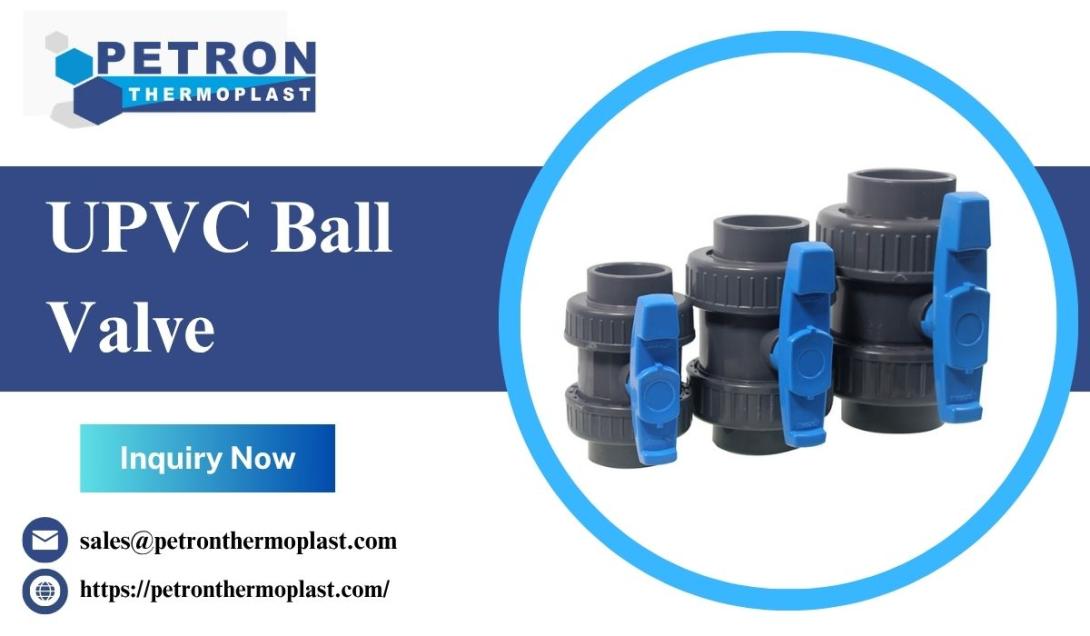
Industrial piping systems require dependable isolation components to control the movement of water, chemicals, process fluids, and other compatible media. For large-scale plant installations, EPC projects, maintenance programs, and pipeline expansion work, sourcing valves in bulk can help simplify procurement and maintain consistency across the piping network. A factory direct UPVC ball valve for bulk projects provides a practical solution for industrial applications where corrosion resistance, compact construction, and reliable on-off flow isolation are required.
UPVC, or Unplasticized Polyvinyl Chloride, is a rigid thermoplastic material used extensively in compatible chemical, water treatment, wastewater, and industrial fluid handling systems. UPVC ball valves use a spherical internal ball with a bore that rotates to control fluid flow. A quarter-turn operation typically moves the valve between open and closed positions.
For bulk industrial requirements, valve selection should consider pipe size, pressure rating, temperature, chemical compatibility, connection configuration, operating frequency, and installation conditions.
What Is a UPVC Ball Valve?
A UPVC ball valve is a quarter-turn isolation valve designed to start or stop fluid flow through a pipeline. The valve contains a spherical ball with a central passage.
When the valve is open, the ball bore aligns with the pipeline, allowing fluid to pass through. When rotated to the closed position, the solid section of the ball blocks the flow path.
Why Choose UPVC Ball Valves for Bulk Projects?
Large industrial projects may require hundreds of valves across multiple pipelines. Using a consistent valve material and configuration can simplify procurement and installation.
UPVC ball valves offer several characteristics for suitable applications:
- Corrosion-resistant thermoplastic construction
- Lightweight design
- Quarter-turn operation
- Compact configuration
- Low maintenance requirements
- Resistance to many chemicals
- Easy handling during installation
- Multiple connection configurations
Factory Direct Supply for Industrial Projects
Buying factory direct can be useful for customers managing large-volume procurement requirements.
Bulk projects may include:
- New chemical plants
- Water treatment facilities
- Wastewater treatment plants
- Industrial pipeline installations
- Plant expansion projects
- Process piping upgrades
- EPC projects
- OEM requirements
- Maintenance and replacement programs
UPVC Ball Valve for Chemical Transfer
Chemical transfer systems require careful material selection because aggressive fluids can cause deterioration of unsuitable components. UPVC ball valves can be considered for compatible chemical services such as certain acids, alkalis, treatment chemicals, and process fluids.
Corrosion Resistance
One of the major reasons UPVC is used in industrial piping is its resistance to corrosion in many compatible environments.
Unlike conventional steel valves, UPVC does not rust under normal conditions. This can make it useful for installations involving moisture, water treatment chemicals, and certain corrosive process fluids.
However, UPVC is not suitable for every chemical service. Chemical compatibility charts and project-specific engineering evaluation should be used before selecting the valve.
Quarter-Turn Operation
UPVC ball valves typically use a quarter-turn mechanism.
The handle can generally be rotated through approximately 90 degrees between the open and closed positions.
This provides:
- Quick isolation
- Simple operation
- Easy visual indication
- Compact actuation
- Convenient maintenance
Applications of UPVC Ball Valves
UPVC ball valves can be used in a range of compatible industrial applications.
Chemical Processing Plants
They can be installed on suitable chemical transfer and process lines where corrosion resistance is required.
Water Treatment Plants
UPVC ball valves can be used for water and compatible chemical handling applications.
Wastewater Treatment
They can be integrated into treatment, drainage, dosing, and transfer systems where the fluid is compatible with UPVC.
Industrial Manufacturing
Manufacturing facilities may use UPVC valves for process water, chemical transfer, and utility piping.
Chemical Storage Systems
UPVC ball valves can be installed at tank outlets, transfer lines, dosing connections, and other isolation points.
Bulk UPVC Ball Valve Procurement
Bulk procurement requires more than simply calculating the number of valves.
Before placing a large order, buyers should define:
- Valve quantity
- Nominal pipe size
- Connection type
- Pressure requirements
- Operating temperature
- Fluid type
- Chemical concentration
- Installation environment
- Manual or automated operation
- Required accessories
- Delivery schedule
UPVC Ball Valve for Pipeline Isolation
Isolation is one of the primary applications of a ball valve.
Valves can be installed at strategic points throughout an industrial piping network to isolate:
- Pumps
- Storage tanks
- Process equipment
- Branch pipelines
- Filters
- Dosing systems
- Maintenance sections
UPVC Ball Valves for Plant Expansion
When an industrial facility expands, new pipelines and equipment may need to connect with existing systems.
Bulk UPVC valve supply can support:
- New process lines
- Additional storage tanks
- Chemical dosing systems
- New treatment units
- Additional production lines
- Pipeline extensions
Benefits of Factory Direct Bulk Purchasing
Consistent Specifications
Bulk orders can be manufactured or supplied according to defined project specifications.
Procurement Efficiency
Large quantities can be coordinated through a single supply source.
Project Customization
Technical requirements can be communicated directly to the manufacturer.
Simplified Documentation
Project-specific technical information can be coordinated more efficiently when procurement is centralized.
Spare Valve Planning
Bulk purchasing can also allow customers to maintain compatible spare valves for future maintenance.
Maintenance Requirements
UPVC ball valves generally have relatively simple construction, but routine inspection remains important.
Maintenance may include:
- Checking for leakage
- Inspecting valve connections
- Checking handle operation
- Inspecting seals
- Verifying full opening and closing
- Checking surrounding piping
- Replacing worn components where applicable
Why Choose Petron Thermoplast?
Petron Thermoplast supplies thermoplastic piping products for chemical processing, water treatment, wastewater treatment, and industrial process applications.
The product range includes:
- UPVC Ball Valves
- UPVC Butterfly Valves
- UPVC Check Valves
- UPVC Diaphragm Valves
- UPVC Y Strainers
- UPVC Pipe Fittings
- UPVC Pipes
- Industrial Thermoplastic Components
- Custom Fabricated Piping Solutions
For bulk projects, customers can provide valve sizes, quantities, connection types, chemical service, operating conditions, and project requirements to determine the appropriate UPVC ball valve configuration.
Conclusion
A factory direct UPVC ball valve for bulk projects can provide a practical flow isolation solution for compatible industrial piping systems. Its corrosion-resistant thermoplastic construction, quarter-turn operation, compact design, and suitability for various industrial applications make it useful in chemical processing, water treatment, wastewater treatment, and industrial fluid handling systems.
For large procurement requirements, selecting the correct valve specification is essential. Buyers should evaluate chemical compatibility, pressure rating, temperature, pipe size, connection type, operating conditions, and installation requirements before placing a bulk order.
Petron Thermoplast supplies UPVC ball valves for industrial piping systems, chemical transfer lines, process equipment, water treatment facilities, plant expansions, and bulk industrial projects. By coordinating directly with the manufacturer, industrial buyers can specify their required valve sizes, quantities, connection arrangements, and application conditions for project-specific procurement.