

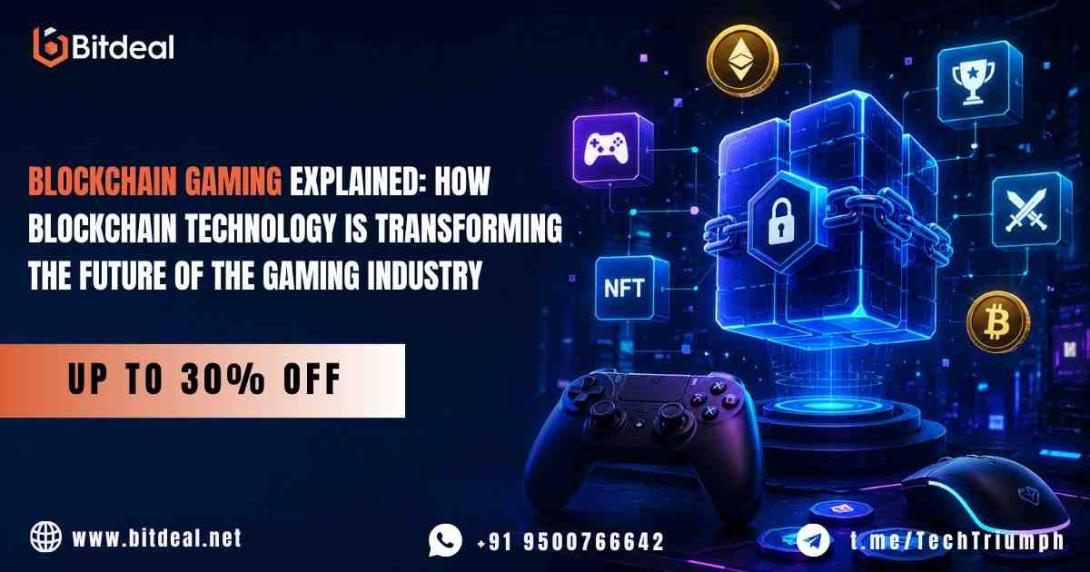
The gaming industry has evolved dramatically over the past few decades, from pixelated arcade games to massive online worlds with millions of players. As technology advances, a new shift is taking shape: blockchain. Once known mainly for powering cryptocurrencies, blockchain technology is now reshaping how games are built, played, and monetized. Blockchain gaming introduces real ownership, transparent economies, and player-driven ecosystems, which is why it's gaining serious attention from developers, investors, and gamers alike.
What Is Blockchain?
Blockchain is a decentralized digital ledger that records transactions across a network of computers instead of a single central server. No single entity controls the data, so it offers decentralization, strong security, and transparency, qualities that make it a natural fit for gaming. These fundamentals also form the foundation of blockchain development, since every blockchain game is built on this same underlying structure.
Blockchain Applications Beyond Cryptocurrency
Blockchain's use cases now extend far beyond digital coins. Finance uses it for faster, secure payments; healthcare for tamper-proof records; supply chain for tracking products; real estate for transparent transactions; and identity management for giving people more control over their data. Increasingly, decentralized gaming has emerged as one of its most promising applications, combining blockchain technology with interactive entertainment.
Why Blockchain Matters in Gaming
Traditional games come with persistent problems. Players don't have true ownership of the items, skins, or currency they earn or purchase, since everything exists inside a company's private database. Publishers maintain centralized control, meaning they can modify or remove assets anytime, or shut down servers entirely and erase player progress. Trading is also limited, often restricted to marketplaces controlled by the developer.
This is where blockchain gaming changes the equation. By recording asset ownership on a blockchain, digital ownership becomes verifiable and independent of any single company. Players can trade, sell, or hold their assets freely, moving the gaming industry toward open, player-centric economies rather than closed, publisher-controlled systems.
How Blockchain Technology Powers Modern Blockchain Games
Understanding the mechanics behind blockchain game development helps explain why these games feel different from traditional titles. Blockchain games typically follow this flow:
Player → Wallet → Smart Contract → NFT → Gameplay → Rewards
Crypto Wallet: A crypto wallet stores digital currency and assets, and logs players into the game, acting as their identity and vault.
Smart Contracts: A smart contract, self-executing code, automatically handles transactions like purchases or quest rewards, without needing a middleman.
NFTs: In-game items are often represented as NFTs, proving ownership of unique assets like characters, weapons, or land.
Game Tokens & Marketplace: Game tokens serve as in-game currency, used for purchases, rewards, or governance. Players trade these tokens and NFTs on a marketplace, completing the loop from gameplay to real, tradeable rewards.
Real-World Examples of Blockchain Games
Axie Infinity
Popularized the play-to-earn model, letting players earn real value through gameplay.
The Sandbox
Lets players buy, build on, and monetize virtual land as NFTs.
Gods Unchained
Brings blockchain ownership to trading card games, letting players truly own and trade their cards.
Together, these projects show how blockchain supports digital ownership, player-driven economies, and decentralized marketplaces at scale.
Benefits of Blockchain Gaming
For players: true digital ownership of items and currency, secure peer-to-peer trading without a central platform, transparent economies with verifiable asset histories, and reduced fraud through cryptographic verification.
For developers: new revenue models such as asset sales and marketplace fees, player-driven economies shaped by community demand, and stronger community engagement as players become genuine stakeholders rather than passive consumers.
Future of Blockchain Gaming
Blockchain gaming is likely to evolve alongside several emerging trends. AI integration could personalize gameplay and automate smart contract logic, while cross-chain gaming may let assets move between different blockchain networks, increasing flexibility for players. Broader Web3 gaming adoption will likely push more mainstream studios to experiment with decentralized features, all driving the continued rise of player-owned economies.
Conclusion
Blockchain is reshaping gaming's future, moving beyond its early ties to cryptocurrency into an era of secure ownership and transparent, player-driven economies. As adoption grows, more businesses are turning to a trusted blockchain game development company like Bitdeal to bring these ideas to life. For companies exploring blockchain-powered games, this can help turn concepts into secure, scalable, market-ready platforms.