

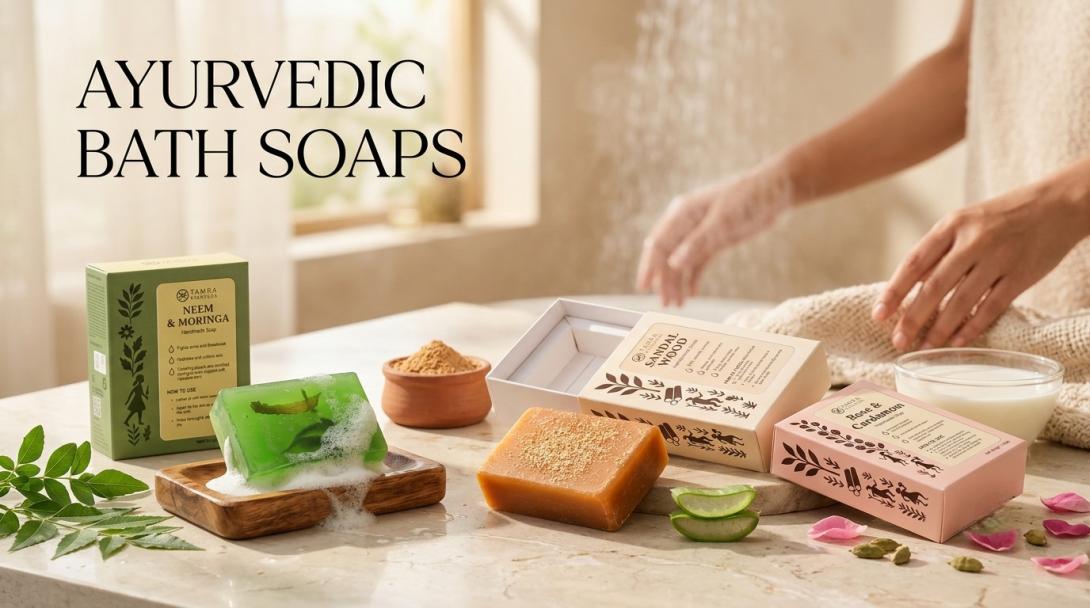
Daily bathing is an important part of personal hygiene, but choosing the right bathing soap can make a difference to your overall skincare routine. Many people are exploring traditional skincare ingredients and plant-based formulations as alternatives to conventional cleansing products. Ayurvedic bath soap is one such option, inspired by traditional Indian practices and commonly formulated with ingredients such as neem, turmeric, sandalwood, aloe vera, and herbal extracts.
These ingredients have long been used in traditional personal-care routines and are valued for their individual properties. However, not every herbal soap is suitable for every skin type. Understanding the ingredients, formulation, and your skin's requirements can help you make a better choice.
What Is Ayurvedic Bath Soap?
Ayurvedic bath soap is a bathing product inspired by Ayurveda, India's traditional system of wellness. It may contain botanical extracts, plant-derived oils, herbal ingredients, and cleansing agents selected for everyday personal care.
Unlike products that focus only on fragrance or cleansing, Ayurvedic-inspired soaps often highlight traditional ingredients and their role in personal-care practices.
Common ingredients include:
- Neem: Traditionally used in personal hygiene and skincare preparations.
- Turmeric: A botanical ingredient valued for its antioxidant properties.
- Sandalwood: Appreciated for its distinctive fragrance and traditional skincare applications.
- Aloe vera: Commonly included in products designed to support skin hydration.
- Coconut oil: Frequently used in soap formulations for its cleansing and conditioning characteristics.
The actual properties of a soap depend on its complete formulation rather than one individual ingredient.
Popular Herbal Ingredients Used in Ayurvedic Bath Soaps
Understanding the ingredients is one of the most important steps when choosing a bathing soap. Here are some commonly used botanicals and their traditional applications.
1. Neem for Traditional Skin Care
Neem has a long history in Indian personal-care practices. Its extracts are commonly used in herbal soaps and cleansing products.
Neem contains naturally occurring compounds that have been studied for their antimicrobial properties. However, the presence of neem in a soap does not automatically mean that it can treat acne, infections, or other skin conditions.
2. Turmeric for Everyday Skincare
Turmeric is widely recognised in traditional Indian beauty routines. It contains curcumin, a compound studied for its antioxidant and anti-inflammatory properties.
It is frequently included in herbal bathing products and traditional skincare formulations. Its inclusion can make a soap appealing to people interested in plant-based personal-care ingredients.
3. Sandalwood for a Refreshing Bathing Experience
Sandalwood is traditionally appreciated for its pleasant fragrance and use in Indian beauty preparations.
It is commonly found in herbal soaps, bathing products, and personal-care formulations. When selecting a sandalwood soap, check whether the fragrance and complete formulation are suitable for your skin.
4. Aloe Vera for Skin Hydration
Aloe vera is a popular ingredient in skincare because of its moisturising and soothing properties.
It is often used in cleansing products to complement other ingredients. Products containing aloe vera may be worth exploring if you prefer a bathing soap with a skin-conditioning formulation.
5. Coconut Oil for Cleansing Formulations
Coconut oil is widely used in traditional soap-making because it contributes to the cleansing and lathering properties of soap.
However, soap formulations containing coconut oil can differ in their effects depending on the concentration and other ingredients. People with dry or sensitive skin should choose products carefully.
How to Choose Ayurvedic Bath Soap According to Your Skin Type
A suitable bathing soap should cleanse your skin without leaving it excessively dry or uncomfortable. Your skin type and sensitivity should guide your selection.
For Dry Skin
Dry skin often feels tight, rough, or uncomfortable after bathing. Choose a gentle cleansing formulation and avoid products that leave your skin feeling stripped of moisture.
Look for soaps with suitable conditioning ingredients and follow bathing with an ayurvedic moisturizer for dry skin or another moisturiser appropriate for your skin.
For Oily Skin
People with oily skin may prefer a soap that removes excess surface oil and dirt without excessive scrubbing.
Neem and other herbal ingredients are commonly included in soaps marketed for oily skin. However, avoid overly harsh formulations, as excessive cleansing can disturb the skin barrier.
For Sensitive Skin
Sensitive skin requires additional care when choosing bathing products.
Consider the following:
- Prefer fragrance-free or low-fragrance formulations.
- Avoid soaps containing ingredients that have previously caused irritation.
- Check the complete ingredient list.
- Perform a patch test before regular use.
- Discontinue use if you experience itching, redness, or discomfort.
Natural ingredients can also trigger allergic reactions, so herbal formulations are not automatically suitable for sensitive skin.
For Normal Skin
People with normal skin can generally explore a wider range of bathing soaps. A mild formulation with suitable cleansing and conditioning ingredients can be a practical choice for everyday hygiene.
How to Use Ayurvedic Bath Soap in Your Daily Routine
Using bathing soap correctly can help maintain comfortable and healthy-looking skin.
Follow these simple steps:
- Wet your body with lukewarm water.
- Apply the soap gently using your hands or a soft bathing cloth.
- Avoid excessive rubbing, particularly on dry or sensitive areas.
- Rinse thoroughly to remove soap residue.
- Pat your skin dry using a clean towel.
- Apply a suitable body moisturiser while your skin is slightly damp.
Avoid prolonged hot showers and excessive cleansing, as these habits may contribute to skin dryness.
How to Build a Complete Ayurvedic-Inspired Personal Care Routine
A balanced personal-care routine includes more than just bathing. Selecting products according to your individual needs can help keep your routine simple and consistent.
For skincare, a gentle bathing soap can be paired with a suitable moisturiser. People interested in traditional beauty formulations may also explore products such as saffron serum, depending on their skincare goals and the product's ingredients.
Hair care can be approached separately. An ayurvedic hair oil may be included in a regular hair-conditioning routine, while an ayurvedic oil for hair growth is another product category people explore for scalp and hair care. However, hair oils should not be considered guaranteed treatments for hair loss or hair-growth concerns.
The key is to choose products based on their intended purpose rather than using multiple products without understanding their formulations.
What Should You Check Before Buying Ayurvedic Bath Soap?
Before purchasing a herbal bathing soap, consider these important factors:
- Ingredient transparency: Check whether the brand clearly lists the ingredients.
- Skin compatibility: Select a formulation suitable for your skin type.
- Cleansing strength: Avoid products that leave your skin feeling excessively dry.
- Fragrance: Consider fragrance-free options if you have sensitive skin.
- Product instructions: Follow the manufacturer's recommended usage.
- Brand reliability: Choose brands that provide clear product information and transparent descriptions.
Making an informed decision can help you find a bathing soap that fits comfortably into your everyday personal-care routine.
Frequently Asked Questions (FAQs)
1. What is Ayurvedic bath soap used for?
Ayurvedic bath soap is used for everyday body cleansing. It is generally inspired by traditional Indian skincare practices and may contain ingredients such as neem, turmeric, sandalwood, and aloe vera.
2. Is Ayurvedic bath soap suitable for daily use?
Many Ayurvedic-inspired bathing soaps are designed for regular use. However, suitability depends on the formulation and your skin type. Choose a gentle product and discontinue use if irritation develops.
3. Which ingredients are commonly found in Ayurvedic bath soap?
Common ingredients include neem, turmeric, sandalwood, aloe vera, coconut oil, tulsi, and other botanical extracts. The ingredient combination varies between products and brands.
4. Is Ayurvedic bath soap good for dry skin?
Some formulations may be suitable for dry skin, particularly those with conditioning ingredients. However, soap can sometimes increase dryness. Follow bathing with a moisturiser and choose products that do not leave your skin feeling tight.
5. Can Ayurvedic bath soap be used on the face?
Not every bathing soap is suitable for facial use. Facial skin can be more sensitive than body skin, so it is better to choose a cleanser specifically formulated for the face.
6. What is the difference between herbal soap and Ayurvedic soap?
Herbal soap generally refers to cleansing products containing plant-based ingredients. Ayurvedic soap is specifically inspired by traditional Ayurvedic principles and may feature herbs commonly used in Indian personal-care practices.
7. How should I store Ayurvedic bath soap?
Keep your soap in a well-drained soap dish away from standing water. Allowing it to dry between uses can help prevent it from becoming soft and wearing away quickly.
8. How can I choose the best Ayurvedic bath soap for my skin?
Check the ingredient list, consider your skin type, avoid known irritants, and choose a product designed for your intended use. If you have a persistent skin condition, consult a dermatologist before changing your skincare routine.