

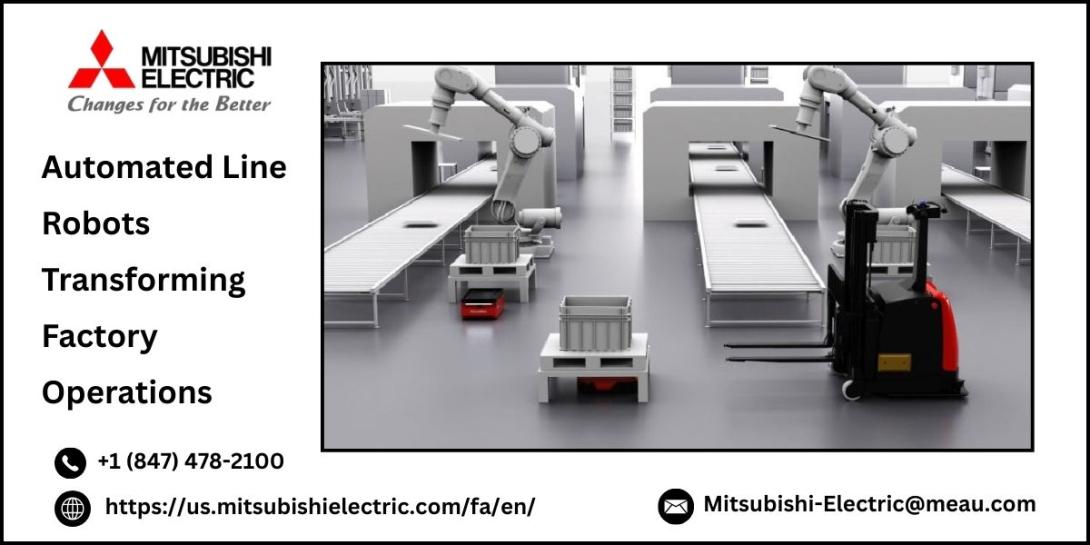
Factory floors rarely change overnight. Instead, they evolve in small, practical steps. A faster process here. A safer workflow there. Over time, those changes reshape how work gets done. That’s exactly how automated line robots have found their place in modern manufacturing not as a dramatic replacement, but as a steady response to real operational pressure. Manufacturers didn’t turn to automation because it looked impressive. They did it because consistency, labor availability, and production demands stopped lining up the way they used to.
Why production lines needed to change
For years, factories relied on predictable labor and stable demand. That balance has shifted.
Repetition creates strain over time
Line work often involves the same motions, repeated thousands of times a day. Over time, that repetition leads to fatigue, errors, and injuries. Automated line robots step into these roles not to speed people up, but to reduce wear on them. Robots don’t get tired. They don’t lose precision at the end of a shift. That reliability changes how production managers think about output.
Variability makes planning harder
Product mixes change more often than they used to. Shorter runs. More customization. Manual lines struggle to adapt quickly without downtime. Automation absorbs that variability more smoothly. This flexibility is one of the quiet reasons adoption keeps growing.
How automated line robots fit into daily operations
Automation doesn’t replace entire lines at once. It usually integrates into specific points where pressure is highest.
End-of-line tasks benefit first
End of line robots are often among the first additions. The Palletizing, packing, and sorting tasks demand consistency and strength. Robots are capable of handling these tasks with predictable accuracy, reducing bottlenecks. They help products move out faster without increasing physical strain on workers.
Conveyor systems become smarter
Automation works best when systems talk to each other. Conveyor system automation allows robots to sync with upstream and downstream processes. It also adjusts speed and timing automatically. This coordination reduces stoppages and keeps lines moving evenly instead of in bursts.
The role of machine tool fixtures in robotic accuracy
Robots are only as effective as their setup.
Precision starts with stability
Machine tool fixtures hold parts in place so robots can perform tasks accurately. Even small inconsistencies can affect quality when production volumes are high. Well-designed fixtures ensure repeatability, allowing robots to perform the same action thousands of times without drift.
Fixtures support flexibility
Modern fixtures are often adjustable, allowing quick changeovers between products. This supports shorter production runs without long downtime, which has become increasingly important.
Automation in food and beverage environments
Not all factories face the same challenges. Food and beverage production brings its own constraints.
Hygiene and consistency matter more
The factory robots operate in environments where cleanliness and repeatability are critical. Food & beverage factory robots reduce human contact with products, supporting hygiene standards. They even maintain the throughput. This is essential in packaging and handling stages where contamination risk is highest.
Speed must stay controlled
Unlike some industries, faster isn’t always better in food production. Automation helps in maintaining the controlled speed and uniform handling. It reduces waste caused by damage or inconsistency.
Understanding the technology behind industrial robots
Most of the industrial robots combine mechanics, control systems, and software.
To get a general neutral explanation of how industrial robots work, have a look at this: https://en.wikipedia.org/wiki/Industrial_robot
Understanding this foundation helps explain why robots excel at consistency, repeatability, and precision.
Long-term impact on factory operations
The real impact of automated line robots shows up gradually.
Output becomes more predictable
With fewer manual variables, production planning becomes easier. Schedules hold. Delays decrease. Inventory planning improves. That predictability often matters more than raw speed.
Workers shift to higher-value tasks
Automation doesn’t remove people from factories. It changes where they add value. Monitoring systems, handling exceptions, and improving processes become more important than repetitive motion. Over time, this shift improves both safety and job satisfaction.
Common questions about automated line robots
Are automated line robots only for large factories?
No. Scalable systems allow small and mid-sized manufacturers to automate specific processes.
Do robots require constant reprogramming?
Not usually. Modern systems are designed for stability, with adjustments made during product changes.
Is automation mainly about speed?
Not primarily. Consistency, safety, and reliability are often bigger drivers.
A quieter kind of transformation
Automated line robots don’t transform factories with spectacle. End of line robots do it through reliability. Through fewer errors and steadier output. Through lines that keep moving even when conditions change. Over time, manufacturers notice something subtle. The floor feels calmer. Planning feels easier. Problems become easier to trace and fix. That’s how transformation really happens in factories not all at once, but one stable process at a time.