
Global Ambient Food Products Market Size, Share, and Forecast (2025–2032)
Market Overview
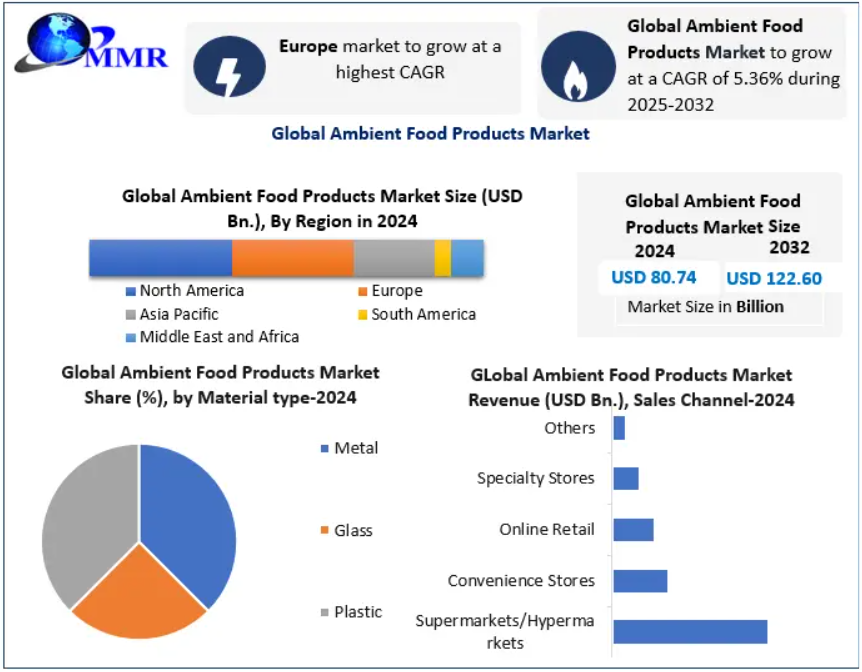
The Global Ambient Food Products Market was valued at USD 80.74 billion in 2024 and is forecasted to grow at a CAGR of 5.36% from 2025 to 2032, reaching nearly USD 122.60 billion by the end of the period.
Ambient food products are packaged foods designed to remain stable at room temperature for extended periods without refrigeration. These include ready meals, sauces & dressings, canned foods, dairy alternatives, baked goods, confectionery, cereals, and beverages. The market is strongly influenced by consumer demand for convenient, long-lasting, and safe food products, supported by advancements in barrier packaging technologies that protect products from oxygen, moisture, and microbial contamination.
Packaging is at the heart of the ambient food industry, with manufacturers focusing on rigid containers (cans, bottles, jars, trays) and flexible solutions (pouches, sachets, bags). Flexible plastics are gaining momentum due to lightweight properties, cost efficiency, and the integration of retort, vacuum, and modified atmosphere packaging technologies.
To know the most attractive segments, click here for a free sample of the report:https://www.maximizemarketresearch.com/request-sample/109272/
Market Dynamics
Key Growth Drivers
- Extended Shelf Life & Food Safety: Advanced sterilization and pasteurization techniques coupled with barrier packaging enhance shelf stability.
- Convenience & Portability: Busy lifestyles are fueling demand for packaged ready-to-eat and easy-to-store ambient food items.
- Global Trade of Packaged Food: Ambient products are widely exported across regions as they can withstand longer transit times.
- Sustainability Push: Increasing R&D in eco-friendly packaging materials to reduce environmental impact.
Restraints
- Plastic Waste Concerns: Heavy reliance on plastic packaging raises regulatory and environmental challenges.
- Competition from Fresh & Frozen Food: Rising preference for healthier, fresher food alternatives may limit growth in certain consumer segments.
Opportunities
- Growth in Emerging Economies: Rising disposable incomes and urbanization in Asia-Pacific and Africa are driving packaged food consumption.
- E-commerce Expansion: Online retail channels are accelerating global accessibility of packaged ambient foods.
- Functional & Nutrient-rich Offerings: Integration of protein-rich, fortified, and clean-label products in ambient categories can attract health-conscious consumers.
Segment Analysis
By Packaging Type
- Rigid Packaging: Includes cans, bottles, jars, trays, cups, and other formats. Still dominant in beverages, sauces, and canned goods.
- Flexible Packaging: Expected to outpace rigid packaging growth, particularly pouches, which are lightweight, cost-effective, and adaptable to high-barrier technologies.
By Material Type
- Plastics (PET, PE, PP, PS): Continue to dominate due to durability, flexibility, and cost efficiency.
- Glass & Metal: Favored for premium beverages, sauces, and canned foods, though higher costs restrain their use.
By Sales Channel
- Supermarkets/Hypermarkets: Largest distribution segment due to wide product availability.
- Online Retail: Fastest-growing channel, driven by e-commerce penetration, direct-to-consumer packaging solutions, and bulk purchasing options.
- Convenience & Specialty Stores: Important for impulse and niche purchases.
By Product Type
- Ready Meals & Sauces/Dressings: Major contributors, reflecting consumer shift toward convenience.
- Dairy & Beverages: Growth supported by increasing consumption of shelf-stable milk alternatives and functional drinks.
- Bakery, Confectionery, Fruits & Vegetables: Steady demand from household consumption and global exports.
To know the most attractive segments, click here for a free sample of the report:https://www.maximizemarketresearch.com/request-sample/109272/
Regional Insights
- North America (35% share in 2024): Dominates the market due to stringent food safety regulations, consumer demand for packaged convenience foods, and adoption of eco-friendly packaging.
- Europe: Strong emphasis on sustainability and packaging innovations, supported by strict EU food waste reduction policies.
- Asia-Pacific: Expected to record the fastest growth, driven by rising consumption in China and India. Increasing demand for yogurt, dairy products, and packaged meals underpins regional expansion.
- Middle East & Africa: Growth supported by urbanization and rising investments in modern retail formats.
- South America: Brazil and Argentina drive demand through a growing packaged food sector and adoption of ambient dairy and beverage solutions.
Competitive Landscape
The market is highly competitive, with both global packaging leaders and regional manufacturers investing in innovation and sustainable materials. Companies are focusing on lightweight solutions, recycling technologies, and functional packaging designs.
Key Players:
- Alexir Partnership
- Marsden Packaging Limited
- Alto Packaging
- Amcor Limited
- SIG Combibloc Obeikan
- Tetra Pak
- Rexam
- Ampac LLC
- Mondi Group
- KM Packaging
- DuPont
- FFP Packaging Solutions Ltd.
- RPC Group
- Bemis Company, Inc.
- Excelsior Technologies
Conclusion
The Global Ambient Food Products Market is set to grow steadily, reaching USD 122.60 billion by 2032. While challenges related to plastic sustainability persist, innovations in biodegradable packaging, barrier technology, and smart labeling are likely to shape the industry’s future.
With North America and Europe maintaining strong market positions, Asia-Pacific will emerge as the most dynamic region, offering significant opportunities for packaging innovators and food manufacturers. Companies that embrace eco-friendly solutions, convenience-driven formats, and digital distribution will gain a competitive edge in this evolving market.