
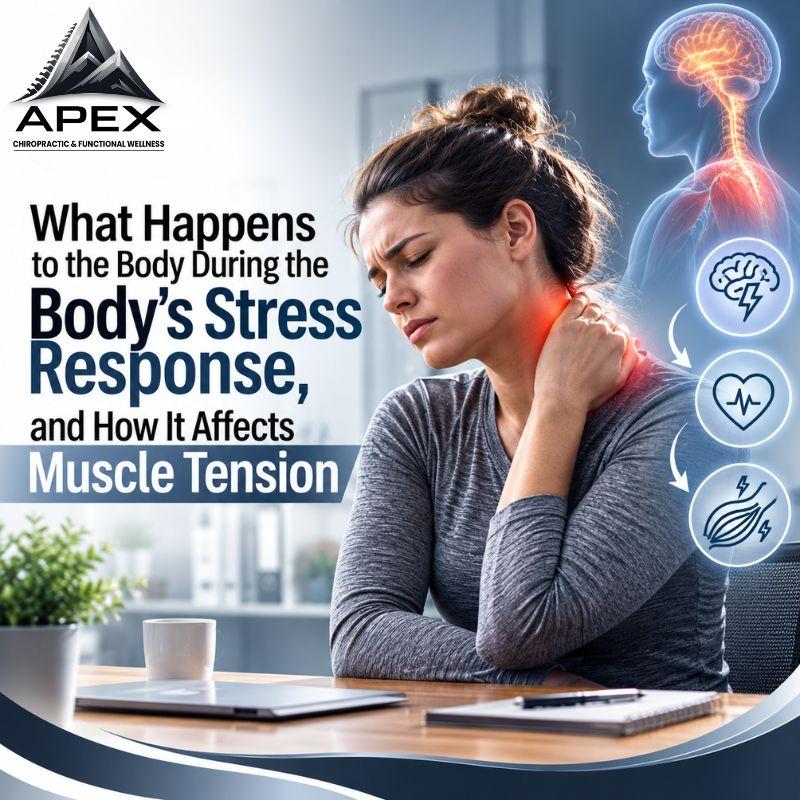
Stress is more than just a mental process. In cases where the brain detects threat, stress, or demand, there is a biological reaction that aims at improving one's ability to survive and perform in the short term. The heart beats faster, the breathing pattern changes, muscles are prepared for action, and attention is enhanced.
This is helpful when the response is brief. Being under stress for a long time can cause problems. Stress can contribute to muscle tension, poor posture, reduced mobility, and neck or back pain. For individuals who have musculoskeletal problems, stress can make symptoms more difficult to manage.
Knowing this, this connection may provide an explanation for why precision chiropractic care is often considered more than just addressing pain points.
The Body's Stress Response Starts With the Nervous System
When the brain perceives an impending danger, the sympathetic nervous system activates the "fight or flight" reaction of the body. The adrenal glands release hormones such as adrenaline and cortisol, among others.
Heart rate and blood pressure are pushed upward, breathing becomes faster, and blood flow is redirected toward muscle tissue and associated systems at an instantaneous rate.
The muscles also begin to contract and become more prepared. The body often shifts its priorities from long-term protection and recovery to immediate preparation.
This is the right response to an honest short-term crisis. But current stressors—the demands of daily life, prolonged sitting, poor sleep, emotional pressure, and constant stimulation—can keep the body operating as though great physical effort is required.
Why Stress Creates Muscle Tension
One of the clearest physical effects of stress is increased muscle tension. People commonly tighten their shoulders, clench their jaw, stiffen their neck, or brace their lower back without realizing it.
When this happens repeatedly, muscles may spend too much time partially contracted rather than cycling normally between contraction and relaxation.
Over time, this can contribute to:
- Neck and shoulder tension
- Headaches
- Lower back discomfort
- Muscle fatigue
- Stiffness
- Reduced range of motion
- Increased sensitivity to pain
The problem is not that stress leads to each incidence of musculoskeletal pain. The problem is that stress may create an environment that makes mechanical issues more apparent or interferes with recovery.
Stress Can Change How You Move
Muscle tightness may also influence movement mechanics. With certain muscle tension, the body may also compensate in terms of its mechanics of bending, twisting, walking, sitting, or lifting.
For instance, when there is prolonged tension, it may lead to widening of the shoulder area or stiffness of the neck area. Over time, these patterns can place an additional mechanical challenge on the joints and surrounding muscles.
The result can become a cycle:
Stress → muscle tension → altered movement → additional mechanical strain → discomfort → more protective tension.
It takes more than simply telling a person to break this cycle and relax. The physiological consequences of prolonged stress will need to be addressed further.
Stress and Pain Can Reinforce Each Other
Persistent pain can end up providing stress on its own. When the pain affects sleep, exercise, work, or general daily life, the body can also become more and more protective of the painful spot.
This can increase muscle resistance and make movement more difficult.
Thus, stress works in both directions. Stress can contribute to muscle pain, while persistent pain can increase stress and defensive muscle activity.
This connection—a whole approach to musculoskeletal care—can be more powerful than focusing entirely on the trouble spot.
How Chiropractic Care Fits Into the Picture
Chiropractic care specializes in the mechanical components of musculoskeletal function, including spine and joint movement, posture, and gait characteristics.
A chiropractic evaluation can help determine if limited joint movement, postural pressure, or abnormal movement patterns are contributing to muscle tension and pain.
Chiropractic intervention may include spinal manipulation and other appropriate treatment strategies designed to increase joint mobility and reduce mechanical pressure. When restrictions are addressed, the surrounding muscle tissues may not need to remain as tight to stabilize or compensate for movement.
This can be an important aspect of a comprehensive approach to addressing physical symptoms in patients suffering from stress-related neck, shoulder, or back problems.
Chiropractic Care Is Not a Substitute for Stress Management
Addressing physical tension does not eliminate the sources of psychological or emotional stress. Long-term improvement may require attention to both.
Also beneficial for patients is the combination of proper chiropractic care along with proper self-care, including physical exercise, good sleeping habits, relaxation, ergonomic changes, and proper rest.
The goal is not only to lessen the physical effects of constant stress but also to improve the conditions that allow the body to feel good.
Better Movement Can Support Better Recovery
When joints move well and muscle tissue does not continuously compensate for limited mobility, everyday physical needs can appear less complex to manage.
Improving spinal and joint function may support:
- More comfortable movement
- Greater range of motion
- Reduced muscular guarding
- Better posture
- Improved tolerance for physical activity
These changes can be especially valuable for people whose work or lifestyle requires prolonged sitting, repetitive movements, lifting, or other physical demands.
When Muscle Tension Should Be Evaluated
Occasional muscle soreness after a stressful day is common, but persistent or regular pain is different. If the discomfort interferes with relaxation and basic self-care, interferes with mobility repeatedly, or keeps returning, then evaluation of underlying musculoskeletal factors may be warranted.
Managing severe or unexplained pain, significant weakness, numbness, bladder or bowel loss, or signs and symptoms after a severe injury requires medical judgment instead of complete reliance on chiropractic care.
The body's stress response is designed to protect us; however, prolonged activation can have physiological consequences. Persistent muscle pain, altered mobility, and increased sensitivity to discomfort can all appear as part of the picture.
Addressing the mechanical aspects of these problems can be an important part of improving painful range of motion. APEX provides personalized care, in conjunction with Chiropractic Adjustments Huntsville, to help relieve patients of back and joint conditions, reduce mechanical stress, and promote healthy movement.
The Article “What Happens to the Body During the Body's Stress Response, and How It Affects Muscle Tension” was originally posted here.