
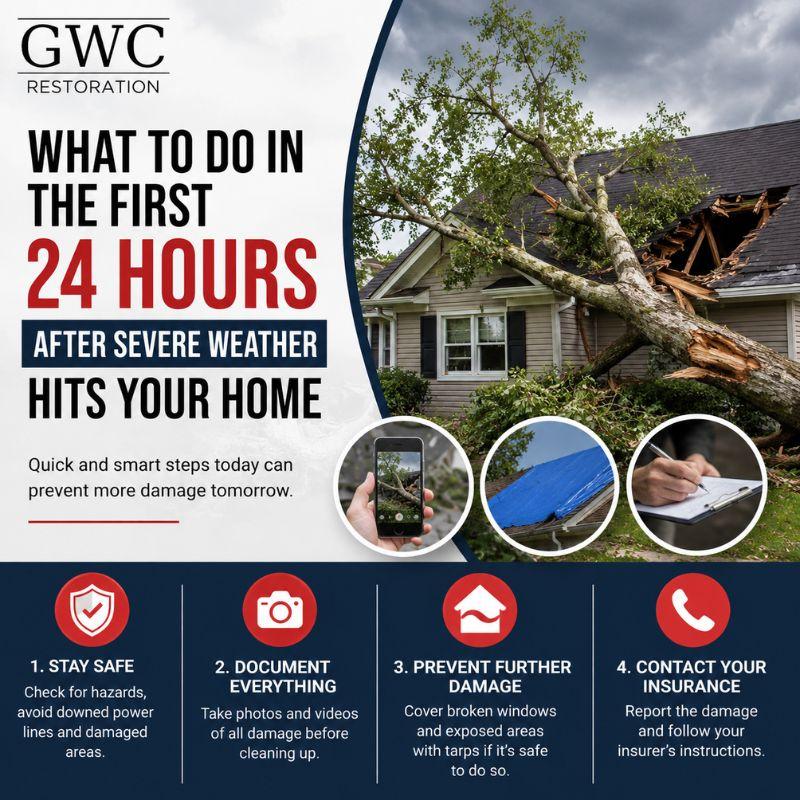
The order is safety, then documentation, then temporary protection, then a professional assessment. Stay clear of damaged areas and downed power lines, photograph everything before cleanup, take safe steps to limit further damage, call your insurer, and get a storm damage restoration in Huntsville to check for hidden moisture and roof damage you can't see from the ground.
North Alabama gets its share of rough weather. Most of the time, the house is still standing once it passes, and the real decisions start the next morning. Here's the order to work in.
1. People First
Make sure the location is secure before walking the property. Look for downed power lines, broken glass, at-risk trees, compromised roofs, water near any power lines, fuel odors, or signs of structural damage. If you see a downed line or suspect structural damage, stay away from the area and contact the appropriate emergency service. Just don't go see it up close.
2. Check for Active Water Intrusion
Once it's safe, inspect your home's roof, attic, windows, siding, skylights, chimneys, and basement or garage for drips, wet insulation, stains, or standing water. Stop the source only if you can do it safely—that doesn't mean climbing onto a wet, wind-damaged roof.
3. Assume There's Roof Damage You Can't See
Roof damage is not always visible from the ground. Stay off the roof and have a professional inspect it once conditions allow. Even a small opening can allow water into your attic during the next rain.
4. Slow the Damage Down — Safely
If safe: Move belongings away from active leaks, place containers under drips, cover openings from the inside, board up damaged home windows, and pull furniture from wet floors. Avoid anything that requires ladders, risky structures, or exposed wires. A restoration team can help put temporary protection and restoration measures in place.
5. Document Before You Clean Up
Photograph and video the roof, outer structure, broken windows, leakage, damage to ceilings and walls, wet floors, furniture, fallen trees, and property. Get wide shots plus close-ups, and do this before anything gets thrown away.
6. Call Your Insurance Company Early
Ask what documents are needed, whether the adjuster wants to look in person, and what emergency procedures should be followed. Keep records of every call and bill—policies vary from policy to policy.
7. Bring In a Professional Storm Damage Team
Water can get behind walls, under floors, and into insulation—areas you may not be able to identify on your own. A professional can assess the overall extent of the damage and help with water damage restoration, roof repair, structural repairs, mold remediation, and reconstruction when needed. Addressing damage quickly can help keep a manageable problem from becoming more extensive.
8. Leave Wet Electrical Systems Alone
If the water has reached outlets, wires, or your electrical panels, do not touch them and do not run electrical equipment near standing water. Have the electrical system professionally checked before using affected equipment or areas.
9. Don't Rush to Tear Everything Out
Document first and loop in your insurer before major demolition—some materials may be saved with prompt restoration. Materials left wet too long can create additional problems, so a professional should help decide what can be dried, what needs to be cleaned, and what needs to be removed.
10. Watch for Hidden Moisture
Water can sit behind dry walls, under floors, inside gaps in walls, under cabinets, in insulation, under carpet padding, and in crawl spaces—moisture meters and infrared imaging can help identify what your hand can't long after the floor feels dry.
11. Hold Off on Permanent Repairs
The first day is about safety, documentation, mitigation, and assessment—not permanent fixes. Before starting major repairs or demolition, document the damage and contact your insurance provider so you understand the next steps.
First-24-Hour Checklist
- Make sure everyone is safe.
- Stay clear of downed lines and unstable structures.
- Check for active water intrusion carefully.
- Photograph everything before cleanup.
- Call your insurance company.
- Take safe, temporary steps to limit damage.
- Skip the DIY roof inspection.
- Get a professional restoration assessment.
- Save every receipt and record.
- Watch for moisture that shows up days later.
What Not to Do
Avoid climbing on damaged roofs, entering areas with suspected structural damage, touching downed power lines, moving electrical equipment near standing water, ignoring "small" leaks, masking damage rather than finding the source, discarding things before documenting them, starting demolition too soon, and assuming a room is dry because it feels dry.
How GWC Restoration Helps Huntsville Homeowners
We're a locally owned and operated restoration company with IICRC certifications, serving Huntsville, Madison, and surrounding North Alabama communities. Our services include storm damage restoration, roof and siding repairs, structural repairs, water damage restoration, mold remediation, contents pack-out and storage, and reconstruction when needed. We're also a licensed home builder (AL HBLB# 29505), allowing restoration and reconstruction to be handled by the same team when required.
If Your Huntsville Home Was Hit, Don't Wait
Storm damage is rarely just what you can see from the driveway. GWC Restoration provides emergency storm damage restoration for Huntsville, Madison, Athens, Decatur, Cullman, and surrounding North Alabama communities. Call (256) 509-6772 or request a free quote.
Frequently Asked Questions
Should I call my insurance company or a restoration company first? Either order works as long as both happen quickly.
Is it safe to check my own roof after a storm? No. Roof damage isn't always obvious, and a compromised structure can be dangerous. Leave it to a professional.
How fast should storm restoration start? As soon as it's safe. The longer water sits, the higher the risk of mold and full material replacement.
The Article “What to Do in the First 24 Hours After Severe Weather Hits Your Home” was originally posted here.