
The U.S. Diamond Market is experiencing steady growth as consumer preferences evolve and demand for diamond jewelry continues across bridal, luxury, and fashion segments. Diamonds are valued for their brilliance, durability, and symbolic significance, making them popular for engagement rings, wedding jewelry, gifts, and premium accessories. In addition to jewelry, diamonds serve important industrial purposes because of their exceptional hardness, wear resistance, and thermal conductivity.
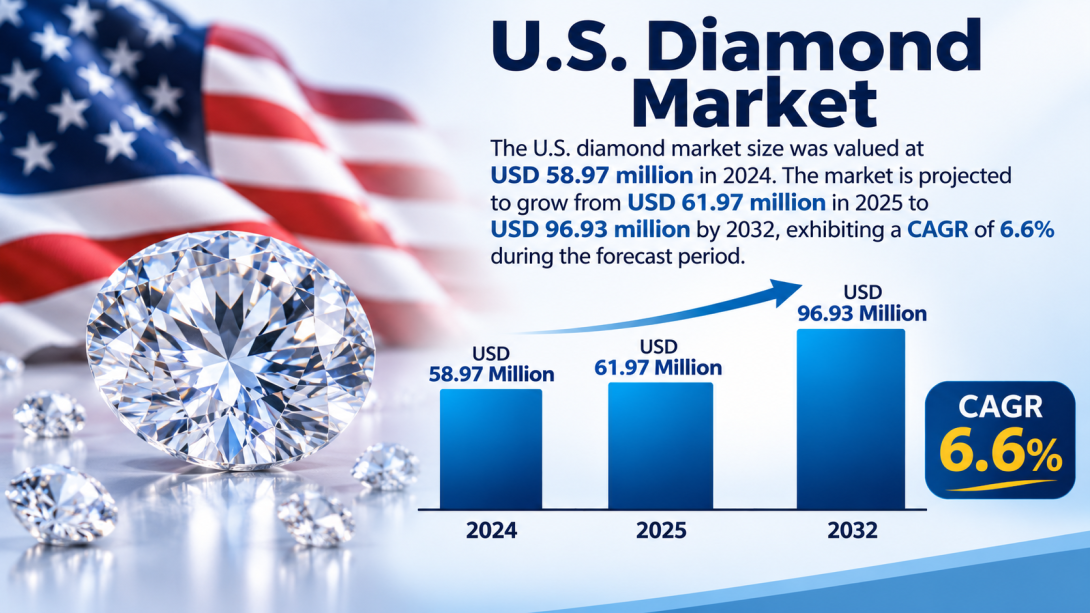
According to Fortune Business Insights, the U.S. diamond market size was valued at USD 58.97 million in 2024. The market is projected to grow from USD 61.97 million in 2025 to USD 96.93 million by 2032, exhibiting a compound annual growth rate (CAGR) of 6.6% during the forecast period. Increasing acceptance of lab-grown diamonds, changing purchasing habits, and growing interest in personalized jewelry are expected to support market expansion.
Growing Demand for Diamond Jewelry
The jewelry industry remains an important contributor to the U.S. Diamond Market. Diamonds are widely used in engagement rings, wedding bands, necklaces, earrings, and other luxury accessories. Their association with celebrations, relationships, and special occasions continues to support consumer demand.
Changing fashion preferences are also influencing the market. Consumers increasingly seek distinctive designs, customized jewelry, and products that reflect their personal style. Jewelry manufacturers and retailers are responding by offering different diamond shapes, settings, sizes, and price points to appeal to a broader customer base.
Rising Popularity of Lab-Grown Diamonds
Lab-grown diamonds are creating new opportunities in the U.S. Diamond Market. Produced using advanced technological processes, these diamonds share the fundamental chemical, physical, and optical properties of natural diamonds. Their comparatively affordable prices have made them attractive to consumers seeking diamond jewelry within specific budgets.
Growing awareness of sourcing practices and environmental considerations is also influencing purchasing decisions. Younger consumers, in particular, may consider lab-grown diamonds when comparing price, appearance, and production methods.
Technological improvements in high-pressure, high-temperature (HPHT) and chemical vapor deposition (CVD) processes are supporting the production of lab-grown diamonds for jewelry and industrial applications. However, differences in origin, pricing, consumer preferences, and resale value continue to influence the comparison between natural and laboratory-grown stones.
For detailed market insights : https://www.fortunebusinessinsights.com/us-diamond-market-115013
Type Analysis: Natural and Synthetic Diamonds
Based on type, the U.S. Diamond Market is segmented into natural and synthetic diamonds.
Natural Diamonds: Natural diamonds maintain an established position in the luxury jewelry market. Their geological origin, rarity, and traditional association with significant life events appeal to consumers seeking natural gemstones. Demand for bridal jewelry and premium accessories continues to support this segment.
Synthetic Diamonds: Synthetic diamonds, including lab-grown diamonds, are attracting consumers looking for affordable alternatives. Improvements in production technology and broader retail availability are supporting their adoption. These diamonds also serve industrial applications where consistent material properties and cost efficiency are important.
Both segments are expected to remain relevant as consumers and businesses evaluate product characteristics, pricing, and intended applications.
Product Analysis: Rough and Polished Diamonds
The market is divided into rough and polished diamonds based on product type.
Rough diamonds are uncut stones that require further processing before reaching their final applications. The U.S. market relies on international supply chains to obtain rough diamonds for cutting, polishing, and jewelry manufacturing. Supply availability and international trade conditions can influence procurement costs and product availability.
Polished diamonds are cut and finished to enhance their brilliance and appearance. They are widely used in engagement rings, luxury jewelry, and fashion accessories. Consumer demand for certified stones, customized designs, and online diamond purchases supports activity in this segment.
Application Analysis: Jewelry and Industrial Uses
Jewelry Applications: Jewelry represents a major application for diamonds in the United States. Demand is supported by bridal purchases, luxury spending, gifting occasions, and personalized accessories. Online retail platforms also allow consumers to compare diamond characteristics, explore different designs, and purchase customized jewelry.
Industrial Applications: Diamonds are used in cutting, grinding, drilling, polishing, and other precision manufacturing processes. Their hardness and thermal conductivity make them useful in sectors such as construction, automotive manufacturing, electronics, and aerospace. Synthetic diamonds are particularly relevant where industrial users require consistent performance and controlled production costs.
Distribution Channels and Digital Retail Trends
Digital retail is changing how consumers research and purchase diamonds. E-commerce platforms provide access to product specifications, grading information, prices, and customization options. Virtual try-on tools and digital visualization technologies can also help shoppers evaluate jewelry designs before purchasing.
Traditional jewelry stores remain important because consumers can examine products in person and receive guidance on diamond quality, certification, and design. Retailers that combine physical showrooms with online services can provide a more flexible purchasing experience.
Competitive Landscape
The U.S. Diamond Market includes companies operating across natural diamond jewelry, lab-grown diamonds, and industrial diamond materials. Competition is influenced by product quality, pricing, design innovation, sourcing transparency, technological capabilities, and distribution networks.
Prominent companies operating in the market include:
- Brilliant Earth, LLC
- ALTR Created Diamonds
- CVD Diamond Inc.
- Labrilliante
- WD Advanced Materials, LLC
- Diamond Foundry
- Clean Origin
Market participants are focusing on product innovation, expanded retail availability, and specialized diamond offerings. Companies involved in synthetic diamond production are also investing in manufacturing capabilities to serve jewelry and advanced industrial applications.
Recent Industry Developments
Developments in the diamond industry reflect growing interest in lab-grown products, personalized jewelry, and digital retail experiences. Manufacturers are improving diamond production processes, while jewelry retailers are expanding product selections to address changing consumer preferences.
Digital technologies are also helping retailers improve product visualization and customization. In industrial applications, advances in synthetic diamond manufacturing are supporting specialized uses in precision tools, electronics, and other high-performance materials.
These developments are contributing to changes in product availability, competitive strategies, and consumer purchasing behavior across the U.S. market.
Get Free Sample PDF: https://www.fortunebusinessinsights.com/enquiry/request-sample-pdf/us-diamond-market-115013
Future Outlook
The U.S. Diamond Market is expected to experience steady growth through 2032. According to Fortune Business Insights, the market is projected to increase from USD 61.97 million in 2025 to USD 96.93 million by 2032, registering a CAGR of 6.6% during the forecast period.
Future growth will depend on demand for bridal and fashion jewelry, the adoption of lab-grown diamonds, digital retail expansion, and continued industrial applications. Personalized designs and transparent product information may further influence consumer purchasing decisions.
At the same time, natural diamond pricing, changing consumer expectations, and international supply chain fluctuations will remain important considerations. Companies that adapt to evolving preferences and offer products suited to different applications and budgets may be better positioned to participate in the market's long-term development.
Related Report
Curious About Japan’s Market? Explore the Latest - US Diamond Market - Insights