
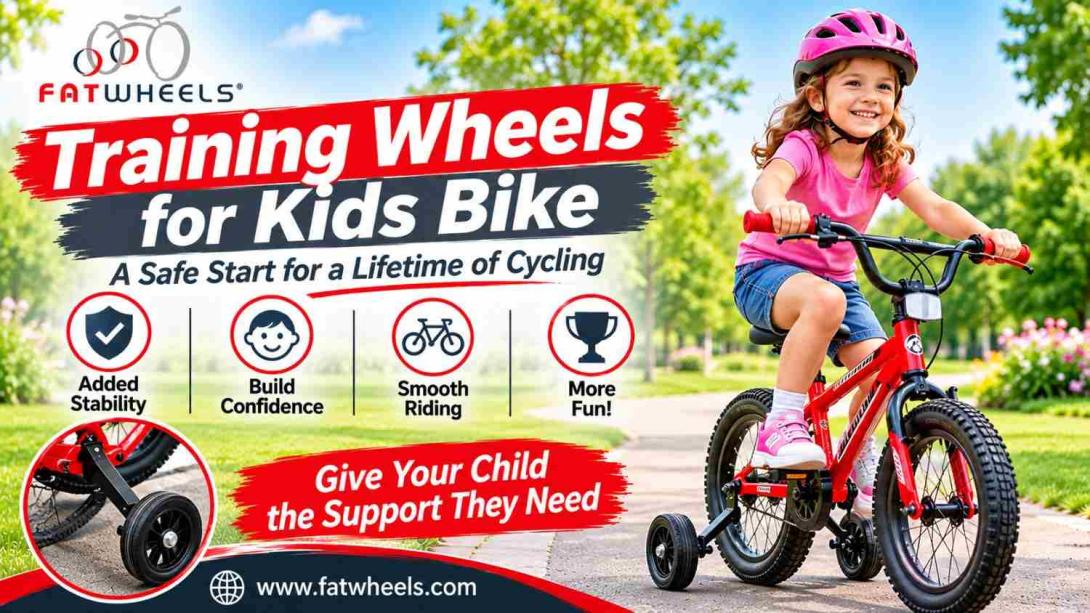
Choosing the right bicycle accessories can make a significant difference in a child's cycling experience. Learning to ride a bicycle is an exciting milestone, but maintaining balance, steering, and pedaling simultaneously can be challenging for beginners. The right training wheels for kids bike can provide additional stability and help young riders become more comfortable as they develop their cycling skills. At FATWHEELS, we believe that more people should have the opportunity to enjoy the freedom, confidence, and independence that come with riding a bicycle.
Whether parents are searching for reliable bike stabilizers, exploring durable fat bike wheels, or looking for dependable replacement training wheels, selecting compatible and properly installed bicycle equipment is essential. Understanding the available options can help families find suitable products for their bicycles and riding requirements.
Why Training Wheels for Kids Bike Are Important
Learning to ride a bicycle requires coordination, balance, confidence, and practice. For many children, balancing on two wheels can initially feel difficult. Training wheels for kids bike provide additional lateral support, helping beginners become familiar with pedaling and steering without having to manage all the balance demands immediately.
Training wheels can make early cycling experiences more approachable. Children can practice starting, stopping, turning, and controlling their bicycles while becoming familiar with riding movements.
Parents should consider several factors when choosing training wheels:
- Bicycle wheel size and frame design.
- Rear axle compatibility and mounting requirements.
- Rider weight and product weight capacity.
- Material quality and overall construction.
- Intended riding surface and usage.
- Proper installation and adjustment.
Choosing compatible equipment is important for maintaining bicycle stability and supporting a positive learning experience.
Understanding Different Types of Bike Stabilizers
Bike stabilizers are designed to provide additional lateral support for bicycle riders who need help maintaining balance. Although conventional training wheels are commonly associated with children's bicycles, specialized stabilizing systems can also accommodate larger bicycles and riders who require additional stability.
Not all stabilizers are designed for the same applications. Some are intended for lightweight children's bicycles, while heavy-duty systems may be suitable for larger bicycles when the product specifications and compatibility requirements allow.
FATWHEELS focuses on bicycle stability solutions that can help children, teenagers, and adults who need additional balance assistance.
When comparing bike stabilizers, consider the following:
- Compatibility: Check whether the stabilizer system fits the bicycle's axle, frame, and wheel configuration.
- Durability: Look for suitable materials and construction designed for the intended rider and bicycle.
- Stability: Consider the level of lateral support provided by the system.
- Installation: Make sure the mounting hardware and installation instructions match the bicycle.
- Maintenance: Regularly inspect brackets, fasteners, wheels, and other components.
The right stabilizer system can help riders feel more comfortable while practicing cycling skills.
Exploring Fat Bike Wheels for Different Riding Conditions
Fat tire bicycles have become popular among riders who enjoy exploring different outdoor environments. Their oversized tires provide a larger contact area with the riding surface, making them useful for certain conditions where conventional bicycle tires may be less suitable.
Fat bike wheels are commonly associated with bicycles designed for sand, snow, gravel, trails, and other challenging surfaces. Their wider tires can provide additional flotation and traction, depending on tire pressure, tread design, and terrain.
When selecting fat bike wheels, riders should consider:
- Wheel diameter and tire width.
- Bicycle frame and fork clearance.
- Hub and axle specifications.
- Brake compatibility.
- Tire pressure recommendations.
- Intended riding environment.
It is also important to understand that fat bike wheels and training-wheel stabilizers serve different purposes. Fat bike wheels are designed for the bicycle's primary wheel system, while stabilizers provide additional lateral support.
For riders interested in combining specialized bicycles with additional balance support, compatibility should always be confirmed before purchasing a stabilizer system.
When Should You Choose Replacement Training Wheels?
Bicycle equipment can experience wear and tear through regular use. Training wheels are no exception. Over time, wheels, mounting brackets, hardware, and other components may require inspection, adjustment, or replacement.
Replacement training wheels can be a practical option when an existing system becomes damaged, worn, or unsuitable for continued use.
Before purchasing replacement training wheels, identify the original equipment specifications and bicycle requirements.
Important considerations include:
- Existing training-wheel mounting design.
- Bicycle axle diameter and configuration.
- Wheel size and bracket dimensions.
- Rider weight requirements.
- Availability of compatible replacement hardware.
- Manufacturer installation recommendations.
Replacing worn or damaged components can help maintain the intended functionality of a stabilizing system. However, replacing individual parts with incompatible components may affect stability and safety.
FATWHEELS encourages customers to evaluate their bicycle configuration carefully before selecting replacement products.
FATWHEELS: Supporting Better Bicycle Stability
At FATWHEELS, the goal is to help make bicycle riding more accessible for people who need additional balance support.
Traditional children's training wheels are not necessarily appropriate for every rider or bicycle. Larger riders and individuals with different balance requirements may need specialized stabilizer systems designed for their particular applications.
FATWHEELS offers bicycle stability products intended to support a variety of cycling needs. Families, caregivers, schools, and organizations can explore available options to identify equipment that may suit their bicycles.
Whether someone is researching training wheels for kids bike applications or comparing specialized bike stabilizers, selecting the correct system is an important first step.
FATWHEELS also recognizes that bicycle compatibility matters. Different bicycles have different axle configurations, wheel sizes, and mounting requirements. Customers should review product specifications and installation guidance before making a purchase.
How to Select the Right Bicycle Accessories
Choosing bicycle accessories should begin with understanding the rider and the bicycle.
For children's bicycles, parents should identify the correct wheel size and confirm that the training-wheel system is compatible with the bicycle. The rider's weight and the manufacturer's product limitations should also be considered.
For specialized bicycles, including fat tire models, additional measurements may be necessary. The width of the rear hub, axle design, frame clearance, and mounting arrangement can influence which accessories are suitable.
When searching for fat bike wheels, focus on the bicycle's original wheel specifications rather than assuming that all wide tires and wheels are interchangeable.
Similarly, when shopping for replacement training wheels, compare the mounting system and product specifications instead of selecting a replacement based only on appearance.
A properly matched bicycle accessory can help provide a more reliable and enjoyable riding experience.
The Importance of Bicycle Safety and Maintenance
Regardless of the type of bicycle or stabilizing system, safety should always come first.
Parents and caregivers should make sure children wear properly fitted bicycle helmets and use appropriate protective equipment. Beginners should practice in a controlled environment away from traffic, steep slopes, and obstacles.
Training-wheel systems should be installed according to the manufacturer's instructions. All mounting brackets, bolts, nuts, and wheel connections should be checked before each riding session.
Regular maintenance should include:
- Inspecting stabilizer wheels for damage.
- Checking mounting brackets and fasteners.
- Examining bicycle tires for wear.
- Checking brakes and steering components.
- Confirming that all accessories remain securely attached.
These simple precautions can help families maintain their bicycles and enjoy more consistent riding experiences.
Making Cycling More Accessible with FATWHEELS
Cycling should be an enjoyable activity that encourages movement, recreation, and independence. The right bicycle accessories can help riders overcome some of the challenges associated with learning and maintaining balance.
From training wheels for kids bike applications to specialized bike stabilizers, choosing suitable equipment can make a meaningful difference for riders who need additional support.
Families can also explore fat bike wheels when considering bicycles designed for different outdoor environments and replacement training wheels when existing components need attention.
FATWHEELS is dedicated to providing bicycle stability solutions that help riders experience more confidence and enjoyment. By understanding bicycle compatibility, selecting suitable equipment, and following proper installation procedures, customers can make informed decisions about their cycling needs.
Conclusion
Finding the right bicycle equipment is essential for creating a comfortable and supportive riding experience. Whether a child is learning to ride for the first time or an experienced rider needs additional balance support, selecting appropriate bicycle accessories can help make cycling more accessible.
Training wheels for kids bike provide beginners with additional lateral support as they practice pedaling and steering. Bike stabilizers can help accommodate riders who need extra balance assistance, while fat bike wheels offer specialized performance for bicycles designed for wider tires and different riding environments. Meanwhile, replacement training wheels provide an option for addressing worn or damaged components when compatible products are available.
FATWHEELS is committed to helping families, caregivers, and riders explore bicycle stability solutions that meet their needs. With the right equipment, proper installation, and consistent attention to safety, more riders can enjoy the confidence, independence, and excitement of cycling.
Frequently Asked Questions (FAQ)
1. What are training wheels for kids bike?
Training wheels for kids bike are additional wheels mounted near the rear wheel of a bicycle. They provide lateral support to help beginners practice pedaling and steering while learning cycling skills.
2. What are bike stabilizers used for?
Bike stabilizers provide additional lateral support for riders who have difficulty maintaining bicycle balance. Depending on the design, they may be suitable for children's, larger, or specialized bicycles.
3. Are fat bike wheels different from regular bicycle wheels?
Yes. Fat bike wheels are designed for bicycles that accommodate significantly wider tires. They are commonly used for riding on surfaces such as sand, snow, gravel, and trails.
4. When should I purchase replacement training wheels?
You may need replacement training wheels when existing wheels or components become damaged, worn, or unsuitable for continued use. Always confirm compatibility before purchasing replacements.
5. Can training wheels fit every children's bicycle?
No. Training-wheel compatibility depends on bicycle wheel size, axle configuration, frame design, mounting hardware, and product specifications.
6. Can adults use bike stabilizers?
Yes. Certain specialized stabilizer systems are designed for larger bicycles and adult riders. It is important to check the manufacturer's rider weight limits and bicycle compatibility requirements.
7. How do I choose the right training wheels?
Consider bicycle size, axle compatibility, rider weight, mounting requirements, construction quality, and intended use. Always follow the manufacturer's installation instructions.
8. Why choose FATWHEELS?
FATWHEELS specializes in bicycle stability solutions designed to help riders who need additional balance support. Its products can be explored by families, caregivers, and organizations looking for specialized bicycle accessories.
#TrainingWheelsForKids #FatBikeWheels #BikeStabilizers #ReplacementTrainingWheels #FATWHEELS