

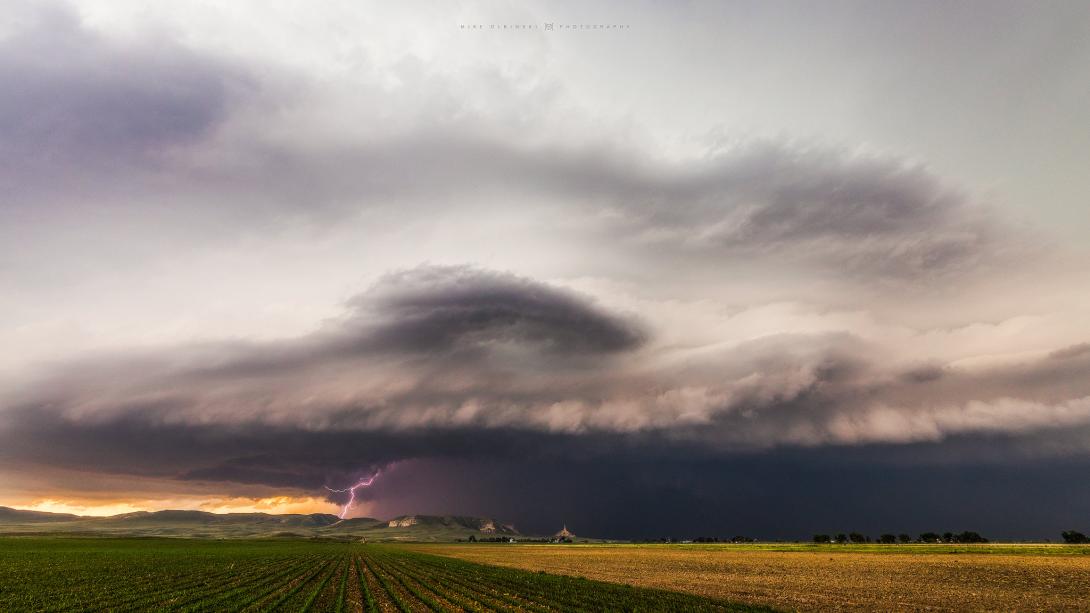
Storm photography captures some of nature's most dramatic moments, from towering cumulonimbus clouds to illuminated lightning and sweeping weather systems. It requires technical skill, patience, and a strong understanding of changing conditions.
For photographers interested in Storm Photography, the work of Mike Olbinski offers inspiration for combining dramatic weather with thoughtful composition and visual storytelling.
Understand the Weather
Good storm photography often begins with research. Weather forecasts, radar imagery, satellite observations, and local alerts can help photographers identify potentially interesting conditions.
Understanding cloud formations and storm development can improve planning, but forecasts cannot guarantee a particular photographic result.
Choose locations that provide clear views of the sky and a suitable foreground. Mountains, open plains, distant buildings, and natural landscapes can add scale to storm images.
Always consider safe access and an appropriate retreat before setting up equipment.
Choose the Right Camera and Lens
A DSLR or mirrorless camera with manual controls offers flexibility when working in changing light.
Wide-angle lenses are useful for capturing large cloud formations and expansive skies. Longer focal lengths can isolate distant details, although photographers should avoid approaching hazardous weather for a closer view.
A sturdy tripod is valuable for long exposures, particularly when capturing lightning at night. Spare batteries and memory cards help prevent interruptions during extended sessions.
Protect equipment from rain and dust without allowing the pursuit of an image to compromise personal safety.
Master Exposure Settings
Storm photography often involves challenging lighting conditions. Bright clouds may sit beside dark foregrounds, while lightning can briefly illuminate an otherwise dark landscape.
Adjust aperture, shutter speed, and ISO according to the scene. A lower ISO can help control image noise when sufficient light is available, while shutter speed determines how movement and lightning are recorded.
Longer exposures can increase the chance of recording a lightning strike, but the ideal approach depends on the ambient light and the desired result.
Review test images and adjust settings when it is safe. Avoid relying on a single exposure strategy for every weather situation.
Create Strong Compositions
A powerful storm photograph needs more than dramatic clouds. Composition helps communicate the size, direction, and atmosphere of the weather system.
Use foreground elements to create depth and scale. A distant mountain range or open landscape can give the viewer a reference point, while a carefully positioned horizon can emphasize the sky.
Pay attention to cloud shapes, leading lines, negative space, and the relationship between light and shadow.
Mike Olbinski's photography demonstrates how dramatic skies can become compelling images when weather, timing, and composition work together.
Capture Lightning Responsibly
Lightning photography demands particular caution. Lightning can strike well beyond the area of heavy rainfall, and exposed locations can become dangerous quickly.
Do not stand outdoors with a tripod during an approaching thunderstorm or attempt to position yourself closer to lightning. If thunder is audible, move into a substantial enclosed building or a hard-topped vehicle.
Use safe locations and remote or automated camera techniques only when the equipment can be operated without exposing yourself to the storm.
Edit Without Losing Natural Detail
Post-processing can improve contrast, color balance, and visibility in storm photographs. Adjustments should preserve the natural structure of the clouds and avoid introducing unrealistic colors or excessive sharpening.
Compare edits with the original image to ensure that important details remain believable.
Conclusion
Storm Photography combines weather awareness, camera technique, composition, and careful editing. Learning these fundamentals can help photographers capture dramatic weather while maintaining a responsible approach to safety.
Mike Olbinski's work provides inspiration for creating images that communicate the scale, movement, and beauty of powerful storms.