

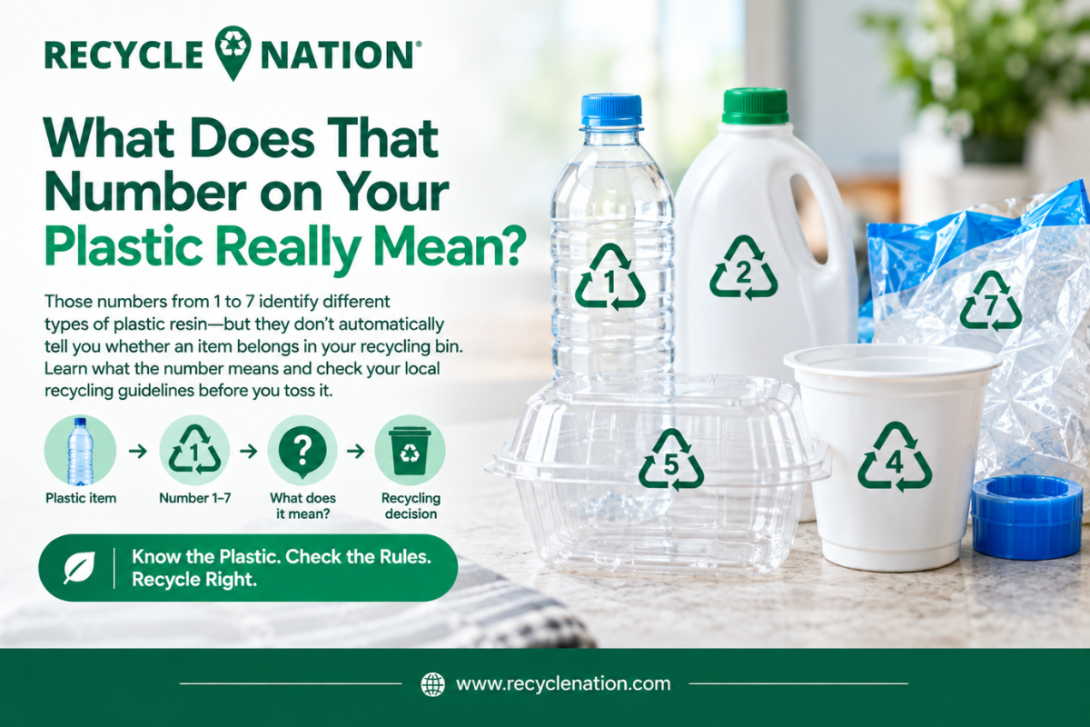
When you look at a package made of plastic, with a triangular shape around a number inside, it seems to make one statement to you – to recycle the product. But it's not as clear as that. The symbol itself tells you about what type of plastic is used in your product, but the issue of whether you should recycle it is determined by your local recycling program.
It's essential to recognize that fact since people expect recycling to be easy. When they see a number like 1, 2, 3, 4, 5, 6, or 7, they immediately need a simple answer, yes or no. In fact, the numbers should be treated as a way to identify materials used to produce packaging.
For anyone trying to improve recycling plastic habits, this is an important starting point. It is crucial to start with recognizing types of plastics you use. And then, it is necessary to find out what type of materials can be recycled and how the packaging should be prepared.
The local infrastructure is critical here as well. Not all recycling facilities have the same sorting technology or the same market opportunities for the recycled plastics. Thus, the instructions for recycling in one community may not be applicable to another community.
Another important aspect is the contamination. Any item that is considered acceptable in recycling may still pose a problem if it is contaminated with some food, liquid or anything else. It will be useful to follow the local guidelines for preparing the items for recycling to prevent contamination.
It does not mean that you have to throw away any plastics that do not belong to your curbside collection program. Based on the type of the plastic and the location, there might be another way to dispose of the items.
It all boils down to making decisions about whether plastic should be recycled based on facts rather than looks. This is a piece of information about the plastic, but not all the information about it.
By understanding what the identification code means and checking local acceptance rules, recycling plastic becomes a more informed process. Instead of wondering if the plastic contains a recycling symbol, it would be better to wonder what kind of plastic it is and what your recycling program accepts.