
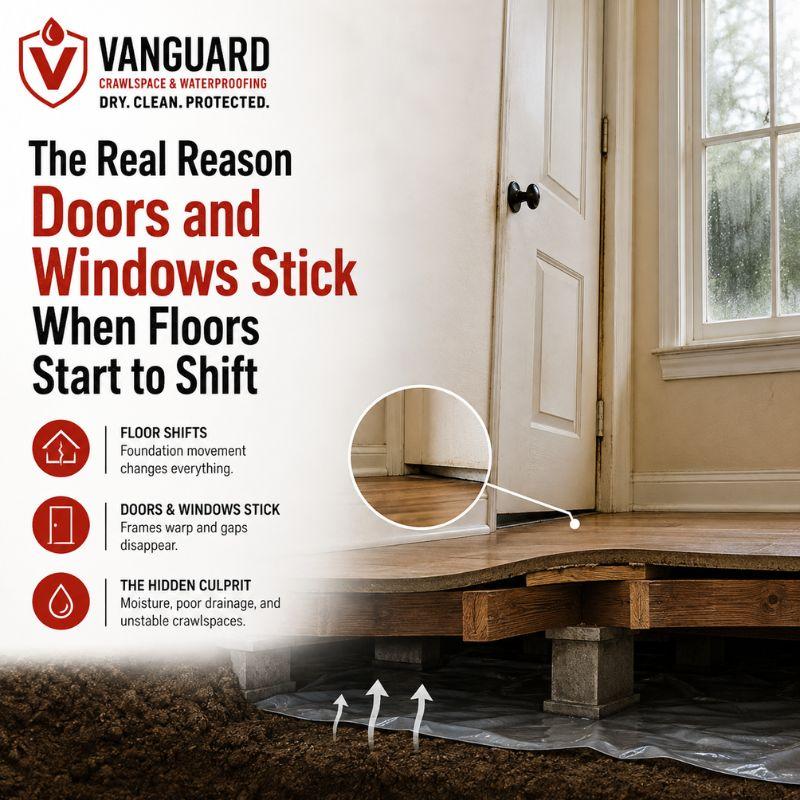
Quick answer: If doors and windows in your Madison home have started sticking, dragging, or refusing to latch, the cause is rarely the door or window itself. In most cases, it's a sagging floor system — weakened floor joists, a settling foundation, or a moisture-damaged crawl space — pulling the entire frame of your house slightly out of square. As the floor dips, walls tilt a few degrees off plumb, door and window frames rack out of their rectangular shape, and hardware that used to glide now binds. Sagging floor repair in Madison typically involves reinforcing or replacing damaged joists, installing engineered support columns, and correcting moisture problems in the crawl space — not just planing down a door.
Below, we break down why this happens, how to tell a floor problem from a "normal" door problem, and what fixing it actually involves.
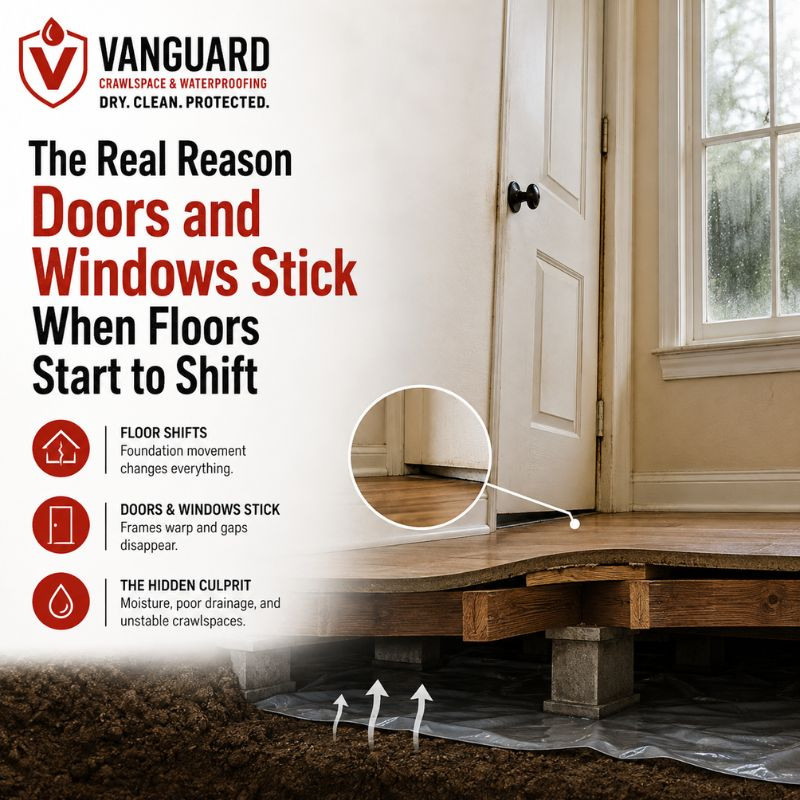
Why a Sagging Floor Drags Your Doors and Windows With It
Your home's frame is a connected system. Floor joists support the subfloor, walls sit on top of the floor framing, and door and window openings are built into those walls. When joists sag — from age, moisture, undersized lumber, or an overspan — the floor beneath a wall drops slightly. That wall doesn't stay perfectly vertical; it leans or twists with the floor.
A door or window opening is built as a perfect rectangle. Even a small amount of racking — as little as a quarter-inch of vertical movement at one corner — turns that rectangle into a parallelogram. The door slab or window sash, however, is still a rigid rectangle. It no longer matches the shape of its frame, so it catches on the top corner, drags along the bottom, or won't latch into the strike plate.
This is why homeowners across Dane County notice the same pattern:
- The second-story or upper-level doors start sticking first, since floor movement is amplified as it travels up through the structure.
- Windows become hard to open or won't stay up on their own.
- Interior doors that used to swing freely now need a shoulder to close.
- Gaps appear between the door and frame on one side while the other side binds tight.
Common Culprits Behind Sagging Floors in Madison Homes
Madison's clay-heavy soil, freeze-thaw cycles, and older housing stock (especially in neighborhoods with homes built before crawl space encapsulation was standard) create a specific set of conditions that lead to floor sag:
Cause What's Happening Typical Warning Sign
Moisture-damaged joists Crawl space humidity rots or weakens wood framing over years Springy or bouncy floor feel
Undersized or overspanned joists Older construction didn't account for modern loads Sagging visible with a level or string line
Settling piers or support posts Wood posts rot or sink into unstable soil Uneven, sloping floors in one area of the home
Foundation settlement Soil movement causes the foundation to drop unevenly Cracks in drywall paired with sticking doors
Poor crawl space drainage Standing water softens soil and accelerates wood decay Musty odor, visible moisture in the crawl space
Because Madison sits on soil types that expand and contract seasonally, even homes without an obvious moisture problem can develop gradual floor sag over 15–25 years. This is one reason a professional structural assessment matters more than a DIY door adjustment.
How to Tell If It's the Floor — Not Just the Door
Before assuming you need floor repair, check for these companion signs. If you see two or more, the floor system — not the hardware — is the likely source:
- Doors or windows on multiple levels of the house are affected, not just one
- Floors feel soft, bouncy, or slope noticeably when you set a marble or ball on them
- Diagonal cracks near door or window corners in drywall
- Gaps forming between baseboards and the floor
- A musty smell or visible dampness when you check the crawl space access
A single sticky door in an old house can just be seasonal wood swelling. Multiple sticking points appearing over months, especially alongside sloped floors, is a structural pattern — and it tends to get worse, not better, without repair.
What Sagging Floor Repair Actually Involves
Professional sagging floor repair addresses the structural cause, not just the symptom. Depending on what our inspection finds, a typical repair plan for a Madison home includes:
- Crawl space inspection and moisture assessment — identifying rot, fungal damage, and drainage issues at the source.
- Joist sistering or replacement — reinforcing weakened joists with new lumber or engineered material fastened alongside the original.
- Installing adjustable steel support columns or piers — these can be leveled over time as the home continues to settle seasonally, unlike fixed wood posts.
- Correcting drainage and vapor barriers — stopping the moisture cycle that caused the sag in the first place.
- Re-leveling the floor system — gradually raising the floor back toward level, which in turn allows door and window frames to return closer to square.
Once the floor is stabilized and leveled, most doors and windows that were sticking purely due to frame racking will operate normally again without needing to be re-cut or replaced.
Why This Matters Beyond the Inconvenience
A sticking door is annoying. A sagging floor is a structural issue that tends to compound:
- Continued joist deflection increases stress on the subfloor and finishes above it.
- Moisture that caused the sag also invites wood-destroying insects and mold.
- Unaddressed settlement can affect resale value and complicate a home inspection when you sell.
- Costs generally rise the longer repair is delayed, since damaged wood spreads to adjacent framing members.
Catching this early — when it still looks like "a couple of doors are sticking" — is the cheapest point in the timeline to fix it.
Frequently Asked Questions
Can a sagging floor really cause a window to stick, not just doors? Yes. Window frames are rectangular assemblies just like door frames. When the wall beneath or around a window racks out of square due to floor movement, the sash binds against the frame the same way a door does.
Will fixing my crawl space actually stop my doors from sticking? In most cases, yes — if the sticking is caused by floor sag rather than humidity-swollen wood. Once the joists are reinforced and the floor is releveled, the door and window openings return closer to a true rectangle, which restores normal clearance.
How much does sagging floor repair cost in Madison? Cost depends on the extent of joist damage, the number of support columns needed, and crawl space accessibility. A firsthand inspection is the only reliable way to scope this, which is why we offer on-site assessments before quoting.
Is it safe to keep living in the house while floors are sagging? Minor sag is usually not an immediate safety emergency, but it will progress. Waiting on repair typically increases both the scope and the cost of the fix, so an inspection sooner rather than later is the safer path.
How long does a typical floor joist repair take? Most residential sagging floor repairs in the Madison area are completed in one to three days, depending on the square footage affected and whether additional moisture or drainage work is needed.
Get a Straight Answer on What's Causing Your Floor to Sag
If doors and windows around your home have started sticking over the past year, it's worth having the floor system checked before you replace hardware or plane down another door. Vanguard Crawlspace inspects crawl spaces and floor framing throughout the Madison area, identifies the actual structural cause, and provides a clear, itemized repair plan — no guesswork.
Schedule a free crawl space and floor inspection with Vanguard Crawlspace today.
The Article “The Real Reason Doors and Windows Stick When Floors Start to Shift” was originally posted here.