

Introduction
Choosing the right career after graduation can be challenging, especially for students who want to enter the IT industry. With the increasing demand for web applications, businesses need developers who can build and maintain both frontend and backend systems. Learning full stack development is one option for graduates who want to develop practical software skills.
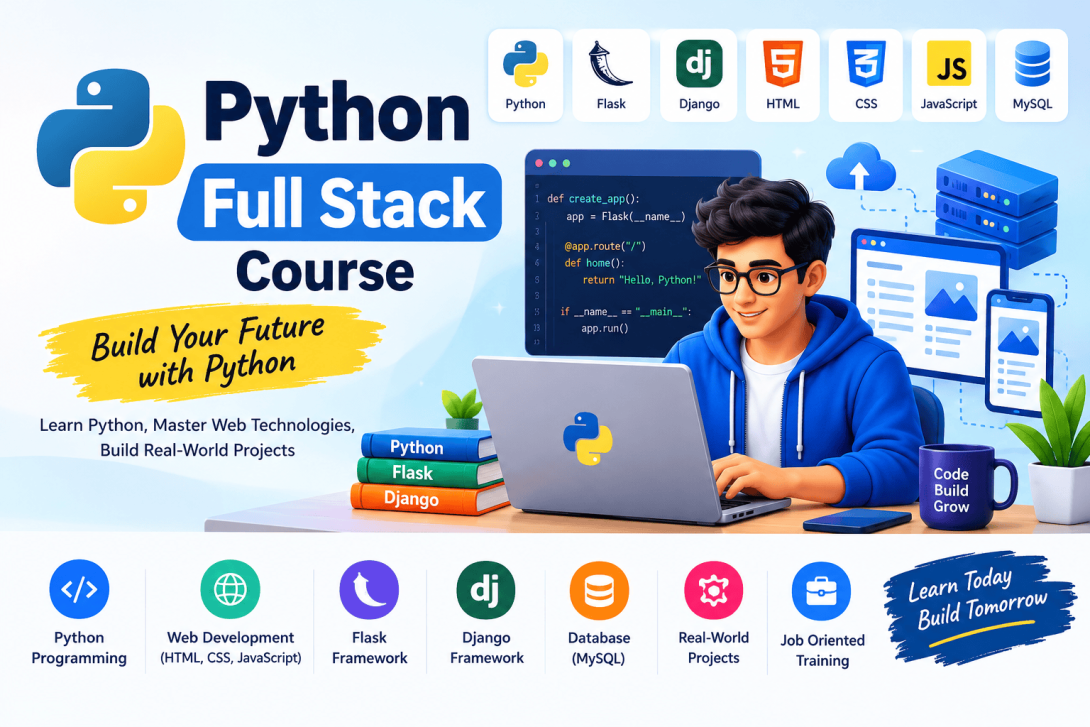
A Python Full Stack Course in Telugu can help graduates understand programming concepts, web technologies, and application development in a familiar language. With consistent practice, project experience, and interview preparation, learners can work toward entry-level roles in software development.
Why Choose Python Full Stack Development After Graduation?
Python is widely used for web development, automation, data processing, and other software applications. Its readable syntax makes it approachable for beginners, while frameworks such as Django and Flask help developers build web applications.
Full stack development combines frontend and backend skills. This allows developers to understand how a website looks, how its features work, and how information is stored and retrieved.
Graduates may consider this career path because it offers opportunities to:
- Develop practical programming skills.
- Build complete web applications.
- Work on individual or team-based projects.
- Create a technical portfolio.
- Apply for entry-level development positions.
- Continue learning related technologies as their careers progress.
However, completing a course alone does not guarantee employment. Practical ability, communication, and interview performance also matter.
Best Career Path for Graduates Learning Python Full Stack
1. Learn Programming Fundamentals
Begin with Python programming basics, including variables, data types, operators, conditional statements, loops, functions, modules, and exception handling.
After understanding the fundamentals, learn object-oriented programming concepts such as classes, objects, inheritance, and encapsulation.
Practice coding exercises regularly. Understanding how to solve problems independently is more valuable than memorizing code.
2. Develop Frontend Skills
Learn HTML, CSS, and JavaScript to create interactive and responsive web pages.
HTML defines page structure, CSS controls presentation, and JavaScript adds interactivity. Practice creating navigation menus, forms, landing pages, and responsive layouts.
These skills help graduates understand the user-facing part of web applications.
3. Learn Backend Development
Choose a Python web framework such as Django or Flask.
Django offers a structured development environment with features such as URL routing, database integration, templates, and authentication support. Flask provides a lightweight framework that allows developers to choose the components needed for their applications.
Learn how to process requests, validate user input, manage sessions, and develop application logic.
4. Understand Databases and APIs
Database knowledge is essential for most full stack development roles. Start with SQL and learn how to create tables, retrieve records, update data, and manage relationships.
Next, understand REST APIs and JSON, which allow different applications or services to exchange information.
Practice connecting your Python application to a database and retrieving information through API endpoints.
5. Build Real-Time Projects
Projects help transform theoretical knowledge into practical experience. Graduates can start with a portfolio website and progress to a student management system, job portal, expense tracker, or online course registration application.
Use Git and GitHub to maintain your code. Write clear project documentation and, where practical, deploy applications so recruiters can review working examples.
Career Opportunities After Training
After developing the required skills, graduates can explore roles such as:
- Junior Python Developer
- Python Full Stack Developer
- Backend Developer
- Web Application Developer
- Django Developer
- Software Development Trainee
Job titles and eligibility criteria vary by company. Some employers accept freshers with strong project portfolios, while others require specific degrees, internships, or previous experience.
How to Prepare for IT Interviews
Revise Python fundamentals, object-oriented programming, SQL queries, frontend concepts, and basic data structures. Prepare to explain the architecture, features, challenges, and solutions used in your projects.
Practice coding questions and common technical interview problems. Prepare a concise resume highlighting technical skills, projects, internships, and relevant certifications.
Also improve communication skills so you can clearly explain your approach to solving problems.
Frequently Asked Questions
1. Can graduates from non-IT backgrounds learn Python full stack development?
Yes. Graduates from different academic backgrounds can learn these skills by starting with programming fundamentals and progressing through practical exercises.
2. How long does it take to learn Python full stack development?
The duration depends on prior knowledge, study time, and practice. A structured learning plan over several months may provide a foundation, but professional proficiency requires continued project work.
3. Do freshers need certifications to get a job?
Certifications may support a resume, but employers often evaluate coding ability, projects, technical knowledge, and interview performance.
4. What should graduates learn first?
Start with Python fundamentals, then learn HTML, CSS, JavaScript, a Python web framework, databases, and Git.
Conclusion
Python full stack development can be a practical career direction for graduates interested in software engineering and web application development. Following a structured learning path, building projects, practicing coding, and preparing for interviews can improve job readiness. A Python Full Stack Course in Telugu can provide guided learning, but consistent independent practice is essential for developing the skills employers expect.