
Introduction
A pyrometer is a non-contact device used to measure high temperatures from a distance, commonly in industrial and scientific settings. Unlike conventional thermometers, a pyrometer relies on the thermal radiation emitted by an object, enabling accurate temperature readings without physical contact. This makes it ideal for measuring the temperature of moving, inaccessible, or extremely hot surfaces like molten metal, furnaces, and engines. Pyrometers have become essential in manufacturing, metallurgy, and maintenance operations across various industries.
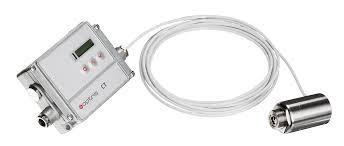
There are several types of pyrometers, including optical pyrometers, infrared pyrometers, and advanced digital versions like the Optris pyrometer. These devices operate based on different technologies but share a common core principle: detecting infrared radiation. Understanding the radiation pyrometer working principle helps users choose the right device for their needs and ensures proper application, accuracy, and efficiency in temperature monitoring.
Pyrometer Explained
A pyrometer is a remote-sensing temperature measurement instrument that interprets thermal radiation from an object to determine its surface temperature. Because it does not require contact, a pyrometer is perfect for measuring objects that are too hot, moving, or dangerous to touch. These instruments play a vital role in high-temperature environments such as steel manufacturing, glass production, and aerospace applications.
There are various categories of pyrometers based on their measurement principles. The most commonly used include optical pyrometers, which rely on the visible spectrum, and infrared pyrometers (IR pyrometers), which detect energy in the infrared range. Some devices, like the infrared IR pyrometer, offer broader spectral sensitivity for enhanced accuracy, especially when integrated with digital systems like Optris pyrometer solutions.
Components of a Pyrometer
- Optical System
The optical system in a pyrometer collects thermal radiation emitted by the target object. This system includes lenses and filters that focus the infrared or visible light onto the detector. The effectiveness of the optical system determines the device's field of view and measurement spot size, which are critical for accuracy. - Detector
The detector converts focused radiation into an electrical signal. For infrared pyrometers, this component is usually a thermopile or photodiode. The detector’s sensitivity to specific wavelengths determines how well the device captures temperature differences across varying materials and surfaces. - Signal Processor
Once the radiation is converted to an electrical signal, the signal processor amplifies and digitizes this information. It compensates for background interference and calibrates the data for accurate temperature computation. This part of the system often includes built-in algorithms to enhance measurement accuracy. - Display
The final component is the display unit, which shows the computed temperature. In modern pyrometers like the Optris pyrometer, this display can be part of an integrated screen or transmitted to a remote digital interface. The display often includes additional data, such as max/min values and signal quality indicators.
Working Principle of A Pyrometer
The core radiation pyrometer working principle is based on the concept that all objects above absolute zero emit infrared radiation proportional to their temperature. A pyrometer captures and interprets this radiation to determine surface temperatures. The process can be broken down into four main steps:
Step 1: Radiation Emission
All objects emit electromagnetic radiation based on their temperature. This radiation increases in intensity and shifts in wavelength as the object gets hotter. For example, a glowing red-hot piece of metal emits both visible and infrared radiation. Pyrometers detect this radiation, especially in the infrared spectrum (typically between 0.7 to 20 micrometers). This characteristic emission, governed by Planck’s Law and Stefan-Boltzmann Law, is the foundation of pyrometer functionality.
Different surfaces emit different amounts of radiation at the same temperature, depending on their emissivity—a measure of how efficiently a surface radiates energy. Understanding and calibrating for emissivity is crucial in ensuring accurate temperature readings, especially for IR pyrometers.
Step 2: Collection & Focusing
Once emitted, the thermal radiation travels through the air to the pyrometer’s lens or mirror. The optical system collects and focuses this radiation onto the detector. This step is vital to ensure the radiation from the specific target area is measured and not influenced by surrounding surfaces.
Focusing mechanisms differ across devices. For instance, some infrared pyrometers use narrow field lenses for distant measurements, while optical pyrometers require precise focusing through adjustable telescopic lenses. The accuracy of this step ensures that the pyrometer can differentiate between objects at different temperatures within the same field of view.
Step 3: Detection & Conversion
The focused radiation reaches the detector, which converts the incoming energy into a measurable electrical signal. Depending on the pyrometer type, this detector could be a thermopile (used in IR thermometers), a photodiode (used in optical pyrometers), or advanced solid-state sensors.
The quality of the detector directly affects the sensitivity and range of the pyrometer. For example, a pyrometer thermometer used in glass furnaces must detect both high radiation intensity and subtle fluctuations, which require high detector precision.
Step 4: Signal Processing & Display
After the signal is generated by the detector, the signal processor refines it by eliminating noise, correcting for ambient temperature, and applying calibration curves based on emissivity and wavelength. The processor then translates the signal into temperature readings using algorithms derived from radiation laws.
Finally, the temperature data is shown on the display unit. In modern systems like the Optris pyrometer, the data can also be logged, transmitted wirelessly, or integrated into industrial monitoring systems for real-time control. These systems offer graphical displays, alarms, and connectivity with PLCs or SCADA software for automation.
Factors Affecting the Accuracy of Pyrometer
1. Emissivity
Emissivity varies between different materials and surfaces. A shiny or polished metal may reflect more radiation than it emits, causing inaccuracies if the emissivity isn’t properly adjusted in the pyrometer settings. Most pyrometers allow users to input the target material’s emissivity to correct readings.
2. Distance
The distance-to-spot ratio determines how large an area the pyrometer measures at a given distance. If the target is smaller than the spot size, the reading will include surrounding temperatures, leading to errors. Users must ensure the pyrometer is at an appropriate distance for the target size.
3. Environment
Environmental conditions such as dust, smoke, steam, or glass barriers can absorb or scatter infrared radiation. This distortion can cause incorrect readings. Specialized pyrometers are designed with filtering optics and compensation algorithms to function reliably in harsh environments.
Summary
A pyrometer is a powerful tool for non-contact temperature measurement, relying on the principle of radiation detection to provide accurate results. Whether using a radiation pyrometer, optical pyrometer, or an advanced infrared IR pyrometer like the Optris pyrometer, understanding how these devices work enhances their effectiveness and reliability.
From collecting emitted radiation to displaying precise temperature values, each component plays a critical role in the measurement process. Factors such as emissivity, distance, and environmental conditions can affect accuracy, but can be managed with proper calibration and device selection. As technology advances, pyrometers continue to evolve, offering smarter, faster, and more integrated solutions for industrial temperature monitoring.